
Introdution
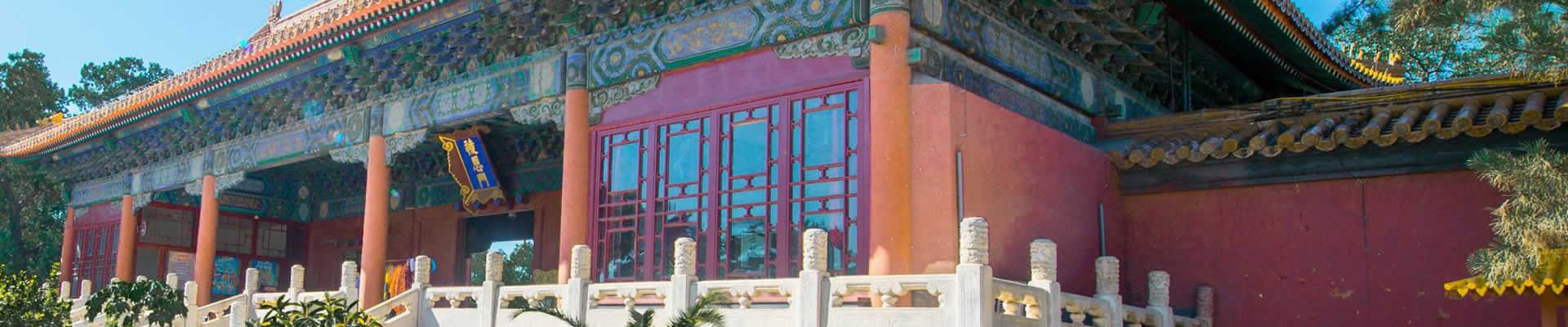
Situated to the north of Beijing Zoo in Haidian District of Beijing, the Five-Pagoda Temple (Wuta Temple) is an ideal place to appreciate the splendid history of Buddhism and architecture in China as well as to enjoy the pleasant scene and special tranquility of the temple. It is a respite from crowded tourist attractions in Beijing.
The temple is located in the east of Baishi Qiao, north bank of the Changhe River, close to the north gate of Beijing Zoo, the Capital Indoor Stadium, Dazhong Temple, Zizhuyuan Park, Beijing Exhibition Center. It has the oldest and most beautiful Vajrasana Pagoda (diamond throne pagoda) among the total six in China. Beijing Art Museum of Stone Carvings is established within this temple. It has nice exhibition halls to the east, west and north of the Vajrasana Pagoda.
History
With its original name of 'Zhenjue Temple' (as the name engraved in the entrance), the temple was first constructed during the Yongle years (1403 - 1424) of the Ming Dynasty (1368 - 1644) and completed in 1473. At that time, an Indian monk came to China to present Emperor Chengzu, the third emperor of the Ming Dynasty, five golden statues of Buddha and a draft of an Indian diamond throne pagoda. Using this draft, the temple with the special architecture of five pagodas was built backing on the West Hill and facing the rippling Long River in Beijing.
During the reign of Emperor Qianlong of the Qing Dynasty (1644 - 1911), the temple twice underwent extensive renovations and was renamed 'Da Zhengjue Temple'. In succeeding years until modern times, the temple has been totally renovated. In 1982, it opened to the public. Today, it is popularly referred to as the Five-Pagoda Temple.
Architectural Features
The main architecture in the Five-Pagoda Temple is the grand construction of the Indian 'diamond throne pagoda' style, wherein five pagodas stand on a square foundation known as the throne. It does not copy the Indian mode, but has its own unique style fusing the Indian pattern with traditional Chinese architectural art and carving.
The whole construction, made of bricks and bluestones, has two parts:
One is the 25-foot-high square foundation with six stories. The first story with a height of 5.8 feet is the base of the whole construction. Each of the five stories above has a narrow eave and carvings of small Buddhist shrines and Buddhas, as well as bas-reliefs of Buddhist objects and Sanskrit letters on its four sides.
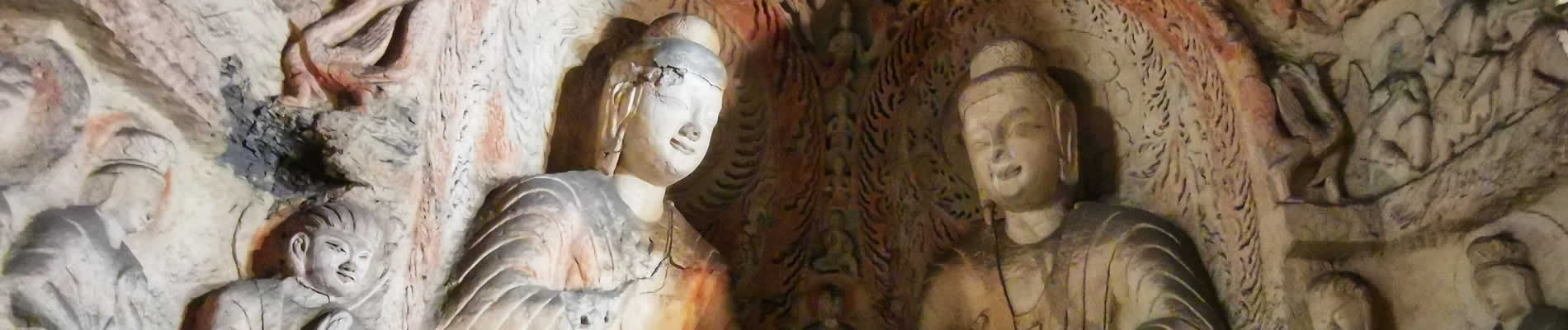
The other part is the five pagodas rising from their square bases on top of the throne foundation. One pagoda is in the center and the others in the four corners of the foundation respectively. The central one of 26 feet in height is a little higher than the others and has 13 stories, two more than the others in the corners. All five pagodas are dainty in appearance and artistic in design. They are all engraved with delicate images of Buddha, bodhi trees, Sanskrit letters and Buddhist symbols as well as lions, elephants, horses and other animal figures. The images of Buddha on these five pagodas represent Buddha in five directions according to the sutra. In addition, it is interesting that the south wall of the base story of the central pagoda is carved with a pair of footprints of Buddha, meaning that the spirit of Buddha spreads everywhere.
The temple complex, with the diamond throne pagoda as its essence, is an outstanding accomplishment of Buddhist art. The carvings in Sanskrit also provide priceless material for research of the ancient Indian language and Tibetan Buddhism. Today, bearing a history of over 500 years, the Five-Pagoda Temple is not only a solemn religious relic, but also the location of the Beijing Art Museum of Stone Carvings which displays more than 2000 pieces of stone artworks for tourists.

Information
Opening Hours: 09:00-16:00 (Except Monday)
Subway: Subway Line 4: get off at National Library Station, get out of the station from southeast exit (Exit C), walk along Wutasi Lu along the Changhe River eastward for 500 meters to the temple.
Bus Route: Take bus no. 86, 319, 320, 332, 634, 645, 653, 689, 695, 697, 717, 808, 814, ?4, ?6, Yuntong 105, Yuntong 106 or Yuntong 205 and get off at National Library Station, walk south till reach the north bank of Changhe River, walk east about 500 meters along the river and you will see it.
Prev: Beijing Aquarium & Blue Zoo Beijing: Best Aquariums in Beijing for Families and Ocean Lovers
Next: Xishiku Church
Duration:7-8 Hours
Attractions(Cities):Tiananmen Square, Forbidden City, Temple of Heaven, Summer Palace
Tour Style:One day, four Beijing essentials — Tiananmen Square, the Forbidden City, the Temple of Heaven and the Summer Palace — with a private English-speaking guide and your own air-conditioned car and driver. Itineraries run daily, take 7–8 hours door to door, and can start from your Beijing hotel, a train station or the airport arrivals gate. Your guide walks you through Ming (1368–1644) and Qing (1644–1911) palace courts with real dates instead of legend, then takes you to a genuine local kitchen for Peking Duck — you order, you pay for what you eat, and vegetarian, halal or lighter meals are easy to arrange. Want to fold in Tai Chi at the Temple of Heaven, a hutong morning market, Peking Opera or Hanfu photos? Just tell us; the car and the day are yours.
Duration:2 Days, 1 Night
Attractions(Cities):Temple of Heaven, Tiananmen Square, Forbidden City, Nanluoguxiang, Mutianyu Great Wall, Summer Palace
Tour Style:Two days, one night, six Beijing essentials — with a private English-speaking guide, your own car and driver, and one overnight in a city-centre four-star. Day one: Tiananmen Square, the Forbidden City (3,400-metre red wall, 980 buildings), a hutong lunch stop, the Temple of Heaven, then evening on Nanluoguxiang. Day two: an early start to the Mutianyu Great Wall — cable car up, optional toboggan down — then the Summer Palace and its 728-metre Long Corridor before drop-off at your hotel, station or airport. Tell us if you want to fold in Peking Duck, 798 Art District, flag-raising at dawn, Chinese acrobatics, a street-snack crawl or Hanfu photos.
Duration:3 Days, 2 Nights
Attractions(Cities):Tiananmen Square, Forbidden City, Temple of Heaven, Jingshan Park, Summer Palace, Kunming Lake Boat Riding, Nanluoguxiang, Panjiayuan Antique Market, Mutianyu Great Wall, Bird's Nest, Water Cube
Tour Style:Three days, two nights in a city-centre four-star, eleven Beijing essentials and a private English-speaking guide, your own air-conditioned car and a professional driver for the whole trip. Day 1: Tiananmen Square, the Forbidden City (3,400-metre red wall, 980 buildings), Jingshan Park for the north panorama over golden roofs, evening on Nanluoguxiang. Day 2: the Mutianyu Great Wall — cable car up, optional toboggan down — back through the city for a walk around the Bird’s Nest and Water Cube lit up. Day 3: the Temple of Heaven, the Summer Palace with a boat on Kunming Lake, and a slow hour at the Panjiayuan antique market before drop-off at your hotel, station or airport. Lunch isn’t included — your guide takes you to genuine local kitchens and you pay for what you eat.
Duration:5 Days, 4 Nights
Attractions(Cities):Mutianyu Great Wall, Bird's Nest, Water Cube, Qianmen Street, Morning Market, Forbidden City, Tiananmen Square, Jingshan Park, Temple of Heaven, Nanluoguxiang, Facial Makeup Painting, 798 Art Zone
Tour Style:Five days, four nights in a city-centre Beijing hotel with a private English-speaking guide, your own car and a professional driver. This is the ‘beyond the surface’ version of Beijing — yes, Tiananmen Square, the Forbidden City (3,400-metre red wall, 980 buildings), Jingshan Park for the golden-roof panorama, the Temple of Heaven and the Mutianyu Great Wall are all in, but the tour also threads in a dawn hutong morning market, a face-painting workshop with a working Peking Opera artist, the 798 Art District’s galleries and cafés, an evening at Qianmen pedestrian street, and a slow look at the Bird’s Nest and Water Cube at the old Olympic Park. Lunch isn’t included on purpose — your guide takes you to genuine local kitchens each day and you pay for what you eat. Drop-off on Day 5 at your Beijing hotel, station or airport.
Duration:10+ Hours
Attractions(Cities):Terracotta Warriors and Horses Museum
Tour Style:A long but focused day trip to the Terracotta Warriors and Horses Museum. Your private English-speaking guide and car meet you at your Xi’an hotel, train station or airport (arrive from Beijing by G-series high-speed rail — 4.5–6 hours, or an early flight if you prefer). Lintong, 35 km east of Xi’an, holds roughly 8,000 life-size clay soldiers, horses and chariots buried with the first emperor Qin Shi Huang around 210 BC and rediscovered by farmers digging a well in 1974 (UNESCO-listed). You’ll cover Pit 1, Pit 2, Pit 3 and the bronze-chariot museum at a proper pace, break for lunch at a local noodle kitchen on your own bill, and finish back at your Xi’an pickup point or the station for the evening train. Total door to door: 10+ hours.
Wechat: YourWayHolidayAsia
24 Hours Hotline:
+86 137-3541-1378
Certificate of Excellence
2012~2026

Your Way Holiday
(Your Privacy is Protected)
 Forbidden City Beijing: Ultimate Tour Guide to China’s Imperial Palace
 Temple of Heaven
 Ming Tombs
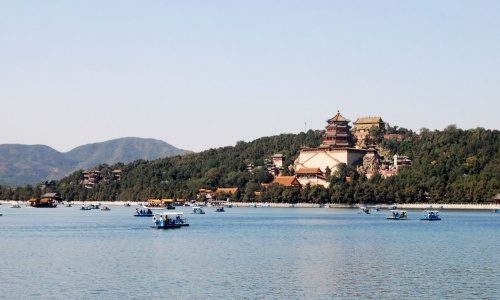 Exploring the Summer Palace Beijing: A Complete Guide to China’s Most Iconic Royal Garden
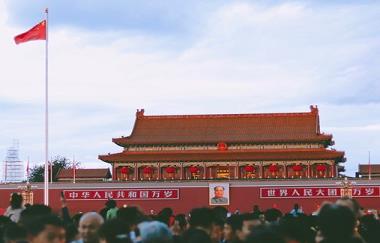 Tiananmen square
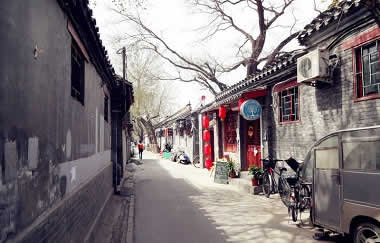 Beijing Hutongs: A Living Tapestry of Time
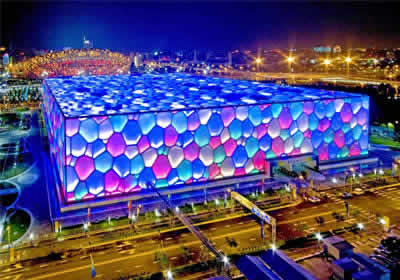 Water Cube
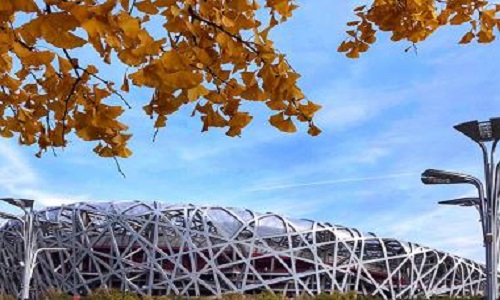 Beijing Bird's Nest – Explore the Iconic National Stadium Beijing
1 to 1 tailor-made service from our professional travel advisors for the most sophisticated
Constantly excellent reviews for attraction, hotel and service Competitive price
Local experts provide quality tours Best selected knowledgeable local guides Authentic local restaurants
7*24 hours available to create you a worry-free tour. No Hidden Fees and absolutely no pressure to buy. Secured









Copyright © 2017 Chinabeijingprivatetour.com All rights reserved. 浙ICP备18056007号-2