Introduction
The White Cloud Temple or the Monastery of the White Clouds is a Daoist temple located in Beijing, China. It is one of "The Three Great Ancestral Courts" of the Quanzhen School of Daoism, and is titled "The First Temple under Heaven".
History & Background
The White Cloud Temple was first founded in the mid-8th century during the Tang dynasty, and was initially called Tianchang Abbey (???; Abbey of Celestial Perpetuity). During this period, the abbey was state-sponsored and staffed by an elite clergy.
From 1125 to 1215 when what is now Beijing was controlled by the Jin dynasty, the abbey served as the Daoist administrative headquarters and played an important role in state ceremonies. After Beijing was taken by the Mongols in 1215, the abbey was taken over by the Quanzhen patriarch Qiu Chuji, and became the headquarters of the Quanzhen movement until the establishment of the Ming dynasty. Qiu renamed the abbey Changchun Gong (???; Palace of Eternal Spring).
In October 1222, Qiu gave his exposition of Daoism to Genghis Khan after a three-year trek from Shandong Province after being summoned. Qiu's successor, Yin Zhiping (???; 1169-1251) built a memorial shrine over Qiu's grave. This shrine became a temple in its own right called White Cloud Temple. The abbey was damaged when the Mongols took over in the late 13th century, and during the Ming dynasty the Changchun Gong disappeared. However, White Cloud Temple survived and took over the functions of Changchun Gong.
During the Ming dynasty, monks from the Zhengyi school took over operations of the abbey, but continued Quanzhen traditions and ordination ceremonies. Zhengyi control over the temple continued until the 17th century, when their monopoly ended and the Quanzhen master Wang Changyue (???; ?-1680) took over. To this day, White Cloud Temple remains Quanzhen controlled.
During the 20th century, the abbey was without an abbot for the 1940s, and was closed when the Communists came to power in 1949. Unlike many other historical sites which were damaged during the Cultural Revolution, White Cloud Temple was well-protected and remained safe. Today it is again a fully functioning temple and is the seat of the Chinese Daoist Association.
Layout & Function
Like most other Chinese temples, the White Cloud Temple is laid out on a north-south axis, with the entrance at the south end. There are five main halls built upon the main axis, beginning with the Main Gate, Yuhuang Hall (???), Laolü Hall (???), Qiuzu Hall (???) and finally the Sanqing Hall (???). On either side of the main axis are two smaller axes, each containing halls dedicated to a variety of deities. In the rear of the complex is a garden which hosts the abbey’s ordination platform.
Yuhuang Hall
This hall was first built in 1661, and was rebuilt in 1788. It is three bays long with a gabled roof, and is flanked by drum and bell towers.
Laolü Hall
This hall has the same design as the Yuhuang Hall and was first built in 1456. The monastic community holds a twice-daily office in the Laolü Hall, and it is where ordination certificates are issued.
Qiuzu Hall
Originally built to enshrine Qiu Chuji, this hall was first built in 1228. It is three bays long with a front gallery.
Sanqing Hall
In 1428, the Sanqing hall was built. It is a two-story, five bay structure with a gabled roof that contains statues of the Three Pure ones on the top floor and the Four Celestial Aides on the bottom floor.
Festival
Every year on the 19th day of the first lunar month a festival is held at the abbey in celebration of Qiu Chuji's birthday. It was thought that Qiu would return to earth as an immortal on this day. The festival was first held during the Yuan dynasty, but was suspended after the People's Republic of China was established in 1949. The festival was revived in the 1990s, and continues to be held to this day.
Prev: Museum of Natural History
Next: Gaobeidian Village
Duration:7-8 Hours
Attractions(Cities):Tiananmen Square, Forbidden City, Temple of Heaven, Summer Palace
Tour Style:One day, four Beijing essentials — Tiananmen Square, the Forbidden City, the Temple of Heaven and the Summer Palace — with a private English-speaking guide and your own air-conditioned car and driver. Itineraries run daily, take 7–8 hours door to door, and can start from your Beijing hotel, a train station or the airport arrivals gate. Your guide walks you through Ming (1368–1644) and Qing (1644–1911) palace courts with real dates instead of legend, then takes you to a genuine local kitchen for Peking Duck — you order, you pay for what you eat, and vegetarian, halal or lighter meals are easy to arrange. Want to fold in Tai Chi at the Temple of Heaven, a hutong morning market, Peking Opera or Hanfu photos? Just tell us; the car and the day are yours.
Duration:2 Days, 1 Night
Attractions(Cities):Temple of Heaven, Tiananmen Square, Forbidden City, Nanluoguxiang, Mutianyu Great Wall, Summer Palace
Tour Style:Two days, one night, six Beijing essentials — with a private English-speaking guide, your own car and driver, and one overnight in a city-centre four-star. Day one: Tiananmen Square, the Forbidden City (3,400-metre red wall, 980 buildings), a hutong lunch stop, the Temple of Heaven, then evening on Nanluoguxiang. Day two: an early start to the Mutianyu Great Wall — cable car up, optional toboggan down — then the Summer Palace and its 728-metre Long Corridor before drop-off at your hotel, station or airport. Tell us if you want to fold in Peking Duck, 798 Art District, flag-raising at dawn, Chinese acrobatics, a street-snack crawl or Hanfu photos.
Duration:3 Days, 2 Nights
Attractions(Cities):Tiananmen Square, Forbidden City, Temple of Heaven, Jingshan Park, Summer Palace, Kunming Lake Boat Riding, Nanluoguxiang, Panjiayuan Antique Market, Mutianyu Great Wall, Bird's Nest, Water Cube
Tour Style:Three days, two nights in a city-centre four-star, eleven Beijing essentials and a private English-speaking guide, your own air-conditioned car and a professional driver for the whole trip. Day 1: Tiananmen Square, the Forbidden City (3,400-metre red wall, 980 buildings), Jingshan Park for the north panorama over golden roofs, evening on Nanluoguxiang. Day 2: the Mutianyu Great Wall — cable car up, optional toboggan down — back through the city for a walk around the Bird’s Nest and Water Cube lit up. Day 3: the Temple of Heaven, the Summer Palace with a boat on Kunming Lake, and a slow hour at the Panjiayuan antique market before drop-off at your hotel, station or airport. Lunch isn’t included — your guide takes you to genuine local kitchens and you pay for what you eat.
Duration:5 Days, 4 Nights
Attractions(Cities):Mutianyu Great Wall, Bird's Nest, Water Cube, Qianmen Street, Morning Market, Forbidden City, Tiananmen Square, Jingshan Park, Temple of Heaven, Nanluoguxiang, Facial Makeup Painting, 798 Art Zone
Tour Style:Five days, four nights in a city-centre Beijing hotel with a private English-speaking guide, your own car and a professional driver. This is the ‘beyond the surface’ version of Beijing — yes, Tiananmen Square, the Forbidden City (3,400-metre red wall, 980 buildings), Jingshan Park for the golden-roof panorama, the Temple of Heaven and the Mutianyu Great Wall are all in, but the tour also threads in a dawn hutong morning market, a face-painting workshop with a working Peking Opera artist, the 798 Art District’s galleries and cafés, an evening at Qianmen pedestrian street, and a slow look at the Bird’s Nest and Water Cube at the old Olympic Park. Lunch isn’t included on purpose — your guide takes you to genuine local kitchens each day and you pay for what you eat. Drop-off on Day 5 at your Beijing hotel, station or airport.
Duration:10+ Hours
Attractions(Cities):Terracotta Warriors and Horses Museum
Tour Style:A long but focused day trip to the Terracotta Warriors and Horses Museum. Your private English-speaking guide and car meet you at your Xi’an hotel, train station or airport (arrive from Beijing by G-series high-speed rail — 4.5–6 hours, or an early flight if you prefer). Lintong, 35 km east of Xi’an, holds roughly 8,000 life-size clay soldiers, horses and chariots buried with the first emperor Qin Shi Huang around 210 BC and rediscovered by farmers digging a well in 1974 (UNESCO-listed). You’ll cover Pit 1, Pit 2, Pit 3 and the bronze-chariot museum at a proper pace, break for lunch at a local noodle kitchen on your own bill, and finish back at your Xi’an pickup point or the station for the evening train. Total door to door: 10+ hours.
Wechat: YourWayHolidayAsia
24 Hours Hotline:
+86 137-3541-1378
Certificate of Excellence
2012~2026

Your Way Holiday
(Your Privacy is Protected)
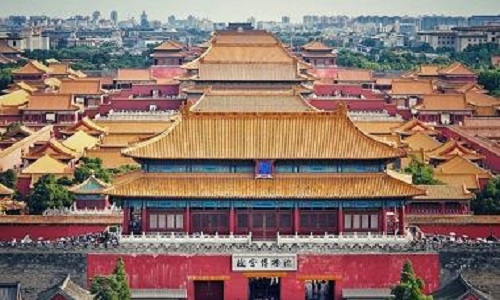 Forbidden City Beijing: Ultimate Tour Guide to China’s Imperial Palace
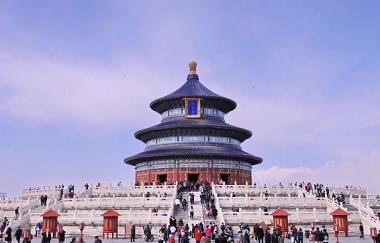 Temple of Heaven
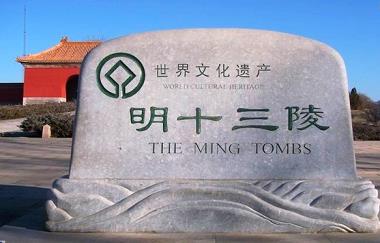 Ming Tombs
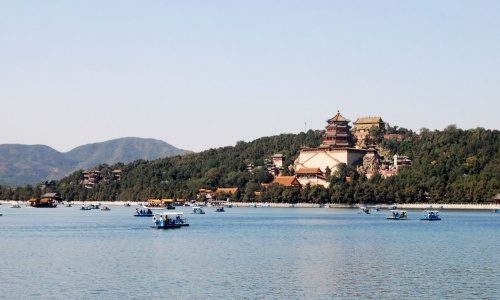 Exploring the Summer Palace Beijing: A Complete Guide to China’s Most Iconic Royal Garden
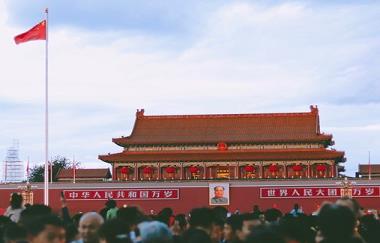 Tiananmen square
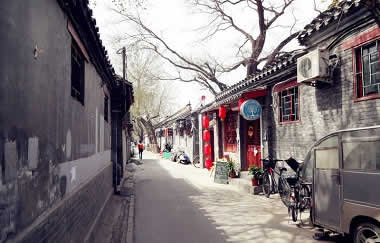 Beijing Hutongs: A Living Tapestry of Time
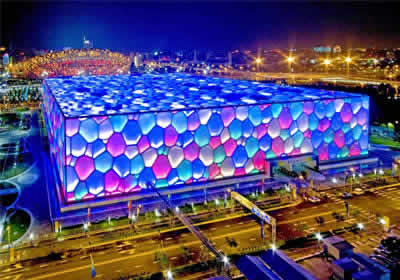 Water Cube
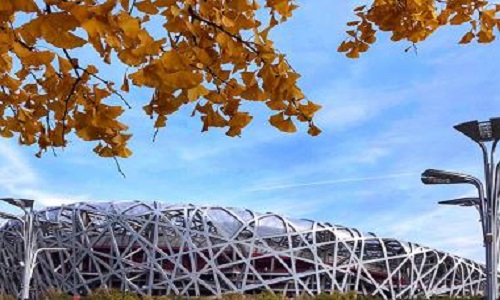 Beijing Bird's Nest – Explore the Iconic National Stadium Beijing
1 to 1 tailor-made service from our professional travel advisors for the most sophisticated
Constantly excellent reviews for attraction, hotel and service Competitive price
Local experts provide quality tours Best selected knowledgeable local guides Authentic local restaurants
7*24 hours available to create you a worry-free tour. No Hidden Fees and absolutely no pressure to buy. Secured









Copyright © 2017 Chinabeijingprivatetour.com All rights reserved. 浙ICP备18056007号-2