Why Visit Beijing
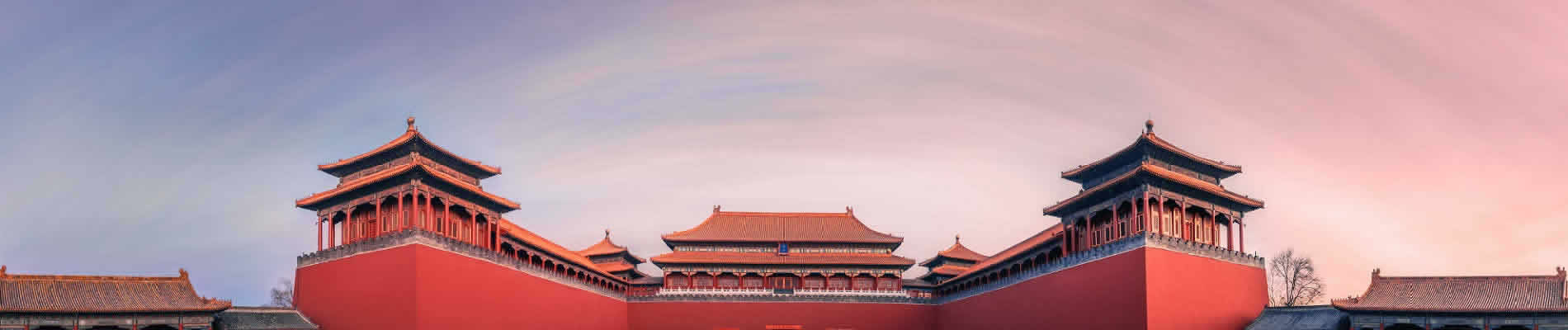
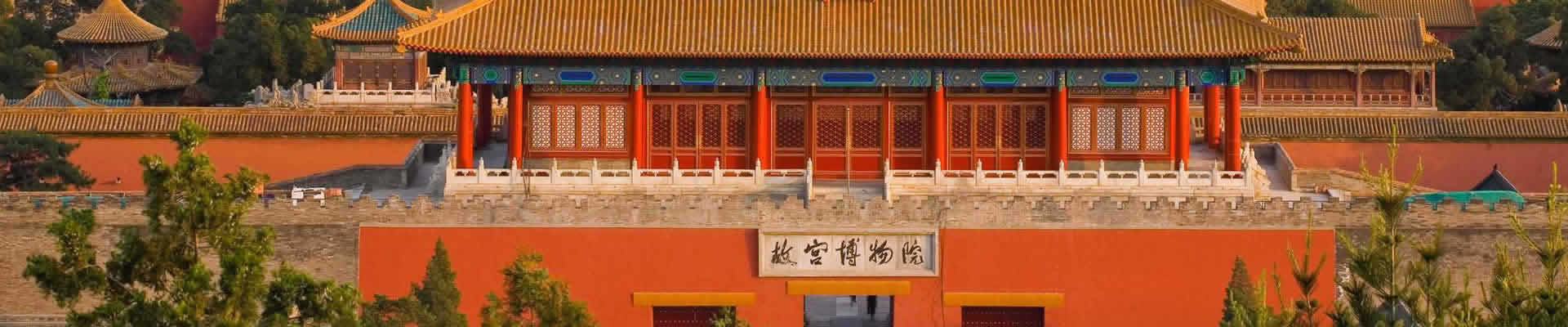
Whether you’re a history buff chasing imperial China’s glory, a food lover craving authentic local flavors, or a traveler curious about the blend of ancient traditions and modern innovation, Beijing has something extraordinary to offer. As the capital of China with over 3,000 years of history and one of the highest densities of UNESCO World Heritage Sites in the world, this city is a masterpiece of culture, history, and urban energy.
A. What You’ll Experience in Beijing
• Imperial China History: Explore centuries-old palaces, temples, and the world-famous Great Wall, all
testaments to China’s rich imperial past.
• UNESCO World Heritage Sites: From the Forbidden City to the Great Wall, the Summer Palace to the Temple of Heaven, Beijing is home to 7 UNESCO sites—one of the highest in any city globally.
• Unmatched Food Culture: Savor Peking duck, traditional hot pot, and street snacks that have been perfected over generations, a feast for every taste bud.
• Modern Metropolis Vibes: Discover trendy art districts like 798, sleek skyscrapers in the Central Business District (CBD), and world-class shopping and entertainment.
B. What This China Beijing Travel Guide Covers
This guide is designed to answer every question an international traveler might have, with step-by-step advice for:
• Stress-free travel preparation (visa, SIM cards, payments, packing).
• Easy transportation around the city and to the Great Wall.
• The best attractions to visit (with insider tips to avoid crowds and scams).
• Authentic local food (where to eat, what to order, how to avoid tourist traps).
• Customizable itineraries for 1, 3, and 5 days (for first-timers, families, and solo travelers).
• Cultural etiquette and safety tips.
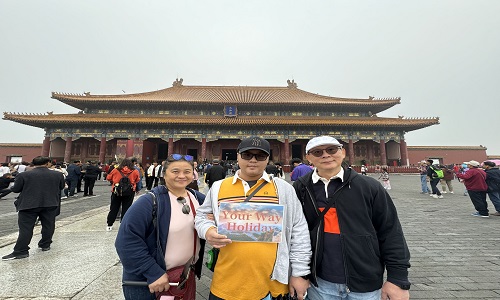 Beijing Day Tour: Experience the Best of the City’s Iconic Landmarks and Rich Heritage
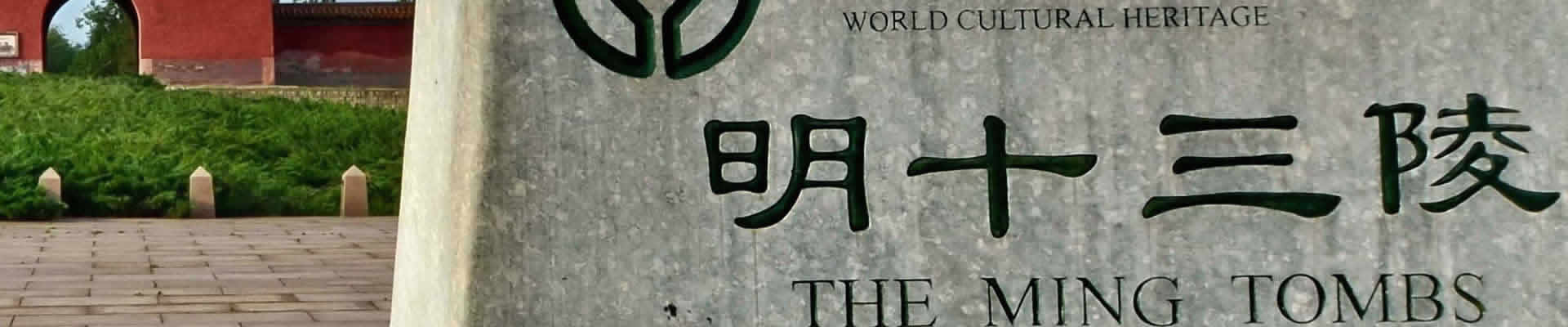
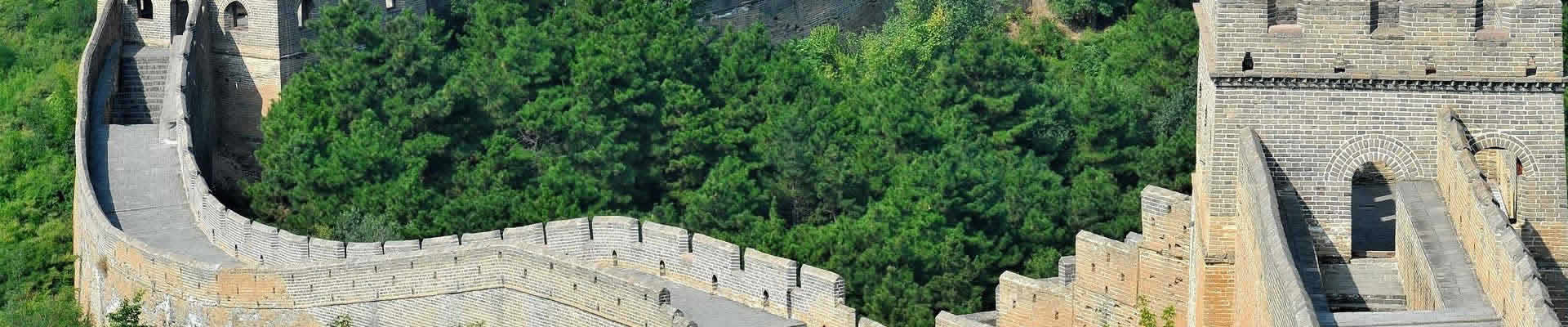
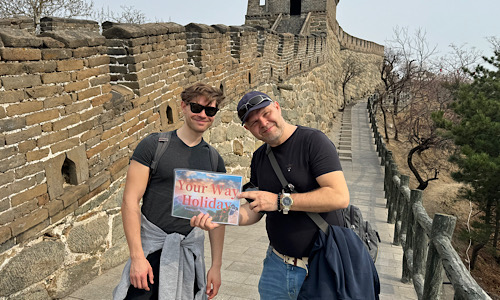 Embark on Beijing Tours: Experience a Full-Day Beijing Great Wall Tour to Badaling Great Wall and Ming Tombs
Beijing Map
A. Beijing Travel Map
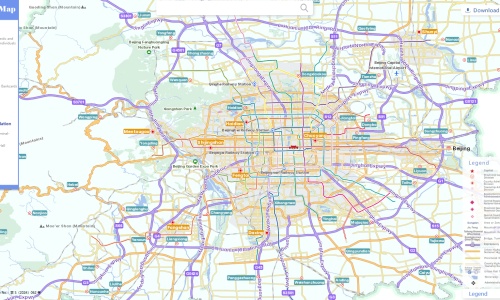
Understanding the layout of Beijing can make travel much easier, especially for first-time visitors. As one of the largest cities in the world, Beijing covers a vast area, but most major attractions are located in several central districts.
To help international visitors navigate the city, Beijing authorities have created an English version of the Beijing City Map. The map includes detailed information about administrative districts, transportation routes, tourist attractions, hotels, commercial areas, and public services. These features make it easier for visitors to plan routes and locate important services while traveling in Beijing.
You can access the official English map here: https://beijing.tianditu.gov.cn/EMap/1/1/EMap.html
B. Beijing Metro Map
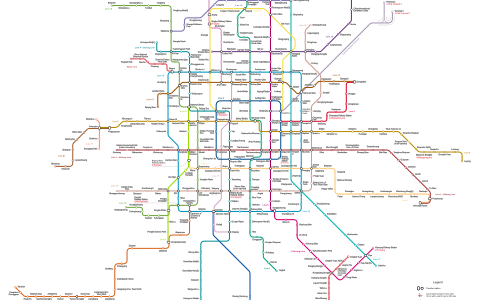
The Beijing Subway is the fastest and most convenient way to travel around the city. The network connects most major tourist attractions, transportation hubs, and commercial districts. Many subway stations provide English signs, ticket machines, and announcements, making the system easy for international travelers to use. Visitors can purchase single tickets at subway stations or use mobile payment and transportation cards for convenient travel.
Some popular attractions are located close to subway stations, for example:
• Forbidden City – Tian’anmen East Station (Line 1)
• Temple of Heaven – Tiantan Dongmen Station (Line 5)
• Summer Palace – Beigongmen Station (Line 4)
• Lama Temple – Yonghegong Lama Temple Station (Line 2 / Line 5)
You can access the map here: https://commons.wikimedia.org/wiki/File:Beijing_Subway_System_Map.svg
Top Attractions in Beijing You Can’t Miss
A. Imperial & Historic Landmarks
1. Forbidden City (The Palace Museum)
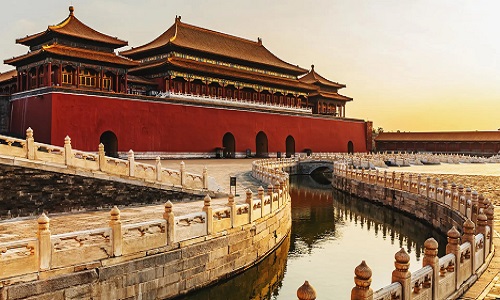
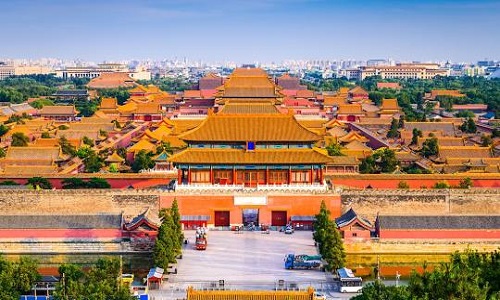
DIFFICULTY: Easy (2/5)
BEST FOR: History lovers, first-time visitors, photography enthusiasts, culture seekers.
ADDRESS: 4 Jingshan Front Street, Dongcheng District, Beijing.
OPENING HOURS: Tuesday to Sunday, Closed Monday(Except National Traditional Holidays)
Opening Hours Last Entry Clock/Treasure Gallery Last Entry
Apr 1 – Oct 31 8:30 AM – 5:00 PM 4:00 PM 4:10 PM
Nov 1 – Mar 31 8:30 AM – 4:30 PM 3:30 PM 3:40 PM
TICKETS:
Price
General Admission(Apr 1 – Oct 31) 60 RMB
General Admission(Nov 1 – Mar 31) 40 RMB
Treasure Gallery 10 RMB
Clock Gallery 10 RMB
• Book 7 days in advance at 8:00 PM CST via official WeChat Mini Program or https://bookingticket.dpm.org.cn/ (passport required).
• Morning tickets: Latest entry 12:00 PM; Afternoon tickets: Earliest entry 11:00 AM.
• No on-site general admission tickets for sale.
HOW TO GET THERE
• Best Route (Skip Crowds): Take Subway Line 8 to Jinyu Hutong Station (Exit C) — Walk 10 mins west to Donghua Gate — Turn left, walk 10 mins along the moat to Meridian Gate (only entrance)
• Alternative: Subway Line 1 to Tian’anmen East/West Station — 15 mins walk to Meridian Gate
• Luggage Storage: Free storage at Meridian Gate (entrance) / Shenwu Gate (exit), retrieve at Shenwu Gate within 2 hours.
TOP HIGHLIGHTS
• Central Axis Halls (Taihe/Zhonghe/Baohe): Iconic imperial ceremonial halls, symbol of imperial power.
• Clock/Treasure Gallery: Priceless imperial relics, intricate ancient clocks and jade/gold artifacts.
• Imperial Garden: Tranquil royal garden with ancient trees, pavilions and classic Chinese landscape design.
• East/West Six Palaces: Former imperial concubines’ residence, quiet corners with rich historical stories.
RECOMMENDED ROUTES
1. Quick Snapshot Tour (2–3 Hours)
• Route: Meridian Gate — Inner Golden Water Bridge — Gate of Supreme Harmony — Hall of Supreme Harmony — Hall of Central Harmony — Hall of Preserving Harmony — Gate of Heavenly Purity — Palace of Heavenly Purity — Hall of Union — Palace of Earthly Tranquility — Imperial Garden — Shenwu Gate (Exit).
• Focus: The iconic central axis—grand halls and imperial gardens that define the Forbidden City’s majesty.
• Pro Tip: Arrive at opening time (8:30 AM) to beat tour groups at the main halls.
2. Essential Tour (4–5 Hours)
• Route: Meridian Gate — Inner Golden Water Bridge — Gate of Supreme Harmony — Hall of Supreme Harmony — Hall of Central Harmony — Hall of Preserving Harmony — Gate of Heavenly Purity — Clock Gallery — Treasure Gallery — Palace of Heavenly Purity — Hall of Union — Palace of Earthly Tranquility — Imperial Garden — Shenwu Gate (Exit).
• Focus: Marvel at intricate imperial clocks (some with automatic movements) and priceless jade, gold, and bronze artifacts.
• Warning: Don’t miss the last entry time for the galleries—set a reminder on your phone!
3. In-Depth Exploration (6–8 Hours)
• Morning Route: Meridian Gate — Inner Golden Water Bridge — Gate of Supreme Harmony — Hall of Military Eminence (Wuying Dian) — Hall of Supreme Harmony — Hall of Central Harmony — Hall of Preserving Harmony — Palace of Compassion and Tranquility (Cining Gong) — Palace of Longevity and Health (Shoukang Gong) — Ice Cellar Restaurant (Lunch).
• Afternoon Route: Gate of Heavenly Purity — Treasure Gallery — Clock Gallery — Palace of Gathered Elegance (Chuxiu Gong) — Yanxi Palace — Hall of Union — Palace of Earthly Tranquility — Imperial Garden — Shenwu Gate (Exit).
• Hidden Gems: Explore lesser-visited halls like Yanxi Palace (known for its unique Western-style architecture) and the serene gardens of Cining Gong.
ACCESSIBILITY NOTE
The Forbidden City is partially wheelchair-friendly, with accessible paths along the central axis and near the Treasure Gallery. Wheelchairs are available for on-site rental—no advance booking required. Some sections have high steps, so assistance may be needed.
TOP PHOTO SPOTS
• Corridors flanking the Hall of Union.
• Stone Lions at the Gate of Supreme Harmony (low angle shot).
• Below the Hall of Supreme Harmony steps (near the sundial).
• Walkways outside Jingren Palace & Yanxi Palace.
• Caisson ceiling of Qianqiu Pavilion in the Imperial Garden.
WHERE TO EAT
Inside the Palace
• Ice Cellar Restaurant: Traditional Beijing dishes, 150-200 RMB/person.
• Wanchun Jinfu Afternoon Tea: Royal-style pastries/coffee, 200-300 RMB/person.
Near the Palace
• Siji Minfu: Top-rated Peking duck, 150-200 RMB/person (English menu).
• Hehe Roubing: Local juicy meat pies, 30-50 RMB/person.
• Jinyu Hutong Station Food Court: Quick bites (noodles/dumplings), 40-60 RMB/person.
SEASONAL HIGHLIGHTS
• Mar-Apr: Spring blossoms (magnolia/lilac/peach) at Zhongcui Palace, Shoukang Palace & Imperial Garden.
• Oct-Nov: Golden ginkgo trees, cool weather and fewer crowds (best travel time).
• Dec-Jan: Snow-covered red walls & golden roofs (magical winter scenery).
• Winter Solstice: Sunlight illuminates the "Zhengda Guangming" plaque in the Palace of Heavenly Purity.
VISITING TIPS
• Wear comfortable walking shoes (8-10 km of walking even for the quick tour).
• Bring sunscreen/hat/sunglasses (little shade in outdoor areas, especially in summer).
• Bottled water costs 3-5 RMB inside; bring an empty water bottle to fill up for free at the palace’s restaurants.
• Prepare some snacks for the tour.
• No flash photography inside halls (protects imperial relics).
• Avoid the central axis between 10:00 AM-2:00 PM to skip peak crowds.
• Multi-language audio guide 40 RMB at Meridian Gate; free English audio via official WeChat Mini Program.
2. Tiananmen Square
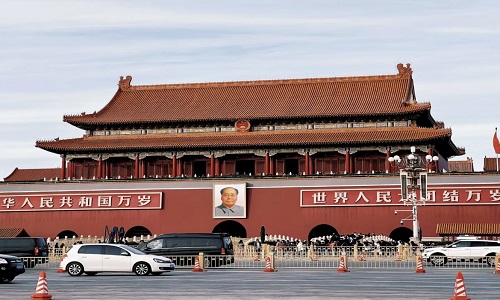
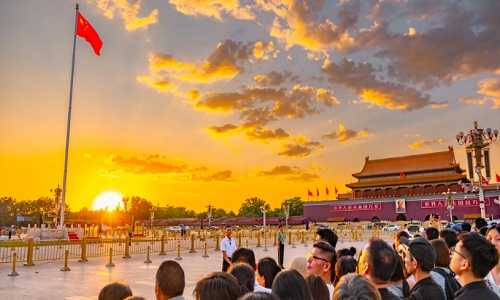
DIFFICULTY: Easy (1/5)
BEST FOR: First-time visitors, history lovers, photographers, culture seekers.
ADDRESS: Chang’an Avenue, Dongcheng District, Beijing, China.
OPENING HOURS: Daily: Approximately 5:00 AM – 10:00 PM (Reservation required)
Visiting Period Time
Flag Raising Around sunrise
Morning 8:00 AM – 12:00 PM
Afternoon 12:00 PM – 4:00 PM
Evening After 4:00 PM
• For the most memorable experience, many travelers choose to arrive before sunrise to watch the daily flag-raising ceremony performed by the honor guard of the People’s Liberation Army.
TICKETS:
General Admission: Free (reservation required).
• Visitors must book 1–7 days in advance via the official WeChat mini-program: Tiananmen Square Reservation.
• Passport information is required for international visitors.
Reservation Steps
1. Open WeChat and search for Tiananmen Square Reservation;
2. Enter your personal details (passport number required);
3. Choose your preferred date and time slot;
4. Submit the reservation and save your QR code for entry.
Tips for Non-Chinese Speakers
• Use WeChat’s built-in translation feature.
• Ask hotel staff or a local guide to help with the booking if needed.
• Take a screenshot of your reservation QR code in case of poor internet connection.
HOW TO GET THERE
• Subway (Recommended): Take Subway Line 1 to Tiananmen East Station (Exit C) which is the closest to the National Museum of China or to Tiananmen West Station which is the Closest to the Great Hall of the People.
• Taxi / Ride-Hailing: drop off at Zhengyi Road No.5 (near security entrance) or Qianmen Area (south side of the square).
SECURITY CHECK PROCESS
Visitors must pass three security checks before entering the square.
1. Identity Verification
Near subway exits, visitors must scan their ID or passport and complete facial recognition.
2. Reservation Check
Staff will verify your reservation QR code.
3. Security Screening
All bags must go through an X-ray security scan similar to airport security.
Pro Tip: Carry as few belongings as possible to pass security faster.
TOP HIGHLIGHTS
• Tiananmen Gate (Gate of Heavenly Peace): Located at the north end of the square, Tiananmen Gate is the historic entrance to the Forbidden City and one of the most recognizable landmarks in China.
• Monument to the People’s Heroes: A 38-meter granite monument built in 1958 to commemorate those who sacrificed their lives in China’s revolutionary history.
• Chairman Mao Memorial Hall: Located on the southern side of the square, the memorial hall houses the preserved body of Mao Zedong and is open to visitors in the morning.
• National Museum of China: One of the largest museums in the world, featuring thousands of artifacts spanning China’s history from ancient civilizations to modern times.
• Great Hall of the People: A monumental government building used for national political meetings and ceremonies.
RECOMMENDED ROUTES
1. Quick Tour (1–2 Hours)
• Route: Tiananmen East Station — Security Check — Tiananmen Square — Monument to the People’s Heroes — Tiananmen Gate — Exit near Forbidden City.
• Focus: Classic photos of the square and views of Tiananmen Gate.
• Pro Tip: Visit early morning or late evening for better lighting and fewer crowds.
2. Classic Central Axis Tour (2–3 Hours)
• Route: Qianmen Gate — Tiananmen Square — Monument to the People’s Heroes — Tiananmen Gate — Forbidden City.
• Focus: Walk along the historic Beijing Central Axis, one of the most important cultural landmarks in China.
• Pro Tip: This route connects seamlessly with a visit to the Forbidden City.
3. Extended Exploration (3–4 Hours)
• Route: Tiananmen Square — Chairman Mao Memorial Hall — National Museum of China — Tiananmen Gate — Forbidden City.
• Focus: Combine political landmarks with a deep dive into Chinese history.
• Warning: Chairman Mao Memorial Hall only opens in the morning, so plan accordingly.
ACCESSIBILITY NOTE
Most areas of Tiananmen Square are wheelchair accessible, with wide paved walkways and ramps. However, security checks and long walking distances may require additional time.
TOP PHOTO SPOTS
• The center of Tiananmen Square with the Monument to the People’s Heroes aligned with Tiananmen Gate.
• Tiananmen Gate from the square (best at sunrise).
• The southern side near Qianmen Gate for wide panoramic shots.
• Night views along Chang’an Avenue when the buildings are illuminated.
WHERE TO EAT
Inside the Palace
• Small kiosks selling drinks and snacks, 10–20 RMB/person.
Near the Palace
• Quanjude Roast Duck (Qianmen) – famous Beijing roast duck restaurant, 200–300 RMB/person.
• Bianyifang Roast Duck – one of the oldest roast duck restaurants in Beijing, 150–250 RMB/person.
• Dashilan Street Food Area – local snacks and traditional Beijing foods, 30–80 RMB/person.
SEASONAL HIGHLIGHTS
• National Day Holiday (Oct): Giant flower displays decorate the square.
• Winter (Dec–Feb): Fewer tourists and dramatic snowy views of Tiananmen Gate.
VISITING TIPS
• Bring your passport — identity checks are required.
• Arrive at least 1 hour before sunrise if you want to watch the flag-raising ceremony.
• The square is very large and exposed—bring water, sunscreen, and comfortable walking shoes.
• Some items are restricted, including lighters and large bags.
• If you plan to visit the Forbidden City, enter from Meridian Gate immediately after visiting the square to save time.
3. Temple of Heaven
DIFFICULTY: Easy (2/5)
BEST FOR: History lovers, culture seekers, photography enthusiasts, nature lovers, casual walkers.
ADDRESS: No.7, Tiantan'neidongli, Dongcheng District, Beijing.
OPENING HOURS: Tuesday to Sunday, Closed Monday(Except National Traditional Holidays).
Park Gate Key Scenic Spots
Apr 1 – Oct 31 6:00 AM – 10:00 PM 8:00 AM – 6:00 PM
Nov 1 – Mar 31 6:30 AM – 10:00 PM 8:00 AM – 5:00 PM
• Last entry for the park gate is 9:00 PM and for key scenic spots is 5:30 PM (Apr 1 - Oct 31) and 4:30 PM (Nov 1 - Mar 31).
Special Lighting for Hall of Prayer for Good Harvests
• Only open on Fridays, Saturdays & major Chinese holidays.
• Lights on at dusk (synchronized with municipal street lights), off at 9:00 PM.
• Only park gate ticket needed for lighting view (scenic spots closed at night).
TICKETS:
Apr 1 - Oct 31 Nov 1 - Mar 31
Admission Ticket (park only) 15 RMB 10 RMB
Combined Ticket (park + all key spots) 34 RMB 28 RMB
Single Key Spots Ticket 20 RMB 20 RMB
Divine Music Administration 10 RMB 10 RMB
• Foreign visitors: Book via WeChat Official Account Temple of Heaven Official Ticketing Platform with passport or Chinese permanent residence permit.
• On-site purchase: Available at ticket windows (passport required).
• Entry: Scan QR code (online booking) or ID/passport directly; no physical ticket needed.
• Pro tip: Buy combined ticket to save time (no separate queuing for single spot tickets, avoid peak season ticket limits).
HOW TO GET THERE
• North Gate (Least crowded, best for photography): Line 7, Qiaowan Station (ride a shared bike for 5 mins to the gate—closest to Hall of Prayer for Good Harvests).
• East Gate (Most convenient, wheelchair-friendly): Line 5, Tiantandongmen Station (Exit A) – 10 mins walk to the gate, perfect for visitors with wheelchairs.
• West Gate (Close to afternoon tea): Line 8, Tianqiao Station (Exit C) – steps to Tiantan Fuyan Afternoon Tea.
TOP HIGHLIGHTS
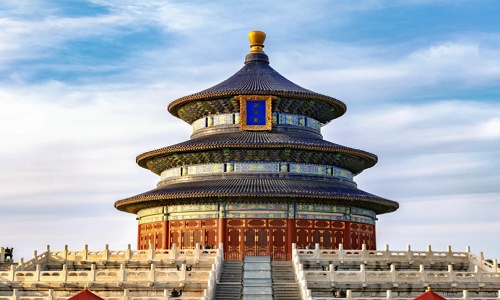
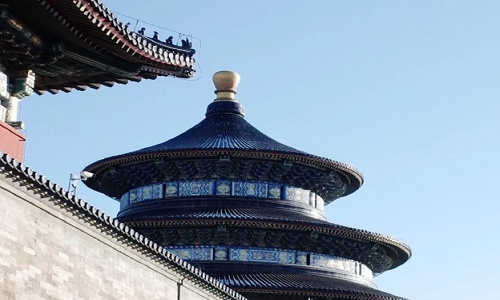
• Hall of Prayer for Good Harvests: Iconic circular imperial temple with golden roof, no nails in construction—symbol of ancient Chinese architecture, the most photographed spot in the park.
• Echo Wall: Circular wall with amazing acoustic effects—whispers on one side can be heard clearly on the other (find a quiet spot to avoid crowd noise).
• Circular Mound Altar: Ancient imperial altar for heaven worship, with "round heaven and square earth" design, white marble platform in the center.
• Danbi Bridge: 360-meter long imperial road connecting Hall of Prayer and Circular Mound Altar, the "holy road" of the temple.
• Imperial Fasting Palace: Where emperors fasted before heaven worship, with quiet courtyards and historical exhibitions.
• Divine Music Administration: Ancient royal music hall, displays traditional ritual musical instruments and performances.
RECOMMENDED ROUTES
1. Quick Essence Tour (1.5 Hours, Most Popular)
• Route: North Gate — Hall of Prayer for Good Harvests — Imperial Vault of Heaven & Echo Wall — Circular Mound Altar — South Gate.
• North Gate entry: direct access to Hall of Prayer, classic photography spots right after entry.
2. In-Depth Tour (3 Hours, Full Exploration)
• Route: East Gate — Seven Star Stones — 72 Corridor — Hall of Prayer for Good Harvests — Danbi Bridge — Imperial Vault of Heaven & Echo Wall — Circular Mound Altar — Imperial Fasting Palace — Double Ring Pavilion — West Gate.
• Experience local life: see elderly Beijingers practicing tai chi/singing Peking Opera in the morning.
3. Seasonal Custom Routes
• Spring: West Gate — Northwestern Outer Part — Hall of Prayer for Good Harvests — Danbi Bridge — Imperial Fasting Palace — Divine Music Administration — Imperial Vault of Heaven & Echo Wall — South Gate.
• Summer: West Gate — Flower Garden — Divine Music Administration — Imperial Fasting Palace — Imperial Vault of Heaven & Echo Wall — Danbi Bridge — Hall of Prayer for Good Harvests — East Gate.
• Autumn: East Gate — Northeastern Outer Part — Hall of Prayer for Good Harvests — Danbi Bridge — Imperial Vault of Heaven & Echo Wall — Imperial Fasting Palace — Divine Music Administration — North Gate.
• Winter: East Gate — 72 Corridor — Hall of Prayer for Good Harvests — Imperial Fasting Palace — Divine Music Administration — Imperial Vault of Heaven & Echo Wall — South Gate.
ACCESSIBILITY NOTE
• East Gate has full barrier-free access; smooth paths along the 72 Corridor and Danbi Bridge (ramp for thresholds).
• Hall of Prayer for Good Harvests, Imperial Vault of Heaven (Echo Wall) have no barrier-free access (only distant viewing).
• Circular Mound Altar has barrier-free ramps but slightly uneven roads (assistance recommended for manual wheelchairs).
TOP PHOTO SPOTS
• Hall of Prayer for Good Harvests main platform imperial road (central full view).
• Through the gate of Imperial Heaven Hall/Gu Xi Men/Qi Wu Men (framed view of Hall of Prayer—iconic shot).
• Qi Wu Men (reflection of Hall of Prayer in water, "heavenly palace" effect).
• West side of Hall of Prayer (clean full view with no crowds).
• Northeast/Northwest outside Hall of Prayer (portrait/close-up with red walls, lawn and pavilions—Chinese romantic style).
• Red wall on the left of Imperial Fasting Palace entrance (celebrity-style classic red wall shot).
• Imperial Fasting Palace main gate (red gate + white magnolia blossoms in spring).
• South of Imperial Fasting Palace main hall (white magnolia waterfalls + red walls + round arch).
• Night shot: Park paths near Hall of Prayer (lighting view on Fri/Sat/holidays, soft light on red walls and golden roof).
WHERE TO EAT
Inside the Palace
• Tiantan Fuyan (Weat Gate/East Gate): Top pick imperial-style afternoon tea & authentic Beijing cuisine (fewer crowds than the Forbidden City’s afternoon tea, 10 mins queue even on weekends). Must-try: Red Plum Princess Smile (bayberry & lychee drink), Fu Character Latte, Persimmon Pea Flour Cake, Rose Cake.
• Qigu-Tiantan Weidao Restaurant: Traditional Beijing snacks and light meals.
• Tiantan Fuyin Beverage Shop (East 2nd Gate): Drinks and light snacks.
Near the Palace
• Lao Ciqikou Douzhi (Tiantan Branch): 700m away, iconic old Beijing snack shop, 18 RMB/person – try Douzhi (soybean milk), Jiaoquan (fried dough ring), Pea Flour Cake.
• Da Hai Wan Jing Cuisine (Tianqiao): 1km away, authentic Beijing food, 66 RMB/person – Zhajiangmian (black bean sauce noodles), Bao Du (blanched tripe).
• Nanmen Shabu (Tiantan Branch): 900m away, classic Beijing copper pot hot pot, 101 RMB/person – hand-cut lamb, sesame sauce dip.
VISITING TIPS
• Wear comfortable walking shoes (flat roads, perfect for casual walking).
• Bring an empty water bottle (free water refills at park rest areas); bottled water costs 3-5 RMB inside.
• Visit early in the morning (before 9:00 AM) to avoid crowds and experience local life.
• Photography pro tip: Walk into the wooded areas for quiet shots, even spot cute squirrels by chance.
• No flash photography inside historical halls; respect cultural relics.
4. Prince Gong's Mansion
DIFFICULTY: Easy (2/5)
BEST FOR: History lovers, literature enthusiasts (Dream of the Red Chamber fans), architecture admirers, photography enthusiasts, culture seekers.
ADDRESS: No.17, Qianhai West Street, Xicheng District, Beijing.
OPENING HOURS: Daily: 8:30 AM – 5:00 PM (Last entry: 4:10 PM).
• Closed every Monday (except statutory public holidays).
TICKETS: General Admission: 40 RMB
Important Booking Notes
• Book via WeChat Mini Program Prince Gong's Mansion Museum Official Ticketing (supports passport registration).
• On-site ticket purchase available at ticket windows (passport required).
• Entry: Scan QR code (online booking) or present passport directly; no physical ticket needed.
• Pro tip: Book 1–3 days in advance during peak seasons (spring blossom period, public holidays) to avoid on-site queues.
HOW TO GET THERE
• Take Subway Line 6 to Beihai North Station (Exit B, Northeast Exit) – walk 200 meters along Sanzuoqiao Hutong to Gate No.1 (main entrance) or 300 meters along Longtoujing Street to Gate No.1.
TOP HIGHLIGHTS
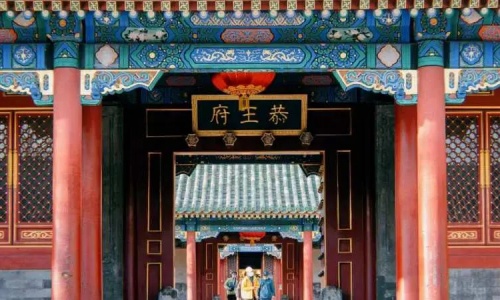
• Silver Peace Hall (Yin'an Dian): The main building of the mansion, known as "Silver Throne Hall" with green glazed roof tiles, showcasing imperial-style grandeur.
• Xijin Studio (Xijin Zhai): Exquisitely carved nanmu partitions, modeled after the Forbidden City's Ningshou Palace by Heshen (the mansion's first owner).
• Rear Screen Building (Houzhao Lou): 100-meter-long building with unique "colorful windows" (bat and catfish designs symbolizing "blessings and abundance"), often compared to "Zhuijin Building" in Dream of the Red Chamber.
• Lone Joy Peak (Dule Feng): A rare stone discovered by Heshen during his southern tour, resembling Guanyin holding a child (known as "Baby-Giving Guanyin Stone").
• Bat Pond (Fu Chi): A "treasure basin" with only an inlet (no outlet), symbolizing "wealth accumulation".
• Secret Cloud Cave (Miyun Dong): Home to the "No.1 Blessing Under Heaven" – a calligraphy work by Emperor Kangxi, embodying "more fields, more sons, more talent, more longevity".
• Grand Opera House: China's only fully enclosed traditional opera house, with nine vats buried under the stage for acoustic enhancement (no microphones needed).
• Dream of the Red Chamber Exhibition: Permanent exhibition showcasing Qing Dynasty editions of the novel, paintings, and cultural relics linking the mansion to the story.
RECOMMENDED ROUTES
1. Quick Snapshot Tour (1 Hour, Most Efficient)
• Route: Gate No.1 — Silver Peace Hall — Jiale Hall — Baoguang Hall — Xijin Studio — Rear Screen Building — Western-style Gate — Bat Pond — Secret Cloud Cave (No.1 Blessing) — Grand Opera House — Gate No.2.
• Focus: Core landmarks and cultural highlights; perfect for time-pressed travelers.
• Pro Tip: Arrive at opening time (8:30 AM) to avoid crowds at Secret Cloud Cave.
2. Cultural Exploration Tour (2 Hours, In-Depth)
• Route: Gate No.1 — Silver Peace Hall — Jiale Hall — Baoguang Hall — Xijin Studio — Baoyue Building — Rear Screen Building — Western-style Gate — Lone Joy Peak — Bat Pond — Anshan Hall — Secret Cloud Cave — Inviting Moon Platform — Grand Opera House — Peony Courtyard — Bamboo Courtyard — Qinqiu Pavilion — Ledao Hall — Duofu Xuan — Gate No.2.
• Focus: Full exploration of mansion and garden, including literary and architectural details.
• Don't miss: Duofu Xuan (where Prince Gong received foreign envoys, with a plaque written by Empress Dowager Cixi).
3. Literature & Garden Tour (3 Hours, For Red Chamber Fans)
• Route: Gate No.1 — Main Courtyards — Dream of the Red Chamber Exhibition — Rear Screen Building — Garden Area — Western-style Gate — Bat Pond — Anshan Hall — Grand Opera House — Bamboo Courtyard — Mountain Paths — Gate No.2.
• Focus: Links between the mansion and Dream of the Red Chamber; explore garden landscapes resembling "Daguanyuan".
• Pro Tip: Rent an audio guide to learn about redology research and historical anecdotes.
ACCESSIBILITY NOTE
• The mansion has numerous thresholds and uneven surfaces.
• Wheelchair users require assistance to navigate between buildings (no dedicated ramps for most thresholds).
• Not fully wheelchair-friendly; recommend alternative attractions for visitors with mobility impairments.
TOP PHOTO SPOTS
• Quyuan Courtyard: Snowy roof and trees (less crowded, near exit).
• Square Pond Water Pavilion (South Side): Panoramic garden views (avoid north side for backlighting).
• Bat Pond: Serene pond with towering trees (stunning in snow).
• Rear Screen Building Windows: Bat and catfish window designs with sunlight filtering through.
• Grand Opera House Interior: Intricate vine carvings on beams (soft natural light).
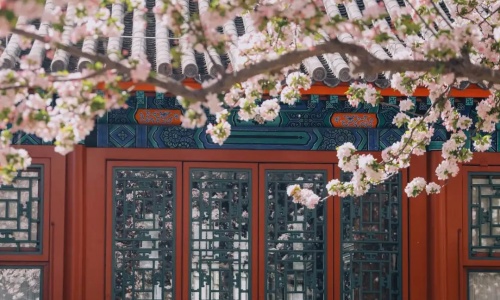
• Peony Courtyard: Spring blossoms against traditional architecture.
• Secret Cloud Cave Entrance: Traditional stone archway with cultural significance.
WHERE TO EAT
• Juer Renjia (Hutong Cuisine): 50 RMB/person – famous braised pork rice (unlimited refills), red bean double-skin milk; hidden in Nanluoguxiang Hutong.
• Manhengji Halal Hot Pot: 117 RMB/person – top-rated copper pot hot pot, hand-cut lamb, sesame paste pancake (popular, long queues).
• Menku Hutong Centennial Luzhu: 53 RMB/person – authentic Beijing luzhu (stewed intestines), fried churros, zhajiangmian.
• Yaoji Chaogan Shop: 32 RMB/person – traditional chaogan (stewed liver), pork and chive buns, fried churros
SEASONAL HIGHLIGHTS
• Spring (Mar-Apr): Blossom season – crabapple (mid-Apr, East Courtyard/Rear Screen Building), lilac (mid-Apr, Cross Courtyard/Ledao Hall), apricot/plum (late Mar, garden paths), magnolia (late Mar, Cross Courtyard).
• Summer (Jun-Aug): Lush green gardens – cool bamboo courtyard and mountain paths, ideal for escaping the heat.
• Autumn (Sep-Nov): Golden maple leaves, clear skies – perfect for photography of traditional architecture against autumn foliage.
• Winter (Dec-Feb): Snow-covered courtyards and roofs – magical scenery at Quyuan Courtyard and Bat Pond (note special Spring Festival closing days).
VISITING TIPS
• Wear comfortable walking shoes (many thresholds and stone paths).
• Avoid weekends during spring blossom season (crowd peak); arrive early for peaceful exploration.
• Multi-language audio guides available for rent at the entrance (40 RMB); free English explanations via official WeChat Mini Program.
• The mansion is often called "Half of Qing Dynasty History" – take time to appreciate the blend of imperial architecture and private garden design.
B. The Great Wall Near Beijing: Complete Guide to 3 Sections (Badaling, Mutianyu, Simatai)
OVERVIEW: The Great Wall of China—one of the Seven Wonders of the World—stretches over 21,000 km across China. Near Beijing, three sections stand out for international visitors: Badaling (classic and convenient), Mutianyu (scenic and less crowded), and Simatai (primitive and night-view friendly). Each offers unique experiences, from hassle-free family trips to adventurous hikes. This guide compares their key features and provides detailed play strategies for seamless exploration.
BADALING VS MUTIANYU VS SIMATAI: WHICH GREAT WALL SHOULD YOU VISIT?
Section Best for Highlights Downsides
Badaling First-time visitors, Most famous section, best infrastructure, Very crowded
families high-speed train access
Mutianyu Photographers, Scenic views, fewer crowds, Requires transfer or tour
couples, families famous toboggan slide
Simatai Hikers, Original wild wall, only section Far from city, steep terrain
adventure travelers open for night tours
1. Badaling Great Wall (Classic & Convenient)
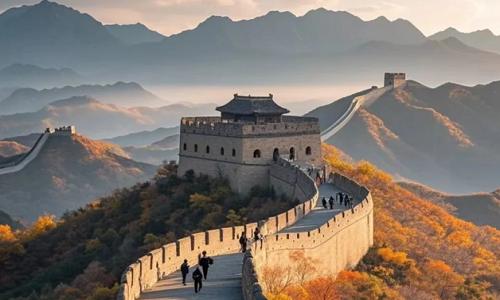
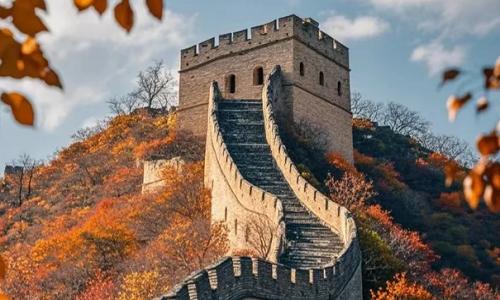
DIFFICULTY: Easy (2/5)
BEST FOR: First-time visitors, families with seniors/kids, time-pressed travelers.
ADDRESS: Badaling Town, Yanqing District, Beijing.
OPENING HOURS:
Opening Hours Last Entry
Apr 1 – Oct 31 6:30 AM – 7:00 PM 6:00 PM
Nov 1 – Mar 31 7:30 AM – 5:30 PM 4:30 PM
Night Tour (Fri, Sat & public holidays) 6:30 PM – 9:30 PM 8:30 PM
• For night tour, only North 1-North 4 Watchtowers open.
TICKETS:
• General Admission: 40 RMB (Apr 1-Oct 31) | 35 RMB (Nov 1-Mar 31).
• Cable Car: One-way 100 RMB | Round-trip 140 RMB.
• Chairlift (Ground Cable Car): One-way 100 RMB | Round-trip 140 RMB.
• Discounts: Free for under 18 & over 60; 50% off for college students (valid student ID required)
• Booking: Reserve via WeChat Mini Program Badaling Great Wall Official Ticketing (passport accepted) or on-site (no advance booking needed for general admission)
HOW TO GET THERE
• High-Speed Rail (Top Choice): Take train from Beijing North Station/Qinghe Station to Badaling Great Wall Station (20-30 mins direct), 10 mins walk to cable car entrance.
• Bus/Shuttle: Bus 877 from Deshengmen Station (12 RMB, 1.5 hrs direct, cash only); or Badaling Shuttle from Qianmen (80 RMB round-trip, includes guide, drops off at Bird's Nest/Water Cube on return).
• Self-Driving: Navigate to "Guntiangou/P1 Parking Lot" (20 RMB/day), arrive before 7:30 AM on weekends to avoid shuttle bus detours.
TOP HIGHLIGHTS
• Heroes' Slope (North 8th Watchtower): The most iconic spot of Badaling, offering panoramic views of the winding Great Wall—perfect for capturing the "Great Wall winding like a dragon" scene.
• Heroes' Monument: Engraved with Mao Zedong's famous line "He who has never been to the Great Wall is not a true hero"—a must-take photo for first-time visitors.
• Dual Cable Car Lines: North Line for adventure (steeper, more views) and South Line for leisure (gentler, fewer crowds), catering to different traveler needs.
• Historical Sites: Supplementary attractions like the Great Wall Forest of Steles, Qi Jiguang Garden, and Chuandao Ancient City, ideal for history buffs extending their trip.
• Night Light Show: Warm yellow lights outline the wall's contour, creating a magical atmosphere—paired with occasional traditional costume parades for immersive experiences.
RECOMMENDED ROUTES
1. North Line (Classic, 3-4 hrs)
• Route: Cable car to North 7th Watchtower — Walk to North 8th Watchtower (Heroes' Slope, must-visit) — Hike to North 12th Watchtower (steep and atmospheric) — Return via chairlift from North 4th Watchtower.
• Highlight: Photo spot at North 4th Watchtower ("Heroes' Stone"), panoramic views from North 8th Watchtower.
2. South Line (Easy, 1.5-2 hrs)
• Route: Cable car to South 4th Watchtower — Walk to South 7th Watchtower — Return via cable car.
• Highlight: Gentle terrain for families/seniors; "Most Beautiful Arrow Window" at South 4th Watchtower (apricot blossoms in spring); Heroes' Monument at South 1st Watchtower.
ACCESSIBILITY NOTE
• Fully wheelchair-friendly with complete barrier-free facilities, including ramps, tactile paving, accessible parking spaces, low ticket windows, and accessible restrooms.
• Wheelchairs are available for free rental at the visitor center (valid ID deposit required).
• Free shuttle buses transport visitors from the parking lot to the entrance, reducing walking distance for seniors and people with mobility impairments.
• Both North and South Line cable cars are wheelchair-accessible, with staff assistance available for boarding.
TOP PHOTO SPOTS
• North 4th Watchtower: Classic "Heroes' Stone" photo with the Great Wall as the backdrop—avoid midday harsh light for softer shots.
• North 8th Watchtower (Heroes' Slope): Highest point of Badaling, offering unobstructed views of the wall stretching into the distance.
• South 4th Watchtower: "Most Beautiful Arrow Window"—frames the surrounding mountains perfectly, especially stunning with apricot blossoms in spring.
• Night Tour Photo Spot: North 2-North 3 Watchtowers—capture the illuminated wall against the dark sky, with distant mountain silhouettes adding depth.
• Cable Car Cabin: Shoot downward for a bird's-eye view of the wall's undulating shape and dense forest coverage.
WHERE TO EAT
On-site Options
• Restaurants near the entrance offer local dishes like braised lamb and Beijing noodles (100-150 RMB per person); convenience stores sell snacks and water (affordable but limited variety).
Nearby Local Eats (5-10 mins drive)
• Badaling Farmhouse Restaurants: Serve home-cooked dishes like stewed chicken with mushrooms and stir-fried wild vegetables (80-120 RMB per person).
• Qinglongxia Restaurant: Specializes in Yanqing local delicacies like roasted whole lamb and preserved vegetable cakes (150-200 RMB per person).
SEASONAL HIGHLIGHTS
• Spring (Mar-May): Apricot blossoms and peach blossoms bloom along the wall, creating a romantic contrast with the gray masonry—best viewed at South 4th Watchtower.
• Summer (Jun-Aug): Lush green vegetation covers 70% of the area, offering natural shade—ideal for morning/evening hikes to avoid the midday heat.
• Autumn (Sep-Nov): Golden ginkgo leaves and red maple leaves line the trails, with clear skies for photography—peak beauty in mid-October.
• Winter (Dec-Feb): Snow-covered walls and mountains create a fairy-tale scene—less crowded, but wear warm layers (temperatures can drop to -10°C).
VISITING TIPS
• Eat a full meal before arrival (food on the wall is overpriced: 12 RMB for a sausage).
• Wear non-slip shoes (many 45° inclined steps).
• Avoid cable car queues by arriving before 9:00 AM or after 2:00 PM.
• Skip "Heroes' Certificates" at the entrance (15 RMB fake certificates; official ones are free at North 8th Watchtower).
2. Mutianyu Great Wall (Scenic & Less Crowded)
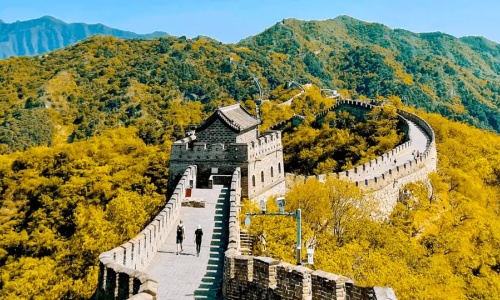
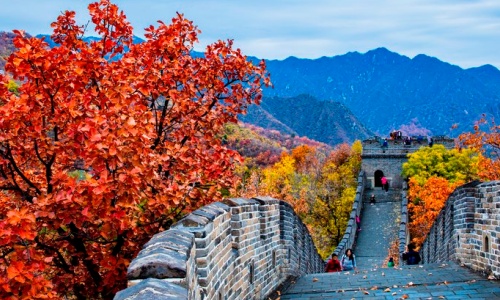
DIFFICULTY: Moderate (3/5)
BEST FOR: Photography enthusiasts, couples, families avoiding crowds, adventure seekers.
ADDRESS: Mutianyu Town, Huairou District, Beijing.
OPENING HOURS:
Opening Hours Last Entry
Apr 1 – Oct 31 7:30 AM – 6:30 PM 5:30 PM
Nov 1 – Mar 31 8:00 AM – 5:30 PM 4:30 PM
• Last ticket sale: 1 hour before closing.
TICKETS:
• General Admission: 45 RMB (Apr 1 – Oct 31) | 35 RMB (Nov 1 – Mar 31).
• Mandatory Shuttle Bus: 15 RMB per person (from parking lot to entrance)
• Cable Car (14th Watchtower): Round-trip 140 RMB (closed cabin, suitable for seniors/kids).
• Chairlift + Alpine Slide (6th Watchtower): Round-trip 140 RMB (adventurous, popular for photos).
• Discounts: Free for under 18 & over 60; no discounts for international adults
• Booking: Reserve 1-3 days in advance via WeChat Mini Program or international platforms for shuttle bus packages.
HOW TO GET THERE
• Direct Shuttle (Highly Recommended): Take Mubus/Zanbus from Dongzhimen/Chaoyangmen/Dengshikou.
7:30 AM – 10:00 AM departures, 14:30 PM – 16:30 PM returns;
Ticket: 80 RMB per adult, 50% off for kids, free for under 3;
Includes round-trip transfer + general admission + shuttle bus (zero transfers, hassle-free).
• Public Transport (Not Recommended): Subway + bus transfers (2+ hrs total).
• Self-Driving: Exit 13 of Jingcheng Expressway (1.5 hrs), parking fee 20 RMB/day.
TOP HIGHLIGHTS
• Zhengguan Tai (4th Watchtower): Unique architecture with three connected watchtowers—rare in Great Wall sections, showcasing Ming Dynasty military design ingenuity.
• Alpine Slide: 1,580-meter-long slide descending from 6th Watchtower—safe yet thrilling, with brakes for speed control (popular with all age groups).
• 20th Watchtower (Heroes' Slope): Highest point of Mutianyu, offering 360° views of the forest-covered mountains and winding wall.
• Multi-Language Support: Comprehensive English/Japanese/Korean signs and audio guide explanations, eliminating language barriers for international visitors.
• Low Crowd Density: Even in peak season, the number of visitors is only 1/3 of Badaling, allowing for peaceful exploration and unobstructed photos.
RECOMMENDED ROUTES
1. West Line Panorama (Cable Car, 2-3 hrs)
• Route: Cable car to 14th Watchtower — Walk to 10th-12th Watchtowers (panoramic "dragon winding" views) — Hike to 20th Watchtower (Heroes' Slope) — Return via cable car.
2. East Line Secluded (Chairlift + Slide, 2 hrs)
• Route: Chairlift to 6th Watchtower — Walk to 4th Watchtower (Zhengguan Tai) — Hike to 1st Watchtower (low crowds) — Slide down the alpine slide.
ACCESSIBILITY NOTE
• Partially wheelchair-friendly: The shuttle bus and cable car (14th Watchtower) are accessible, with ramps at the entrance and cable car stations.
• Wheelchairs are available for rental at the visitor center (50 RMB/day + ID deposit).
• The central section (14th-20th Watchtowers) has relatively gentle terrain, but other areas have steep steps and uneven paths—assistance is required for wheelchair users.
• Senior citizens and travelers with limited mobility are advised to use the cable car for round trips and avoid hiking beyond the 20th Watchtower.
TOP PHOTO SPOTS
• 10th Watchtower: Captures the "dragon's back" view of the wall winding through green mountains—best at golden hour (1 hr before sunset).
• 14th Watchtower: Cable car departure point, offering wide-angle shots of the wall stretching into the distance.
• 20th Watchtower (Heroes' Slope): Highest vantage point, with unobstructed views of Mutianyu's forested landscape (90% vegetation coverage).
• Zhengguan Tai (4th Watchtower): Shoot the three connected watchtowers from a low angle to emphasize their grandeur.
• Alpine Slide: Capture action shots while descending—smile for the camera at the designated photo points (prints available for purchase at the bottom).
WHERE TO EAT
On-site Options
• Mutianyu Restaurant (near entrance): Serves traditional Beijing dishes like braised pork ribs and fried noodles (100-150 RMB per person).
• Snack Stalls: Offer local treats like roasted sweet potatoes and chestnuts (10-20 RMB per serving).
Nearby Local Eats (10-15 mins drive)
• Huairou Farmhouse: Specializes in local delicacies like stewed trout and wild vegetable pancakes (80-120 RMB per person).
• Mutianyu Villa Restaurant: High-end option with panoramic mountain views, serving creative Chinese cuisine (200-300 RMB per person).
SEASONAL HIGHLIGHTS
• Spring (Mar-May): Peach blossoms, pear blossoms, and lilacs bloom along the wall—best viewed at 6th-10th Watchtowers.
• Summer (Jun-Aug): Lush green forests provide natural cooling, and the alpine slide offers a fun way to beat the heat—visit in the morning to avoid afternoon thunderstorms.
• Autumn (Sep-Nov): Red maple leaves and golden ginkgo trees create a colorful landscape—peak beauty in late October (book shuttle tickets 3 days in advance).
• Winter (Dec-Feb): Snow-covered watchtowers and quiet trails—ideal for photography (bring a tripod for low-light shots) and peaceful exploration.
VISITING TIPS
• Arrive before 8:00 AM to avoid tour groups and have the wall to yourself.
• Wear windproof jackets (mountain winds are strong, temperature 5-8°C lower than downtown).
• The alpine slide requires kids under 10 to ride with adults; no height restriction for solo riders.
3. Simatai Great Wall (Primitive & Night-View Friendly)
DIFFICULTY: Hard (4/5)
BEST FOR: Hiking lovers, history buffs, travelers wanting night views + water town experience.
ADDRESS: Gubeikou Town, Miyun District, Beijing (adjacent to Gubei Water Town).
OPENING HOURS:
Opening Hours Last Entry
Day Tour 8:00 AM – 5:00 PM 4:00 PM
Night Tour 6:30 PM – 9:30 PM 8:30 PM
• Day tourists must descend before 4:30 PM (staff supervision for safety); Light show ends at 9:00 PM.
TICKETS:
• General Admission: 40 RMB.
• Gubei Water Town Admission: 140 RMB (mandatory for night tour access; optional for day tour but recommended for combo experience).
• Cable Car (Between 5th & 8th Watchtowers): One-way 100 RMB | Round-trip 180 RMB.
• Shuttle Bus (Within Scenic Area): Single trip 10 RMB | Unlimited 40 RMB/day (worth it for combo tours).
• Booking: Combine Great Wall + Gubei Water Town tickets via official WeChat Mini Program (supports passport registration).
HOW TO GET THERE
• Self-Driving: 2.5 hrs from downtown (navigate to "Simatai Great Wall Parking Lot"), parking fee 30 RMB/day.
• Shuttle Bus from Gubei Water Town: Take bus from Dongzhimen to Gubei Water Town (2 hrs, 48 RMB one-way), then transfer to internal shuttle bus to Great Wall entrance (10 mins).
• Private Tour: Recommended for groups—includes round-trip transfer + tickets + guide (hassle-free for night tours).
TOP HIGHLIGHTS
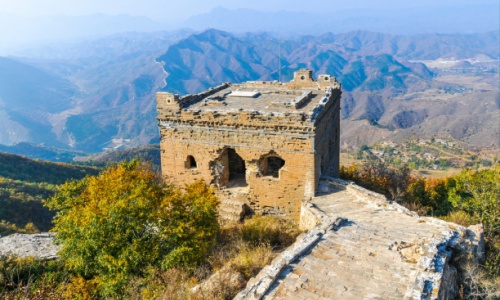
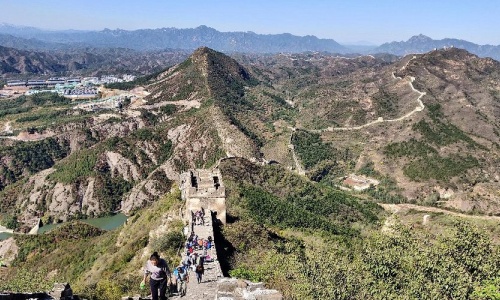
• Primitive Ming Dynasty Features: Retains original masonry, steep single-sided walls, and narrow steps—offering an authentic "wild Great Wall" experience unavailable at other sections.
• Night Light Show: Warm white lights outline the wall's contour, creating a magical "dragon of light" effect—no flashy colors, preserving the wall's historical atmosphere.
• Gubei Water Town Linkage: Combine Great Wall exploration with water town experiences (ancient streets, folk performances, hot springs) for a rich 2-day itinerary.
• 10 Connected Watchtowers: Straight route with no side-way,easy navigation—each watchtower has unique features (e.g., arrow slits, beacon platforms).
• Flying Man Adventure (Near 2nd Watchtower): Thrilling zip-line experience across the valley (additional fee)—perfect for adventure seekers.
RECOMMENDED ROUTES
1. Day Hike (3-4 hrs)
• Route: Entrance — Hike to 1st-10th Watchtowers — Return via cable car from 8th Watchtower.
2. Night Tour + Water Town Combo (5-6 hrs)
• Route:Gubei Water Town — Dinner — Take shuttle bus to Great Wall — Night hike (1st-5th Watchtowers) — Return to water town for night views.
3. Family-Friendly Route (1-2 hrs)
• Route:Cable car to 8th Watchtower — Walk to 5th Watchtower (gentle terrain) — Return via cable car.
ACCESSIBILITY NOTE
• Not wheelchair-friendly: Rugged terrain with steep steps, uneven paths, and no ramps—unsuitable for travelers with mobility impairments or seniors.
• Kids are allowed but must be supervised at all times (many sections have unprotected edges and steep drops).
• The cable car is accessible for strollers (foldable only), with staff assistance available for boarding.
• First-aid stations are located at 5th and 8th Watchtowers—carry a small first-aid kit for minor injuries.
TOP PHOTO SPOTS
• 8th Watchtower: Highest point of Simatai, offering panoramic views of the primitive wall and distant Gubei Water Town.
• 3rd Watchtower: Captures the steep single-sided wall—shoot from below to emphasize its dramatic slope.
• Night Tour Photo Spot: 2nd-5th Watchtowers—illuminated wall against the dark sky, with Gubei Water Town's lights in the distance.
• Cable Car Cabin: Aerial shots of the wall winding through mountains and the water town's traditional architecture.
• 10th Watchtower: Final watchtower of the route, offering a "last glance" view of the primitive Great Wall.
WHERE TO EAT
On-site Options
• Limited to convenience stores at the entrance and 5th Watchtower—sell water, energy bars, and snacks (affordable but limited).
Gubei Water Town (10 mins by shuttle bus)
• High-End Restaurants: Serve refined Cantonese, Shandong, and Hangzhou cuisine (200-300 RMB per person).
• Local Specialties: Try Miyun braised fish, Qingzhen lamb, and water town snacks like sesame seed cakes (50-100 RMB per person).
• Street Food: Food stalls offer fried chestnuts, sweet potato porridge, and traditional pastries (10-20 RMB per serving).
SEASONAL HIGHLIGHTS
• Spring (Mar-May): Cherry blossoms and apricot blossoms bloom in Gubei Water Town, with the Great Wall as a backdrop—perfect for combo photos.
• Summer (Jun-Aug): Cool mountain air and evening breeze—ideal for night tours (avoid midday hikes due to heat).
• Autumn (Sep-Nov): Golden leaves cover the mountains, and the clear sky enhances visibility—best for day hikes and photography.
• Winter (Dec-Feb): Snow-covered primitive walls and frozen Gubei Water Town—magical winter scenery, but wear warm layers (temperatures can drop to -15°C).
VISITING TIPS
• Hiking shoes are a must (rocky and uneven terrain; no flip-flops/sandals).
• Bring a flashlight for night tours (phone flash works; wall paths are lit but dim in some areas).
• Kids must be accompanied by adults at all times (steep sections and unprotected edges).
• Book Gubei Water Town accommodation in advance for 2-day trips (hot spring resorts are popular in winter).
C. Imperial Parks and Gardens
1. Summer Palace
DIFFICULTY: Easy (2/5)
BEST FOR: History lovers, nature enthusiasts, photography enthusiasts, families, casual walkers, culture seekers.
ADDRESS: 19 Xinjiangongmen Road, Haidian District, Beijing.
OPENING HOURS: Tuesday to Sunday, Closed Monday(Except National Traditional Holidays)
Park Grounds Garden-within-the-Garden Attractions Other Scenic Spots
Apr 1 – Oct 31 6:00 AM – 8:00 PM 6:00 AM – 6:00 PM 8:00 AM – 6:00 PM
Nov 1 – Mar 31 6:30 AM – 7:00 PM 8:30 AM – 5:00 PM 8:30 AM – 5:00 PM
• Garden-within-the-Garden attractions include Tower of Buddhist Incense, Garden of Virtue and Harmony, Summer Palace Museum, and Suzhou Street.
• Other scenic spots include Pavilion of Nurturing Clouds, Chamber of Clearness, Farming and Weaving Scenic Area, Naval Training School, and South Lake Island.
• Garden-within-the-Garden attractions and other scenic spots closed every Monday (except national public holidays).
TICKETS:
Apr 1 - Oct 31 Nov 1 - Mar 31
General Admission 60 RMB 20 RMB
Combined Ticket(General+Garden-within-the-Garden) 40 RMB 50 RMB
Garden of Virtue and Harmony (Dehe Yuan) 10 RMB 10 RMB
Tower of Buddhist Incense (Foxiang Ge) 10 RMB 10 RMB
Suzhou Street 10 RMB 10 RMB
Summer Palace Museum 10 RMB 10 RMB
• Book 1–7 days in advance via official WeChat Mini Programs: Summer Palace or Changyou Park (pre-sale opens at 9:00 PM CST daily).
• Foreign visitors: Book with passport number, enter via QR code (no ID card required).
• Refund policy: Combined tickets are non-refundable once scanned; unused tickets can be refunded within 7 days of the scheduled visit.
• Discounts: 50% off for eligible visitors (students, seniors, etc.) with valid documents.
HOW TO GET THERE
1. Metro (Most Recommended)
• North Palace Gate: Line 4, Beigongmen Station (direct access, best for Suzhou Street)
• East Palace Gate (main entrance): Line 4, Xiyuan Station — 500m west along Tongqing Street (close to Renshou Dian)
• West Gate: Xijiao Line, Summer Palace West Gate Station — short walk to Changguan Tang
2. Bus
• East Palace Gate: Buses 331, 332, 346, 584, Night 8
• North Palace Gate: Buses 331, 332, 346, 584, 601, Night 8
• Xinjiangongmen/South Ruyi Gate: Buses 74, 374, 437
3. Self-Driving
• Parking at East/North/Xinjiangongmen/West Gates (20–30 RMB/day)
• Avoid weekends/holidays for easier parking
TOP HIGHLIGHTS
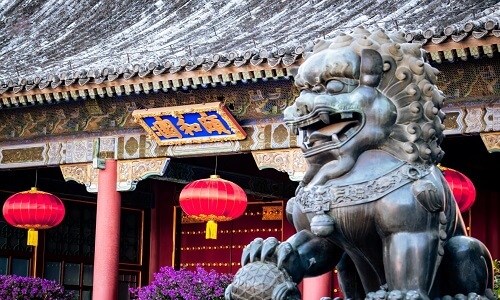
• Long Corridor: A 728-meter covered corridor with over 10,000 colorful murals—UNESCO-listed, the longest of its kind in the world.
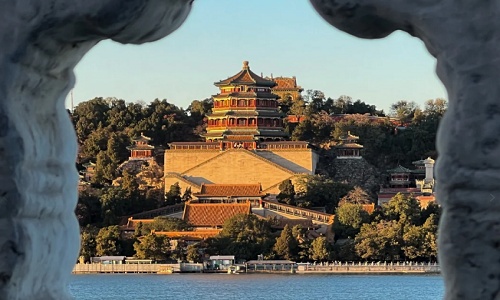
• Tower of Buddhist Incense (Foxiang Ge): The iconic centerpiece of the Summer Palace, offering panoramic views of Kunming Lake and surrounding landscapes from its hilltop location.
• Seventeen-Arch Bridge: A stunning stone bridge connecting South Lake Island to the east bank—one of China’s most famous ancient bridges, perfect for sunset photos.
• Kunming Lake: A vast lake covering 3/4 of the park—rent a boat to explore (traditional dragon boats, electric boats, and pedal boats available) for a serene perspective of the palace and hills.
• Suzhou Street: A replica of a traditional Jiangnan water town street—lined with ancient-style shops and restaurants, offering a taste of southern Chinese scenery.
• Garden of Virtue and Harmony (Dehe Yuan): Home to a well-preserved imperial theater—one of the largest and most exquisite ancient Chinese theaters, showcasing traditional stage architecture.
• Harmony Garden (Xiequ Yuan): A compact classical garden within the palace, known for its elegant pavilions, ponds, and autumn foliage (a favorite spot for photographers).
RECOMMENDED ROUTES
1. Quick Snapshot Tour (2 Hours)
• Route: East Palace Gate — Renshou Dian — Leshou Tang — Long Corridor — Paiyun Dian — Tower of Buddhist Incense — Stone Boat — East Palace Gate.
• Focus: Core imperial landmarks and iconic views—perfect for time-pressed travelers.
2. Essential Tour (3 Hours)
• Route: North Palace Gate — Suzhou Street — Four Great Continents — Tower of Buddhist Incense — Paiyun Dian — Long Corridor — Stone Boat — Boat Ride to South Lake Island — Seventeen-Arch Bridge — Bronze Ox — East Palace Gate.
• Focus: Combines cultural sites with lake views and a boat ride—balanced experience.
3. In-Depth Tour (4-5 Hours)
• Route: Xinjiangongmen Gate — Kunming Lake East Dyke — Bronze Ox — Summer Palace Museum — Renshou Dian — Yulan Tang — Leshou Tang — Long Corridor — Paiyun Dian — Tower of Buddhist Incense — Stone Boat — Harmony Garden — Suzhou Street — North Palace Gate.
• Focus: Covers major attractions plus lesser-visited spots like Summer Palace Museum and Harmony Garden—ideal for history and nature lovers.
4. Two barrier-free circular routes
• Flat route (6,962m): East Palace Gate — Renshou Dian — Zhichun Ting — East Dyke — Xiuyi Bridge — West Gate — West Dyke — Stone Boat — Long Corridor — East Palace Gate.
• Hilly route (2,565m): East Palace Gate — Renshou Dian — Leshou Tang — Long Corridor — Stone Boat — Back Hill — East Palace Gate.
ACCESSIBILITY NOTE
• Fully wheelchair-friendly with free wheelchair rental at 6 gate areas (East Palace Gate, Xinjiangongmen Gate, South Ruyi Gate, West Gate, North Palace Gate, North Ruyi Gate).
• Wheelchair deposit: 500 RMB (cash or mobile payment accepted); limited quantity—bring your own if possible.
• Accessible facilities: Ramps, tactile paving, accessible restrooms, and low ticket windows throughout the park.
TOP PHOTO SPOTS
• Seventeen-Arch Bridge: Sunrise/sunset shots with the bridge reflecting in Kunming Lake—stand on the east bank for the classic angle.
• Long Corridor: Capture the full length of the corridor with mural details; shoot from the southern side for even lighting.
• Tower of Buddhist Incense: Hilltop view from Paiyun Dian Plaza—frame the tower against the lake and distant hills.
• Harmony Garden (Xiequ Yuan): Autumn foliage (red maples and yellow ginkgoes) with traditional pavilions—popular with ancient costume photographers.
• Houxi River (Back Stream River): Quiet area with lush vegetation and occasional squirrels—ideal for nature and candid shots.
• Stone Boat (Marble Boat): Classic imperial architecture by the lake—shoot from the west side for unobstructed views.
• South Lake Island: Panoramic views of Kunming Lake and the Seventeen-Arch Bridge—best in the morning with soft light.
WHERE TO EAT
Inside the Park
• Tingli Guan: A time-honored imperial-style restaurant near the Stone Boat—specializes in court cuisine like "Palace Gate Fish" and "Buddha Jumps Over the Wall" (180 RMB per person).
• Fast Food Kiosks: Located at Zhichun Ting, Paiyun Dian East Wing, and Shizhang Ting—serve noodles, rice dishes, and snacks (40-60 RMB per person).
Near the Park(1-2km)
• Local Restaurants (North Palace Gate Area): Serve authentic Beijing dishes like zhajiangmian (black bean sauce noodles) and bao du (blanched tripe) (60-100 RMB per person).
• International Options (Xiyuan Area): Coffee shops, pizza, and fast food chains—convenient for quick bites (50-80 RMB per person).
SEASONAL HIGHLIGHTS
• Spring (Mar-May): Cherry blossoms, peonies, and lotus flowers bloom—best spots at Kunming Lake shore and Harmony Garden.
• Summer (Jun-Aug): Lush greenery and cool lake breezes—ideal for boat rides and evening walks; lotus flowers in full bloom on Kunming Lake.
• Autumn (Sep-Nov): Golden ginkgoes and red maples—Houxi River and Harmony Garden are top fall foliage spots (visited by international dignitaries like Italian President Mattarella).
• Winter (Dec-Feb): Snow-covered pavilions and frozen Kunming Lake—serene and less crowded; occasional ice activities on the lake (weather permitting).
VISITING TIPS
• Wear comfortable walking shoes (the park is large—8-10 km for full exploration).
• Rent a multi-language audio guide (21 languages including English, French, German) at major gates (40 RMB) or use the free WeChat mini-program "Yihe Service" for mobile navigation.
• Avoid peak crowds (10:00 AM-2:00 PM) by arriving early or visiting in the afternoon.
• Boat rental tips: Choose electric boats for ease (120 RMB per hour for 6-seater); return to the original pier to avoid extra fees.
• Wind warning: Boat services suspend during level 4+ winds—check weather forecasts before planning a boat ride.
• Best visiting time: April-October for mild weather and full attractions access.
2. Jingshan Park
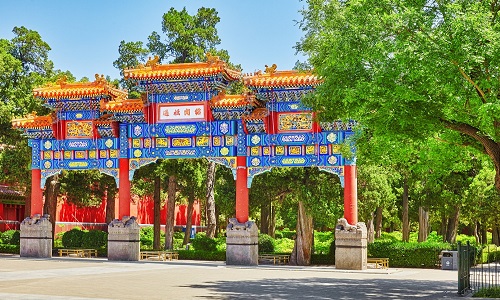
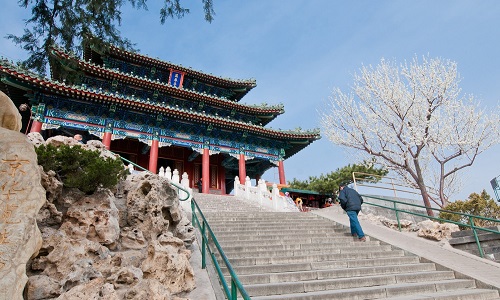
DIFFICULTY: Easy (2/5)
BEST FOR: Photography enthusiasts, history buffs, casual walkers, sunset chasers, first-time visitors.
ADDRESS: No.44, Jingshan West Street, Xicheng District, Beijing.
OPENING HOURS:
Park Grounds Key Courtyard Attractions
Apr 1 – Oct 31 6:00 AM – 9:00 PM 8:00 AM – 6:00 PM
Nov 1 – Mar 31 6:30 AM – 8:00 PM 8:30 AM – 5:00 PM
• Key Courtyard Attractions include Shouhuang Dian, Guande Dian, and Guandi Miao, which is closed every Monday (except national public holidays).
TICKETS:
• Regular Price: 2 RMB.
• Half Price: 1 RMB (for eligible visitors: students, seniors, etc.)
• Peony Festival Period (Apr – May): 10 RMB | Half Price: 5 RMB.
Important Booking Notes
• Book in advance via official WeChat Mini Program Changyou Park or website https://www.bjgyol.com.cn/?lang=en (only authorized online platform).
• Foreign visitors: Book with passport number, enter via QR code (no physical ticket needed).
• On-site ticket purchase available at ticket windows (passport required).
• No resale or profitable use of tickets allowed—violators may be denied entry.
• Best value: Regular ticket (one of Beijing’s cheapest attractions with unmatched views).
HOW TO GET THERE
1. Metro (Most Recommended)
• Line 8: China National Art Museum Station (Exit A, Northwest Exit) — Short walk to the park
• Line 6: Dongsi Station (Exit E, Northwest Exit) — Walk to the park (10 minutes)
2. Bus
• South Gate: Buses 101, 103, 109, 124 (tram), 58, 68 — Get off at Forbidden City Station — 200 meters walk
• East Gate: Buses 111, 124 (tram), 58 — Get off at Jingshan East Gate Station — 200 meters north walk
• West Gate: Buses 5, 58 — Get off at Xibanqiao Station — 50 meters walk
3. Self-Driving
• Navigate to "Jingshan Park West Gate Ground Parking Lot" (parking fee: 20 RMB/day)
• Convenient for visitors with luggage or mobility needs
TOP HIGHLIGHTS
• Wanchun Pavilion (Wanchun Ting): The highest point of Jingshan Park and downtown Beijing, offering a panoramic bird’s-eye view of the Forbidden City—named one of the "Top 10 Sunset Views in Beijing" (sunset glow over the red walls and golden roofs is iconic).
• Site of Emperor Chongzhen’s Suicide: Location where the last emperor of the Ming Dynasty hanged himself (the original tree was cut down in 1971, but the site is preserved with historical markers).
• Five Pavilions on the Hilltop: Five interconnected pavilions (Zhoushang Ting, Guanmiao Ting, Wanchun Ting, Jifang Ting, Fulang Ting) arranged in a line, each offering unique views of the city.
• Flower Exhibitions: Tens of thousands of peonies, Chinese herbaceous peonies, lotus, and chrysanthemums—peony festival in spring (Apr-May) is the most popular, with colorful blooms across the park.
• Shouhuang Dian (Hall of Imperial Longevity): A well-preserved imperial building complex, once used to enshrine portraits of emperors—showcases traditional Chinese architecture and cultural relics.
RECOMMENDED ROUTES
1. Quick Sunset Tour (1 Hour)
• Route: South Gate — Site of Emperor Chongzhen’s Suicide — East Hill Path — Wanchun Pavilion (watch sunset) — West Hill Path — West Gate.
• Focus: Core highlight (Forbidden City view) with minimal walking—perfect for time-pressed travelers.
2. Essential History & View Tour (1.5 Hours)
• East Gate — Site of Emperor Chongzhen’s Suicide — East Hill Path — Zhoushang Ting — Guanmiao Ting — Wanchun Pavilion — Jifang Ting — Fulang Ting — West Hill Path — Shouhuang Dian — West Gate.
• Focus: Combines historical sites, hilltop views, and cultural attractions—balanced experience.
3. Flower Viewing Tour (2 Hours, Spring Only)
• Route: South Gate — Peony Garden — Site of Emperor Chongzhen’s Suicide — Hill Path — Wanchun Pavilion — Shouhuang Dian — East Gate.
• Focus: Spring blooms + iconic views—ideal for photography enthusiasts.
ACCESSIBILITY NOTE
• The park has gentle slopes and paved paths, suitable for most visitors including seniors and families with strollers.
• No wheelchair rental service on-site; visitors with mobility impairments are advised to bring their own wheelchairs (main paths are accessible).
• Benches are placed along walking routes for rest.
• The hilltop can be reached via gradual paths (no steep stairs), making it manageable for casual walkers.
TOP PHOTO SPOTS
• Wanchun Pavilion: Panoramic view of the Forbidden City (best at sunset for golden light on the roofs).
• West Side of Wanchun Pavilion: View of Beihai Park’s White Pagoda and the Central Axis of Beijing.
• Site of Emperor Chongzhen’s Suicide: Historical site with symbolic significance (somber and reflective).
• Peony Garden (South of the Park): Colorful peonies in spring—perfect for close-up and portrait shots.
• Five Pavilions Line: Capture the symmetrical arrangement of the pavilions against the city skyline.
WHERE TO EAT
Near the Park (5-10 Minutes Walk)
• Casual Restaurants (West Gate Area): Offer Beijing noodles, dumplings, and home-cooked dishes (50-80 RMB per person).
• Local Snack Stalls (East Gate Area): Serve jianbing (savory crepe), soybean milk, and roasted sweet potatoes (10-20 RMB per person).
• Tip: The park itself has no restaurants—eat before or after your visit (recommended to pair with a Forbidden City tour for a full half-day itinerary).
SEASONAL HIGHLIGHTS
• Spring (Mar-May): Peony and Chinese herbaceous peony festival (Apr-May) with tens of thousands of blooms; cherry blossoms and apricot blossoms in early spring.
• Summer (Jun-Aug): Lotus flowers in the park’s ponds; lush greenery and cool shade—ideal for evening walks and sunset viewing.
• Autumn (Sep-Nov): Chrysanthemum exhibition in late autumn; golden ginkgo leaves and red maple leaves line the paths—clear skies enhance the Forbidden City views.
• Winter (Dec-Feb): Snow-covered pavilions and the Forbidden City’s snowscape—serene and less crowded; perfect for winter photography (dress warmly as temperatures can drop to -10°C).
VISITING TIPS
• Wear comfortable walking shoes (gentle uphill paths, 30-minute walk to the hilltop).
• Best time to visit: Sunset (1 hour before sunset) for the most magical Forbidden City views—arrive 30 minutes early to secure a spot at Wanchun Pavilion.
• Avoid crowds: Visit on weekdays (weekends and holidays have more tourists at Wanchun Pavilion).
• Combine with Forbidden City: Visit Jingshan Park right after the Forbidden City (500 meters north of Shenwu Gate) for a complete imperial Beijing experience.
• No flash photography needed at sunset—natural light is perfect for photos; drone use is strictly prohibited.
3. Beihai Park
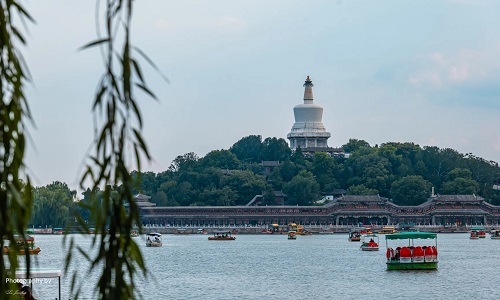
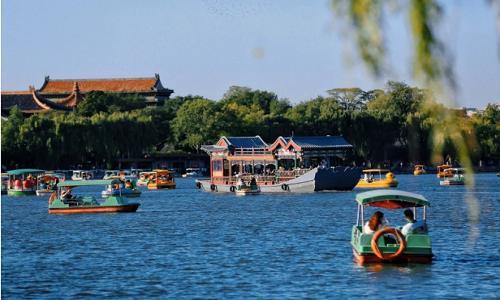
DIFFICULTY: Easy (2/5)
BEST FOR: History lovers, photography enthusiasts, nature seekers, families, casual walkers, culture buffs.
ADDRESS: No.1 Wenjin Street, Xicheng District, Beijing (adjacent to Jingshan Park and the Forbidden City).
OPENING HOURS:
Park Grounds Key Courtyard Attractions
Apr 1 – Oct 31 6:00 AM – 9:00 PM 8:00 AM – 6:00 PM
Nov 1 – Mar 31 6:30 AM – 8:00 PM 8:30 AM – 5:00 PM
• Key Courtyard Attractions include Tuan Cheng, Yong'an Temple, Yuegu Lou, Huafang Zhai, Jingxin Zhai, Kuaixue Tang, Xiao Xitian, Xitian Fanjing, Chanfu Si, Wanfo Lou Ruins.
• Tuan Cheng (Round City): Open daily (no Monday closure). Other attractions: Closed every Monday (except national public holidays).
TICKETS:
• General Admission (Apr 1 – Oct 31): 10 RMB.
• Combined Ticket (General Admission + all key attractions) (Apr 1 – Oct 31): 20 RMB
Key attractions includes: Park entry + Yong'an Temple & White Pagoda + Yilan Tang + Tuan Cheng (1 RMB separate value)
• General Admission (Nov 1 – Mar 31): 5 RMB.
• Combined Ticket (General Admission + all key attractions) (Nov 1 – Mar 31): 15 RMB
Important Booking Notes
• Book 1–7 days in advance via official WeChat Mini Program Changyou Park or website https://www.bjgyol.com.cn/?lang=en (only authorized online platform).
• Foreign visitors: Book with passport number, enter via QR code (no physical ticket needed).
• On-site ticket purchase available at ticket windows (passport required).
HOW TO GET THERE
1. Metro (Most Recommended)
• Line 6: Beihai North Station — Short walk to North Gate (closest to Shichahai and Gong Wang Fu)
• Line 8: Nanluoguxiang Station — 15-minute walk to North Gate
2. Bus
• North Gate: Buses 13, 42, 107, 111, 118, 612, 701 — Get off at Beihai Park North Gate Station
• East Gate: Bus 5 — Get off at Xibanqiao Station (5-minute walk; seamless connection from Jingshan Park West Gate)
• South/Southwest Gate: Buses 5, 101, 103, 109, 124, 128, Zhuan 1, Zhuan 2 — Get off at Beihai Station
3. Self-Driving
• Parking available at North Gate and South Gate parking lots (20–30 RMB/day)
• Convenient for visitors with luggage or mobility needs
TOP HIGHLIGHTS
• White Pagoda (Baita): The iconic symbol of Beihai Park—a Tibetan-style lama tower perched on Qionghua Island, offering panoramic views of the park and surrounding cityscape.
• Yong'an Temple: A Qing Dynasty Tibetan Buddhist temple built along the slope of Qionghua Island, with layered halls and stunning views of the lake.
• Jingxin Zhai (Quiet Heart Studio): A exquisite Jiangnan-style garden within the park, featuring Taihu stone rockeries, winding corridors, and peaceful ponds—perfect for photography.
• Nine-Dragon Wall (Jiulong Bi): A magnificent seven-color glazed brick wall with nine coiled dragons on each side—one of China’s most famous imperial dragon decorations.
• Five Dragon Pavilions (Wulong Ting): Five connected pavilions by the lake, originally used by emperors for fishing and moon-gazing—offer postcard-perfect views of the White Pagoda.
• Tuan Cheng (Round City): A "city within a city" with ancient cypress trees and a precious white jade Buddha—showcases imperial garden design.
• Xiao Xitian (Little Western Heaven): A grand square pavilion-style building surrounded by water, one of China’s largest square pavilions—impressive for its scale and architecture.
RECOMMENDED ROUTES
1. Essential Highlights Tour (2-3 Hours)
• Route: North Gate — Jingxin Zhai — Xitian Fanjing — Nine-Dragon Wall — Xiao Xitian — Five Dragon Pavilions — Boat Ride to Qionghua Island — White Pagoda — Yong'an Temple — South Gate.
• Focus: Core attractions and iconic views—balanced for time-pressed travelers.
2. In-Depth Culture & Nature Tour (4 Hours)
• East Gate — Zhi Shan Bridge — Qionghua Island — White Pagoda — Yilan Tang — Yuegu Lou — Languang Dian Pier — Boat Ride to Five Dragon Pavilions — Chanfu Si — Kuaixue Tang — Nine-Dragon Wall — Jingxin Zhai — North Gate.
• Focus: Combines historical sites, boat exploration, and cultural attractions—ideal for history and nature lovers..
3. Photography & Blossom Tour (3 Hours, Spring Only)
• Route: West Gate — Begonia Avenue — Qionghua Island Peach Blossom Path — Jingxin Zhai — Xitian Fanjing Red Wall — Nine-Dragon Wall — Five Dragon Pavilions (White Pagoda backdrop) — South Gate.
• Focus: Spring blooms and top photo spots—perfect for photography enthusiasts.
ACCESSIBILITY NOTE
• Wheelchair rental service available at all gate areas (free with 500 RMB deposit, cash or mobile payment accepted).
• Barrier-free paths connect major attractions, including ramps for Qionghua Island (gradual slope, manageable for wheelchairs with assistance).
• Mother-and-baby room available inside South Gate (call 64037972 for access).
TOP PHOTO SPOTS
• Qionghua Island West Bank: Classic view of the White Pagoda against the lake and distant city skyline—best at golden hour.
• Jingxin Zhai Stone Bridge: "Window frame portraits" with traditional Chinese architecture as the backdrop (inspired by celebrity photography styles).
• Xitian Fanjing Red Wall: Low-angle shots of red walls and green glazed tiles for dramatic, high-end photos.
• Nine-Dragon Wall: Close-up shots of dragon scale details (more striking than full panoramic shots).
• Five Dragon Pavilions: White Pagoda framed between the pavilions—iconic Beihai Park postcard view.
• Yilan Tang Waterfront: Reflection of ancient buildings in the lake, especially beautiful on calm mornings.
• Peach Blossom Path (Qionghua Island Top): Spring blooms (March) with red walls and the White Pagoda—romantic and vibrant.
WHERE TO EAT
Inside the Park
• Qingfeng Steamed Bun Shop (Qionghua Island South Side): Local favorite for affordable steamed buns, noodles, and snacks (30-50 RMB per person)—popular with locals.
• Lake View Restaurants (East Bank): Serve Chinese dishes with lake views (80-120 RMB per person)—ideal for a leisurely lunch.
Near the Park (1-2km)
• North Gate Area (Shichahai): Bars, cafes, and local restaurants serving Beijing snacks like zhajiangmian and bao du (60-100 RMB per person).
• South Gate Area (Jingshan/Forbidden City): Casual eateries and coffee shops—convenient for combining with a multi-attraction itinerary (50-80 RMB per person).
• Picnic Tip: Bring snacks or order takeout to enjoy by the lake (many locals do this)—a budget-friendly and relaxing option..
SEASONAL HIGHLIGHTS
• Spring (Mar-May): Blossom season—peach blossoms (Mar mid), magnolias (Mar mid-Apr), crabapple (Apr) at Qionghua Island, Xitian Fanjing, and West Gate Begonia Avenue.
• Summer (Jun-Aug): Lush greenery and lotus flowers on the lake—rent a boat to explore (cool breeze and scenic views); evening visits to avoid midday heat.
• Autumn (Sep-Nov): Golden ginkgoes and red maples—clear skies enhance White Pagoda photos; comfortable temperatures for walking.
• Winter (Dec-Feb): Snow-covered White Pagoda and frozen lake—serene and less crowded; occasional ice activities (weather permitting); perfect for winter photography.
VISITING TIPS
• Wear comfortable walking shoes (gentle uphill paths, 30-minute walk to the hilltop).
• Rent a multi-language audio guide at gate areas (40 RMB) or use park maps with English descriptions.
• Boat rental: Choose electric boats (120 RMB per hour for 6-seater) for a leisurely lake tour—board at Qionghua Island or East Bank piers.
• Combine with nearby attractions: North Gate connects to Shichahai and Gong Wang Fu; East Gate is a short walk from Jingshan Park; South Gate is close to the Forbidden City.
• Avoid crowds: Visit on weekdays (weekends and holidays are busier, especially at the White Pagoda and Five Dragon Pavilions).
• Best visiting time: April-October for mild weather and full attractions access; sunset at Five Dragon Pavilions offers magical White Pagoda views.
D. Cultural & Modern Attractions
1. Lama Temple
DIFFICULTY: Easy (2/5)
BEST FOR: Culture seekers, history lovers, spiritual travelers, photography enthusiasts.
ADDRESS: No.12 Yonghegong Street, Dongcheng District, Beijing.
OPENING HOURS: Open daily (no closed days)
Opening Hours Ticket Stop Clear-up Time
Apr 1 – Oct 31 9:00 AM – 5:00 PM 4:30 PM 5:00 PM
Nov 1 – Mar 31 9:00 AM – 4:30 PM 4:00 PM 4:30 PM
TICKETS:
• General Admission: 25 RMB; Half-price Ticket: 12 RMB.
• Free: Children under 6 years/1.2m; Disabled visitors (including disabled military/police/fire rescuers) with valid certificates.
• Half-price: Minors 6-18 years, full-time undergrad & below students; Seniors under 60 years with valid certificates.
• Purchase: On-site (paper tickets at Ticket Service Center) or online via official WeChat Mini Program Yonghegong Visitors and Believers Service.
• Foreign Visitors: Full-price via QR code; Half-price paper tickets at Ticket Service Center (with passports/valid IDs).
HOW TO GET THERE
• Subway (Best Route): Take Line 2 or Line 5 to Yonghegong Lama Temple Station, Exit F (Southeast), 3 minutes' walk to the entrance.
• Bus: Take Bus No.13, 116, 117, 684 etc., get off at Yonghegong Station or Yonghegong East Station.
• Luggage Reminder: No luggage storage service on the premise, please make proper arrangements in advance.
TOP HIGHLIGHTS
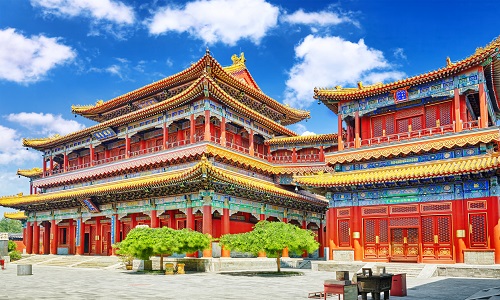
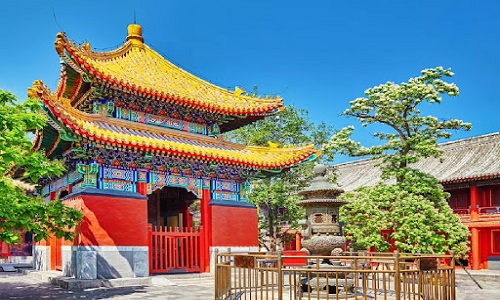
• Imperial & Religious Architecture: Originally the Prince Yong Mansion (1694), converted to a Tibetan Buddhism Gelug sect temple in 1744. It features golden glazed tiles (imperial symbol) and a unique blend of Han, Manchu, Mongolian and Tibetan architectural styles, and is Beijing’s largest Tibetan Buddhism temple.
• Blessing-themed Halls: Each hall has a special spiritual meaning, e.g., Yonghe Gate Hall for wish fulfillment, Medicine Buddha Hall for health and longevity, Wanfu Pavilion for luck transformation.
• Traditional Tiao Buzha Ritual: A grand religious music and dance drama is held on the 30th (29th if short) of the 1st lunar month and the morning of the 1st day of the 2nd lunar month, to exorcise evil spirits and pray for blessings.
• Free Eco-friendly Incense: The temple provides 3 sticks of sandalwood incense per person for free (traditional etiquette), no need to bring your own.
RECOMMENDED ROUTES
• Route: Main Gate — Imperial Road — Incense Distribution Area — Zhaotai Gate — Yonghe Gate Hall (Wish Fulfillment) — Scripture Lecture Hall (Peace) — Kalachakra Hall (Luck Transformation) — Esoteric Buddhism Hall (Peace) — Medicine Buddha Hall (Health & Longevity) — Yonghe Palace Hall (Eliminate Worries) — Consecration Room — Yongyou Hall (Peace & Disaster Relief) — West Side Hall (Academic Success) — East Side Hall (Exorcism & Wealth) — Dharma Wheel Hall (Academic Success) — Yamantaka Tower (Drive off Mean People) — Zhaofo Building (Elders' Longevity) — Wanfu Pavilion (Luck Transformation) — Guanyin Cave (Marriage & Pregnancy) — Suicheng Hall (Wisdom & Disaster Relief) — Back Gate (Exit).
• Recommended visit duration: 2 hours.
ACCESSIBILITY NOTE
• The temple has accessible ramps at the main entrance, and Yonghegong Lama Temple Subway Station Exit E is equipped with barrier-free facilities. Some halls have high steps, and sidewalks near the station may have non-motor vehicle obstructions, so assistance is recommended for wheelchair users.
TOP PHOTO SPOTS
• The Grand Pailou (Memorial Archway): Classic shot with blue sky and traditional Chinese archway.
• Red Walls & Golden Tiles: Iconic color contrast of royal religious architecture.
• Ancient Trees & Light and Shadow: Tranquil spiritual atmosphere from mottled light through old trees.
• Entrance of Wanfu Pavilion: The temple’s core landmark with magnificent architectural details.
• Spring Blossoms (Mar-Apr): Magnolia/peach/lilac blooming against red walls for a poetic scene.
WHERE TO EAT
• Xiyuanju: Authentic Beijing shabu-shabu, 80-150 RMB/person.
• Chatang Li: Traditional Beijing sweet soup and local snacks, 20-50 RMB/person.
• Quanjude: World-renowned Peking duck, 200-300 RMB/person (English menu available).
SEASONAL HIGHLIGHTS
• Mar-Apr: Spring blossoms against red walls, creating a peaceful and poetic Buddhist scene.
• 1st Lunar Month: Grand Tiao Buzha ritual and temple fair, a vivid display of Tibetan Buddhism culture.
• Sep-Nov: Cool weather and fewer crowds, ideal for leisurely visiting and photography.
• Dec-Feb: Snow-covered temple grounds, forming a solemn and sacred atmosphere.
VISITING TIPS
• Dress Code: Avoid shorts, slippers or overly fancy/revealing clothes to show respect for the religious site.
• Religious Etiquette: No photos of Buddha statues; cross thresholds without stepping on them; hold incense with your left hand when lighting.
• Incense Rules: Use only the free 3 sticks of incense provided by the temple; do not bring or burn extra incense.
• Explanation Service: Professional Chinese/English/German/Russian guides available; free Chinese/English audio guides via on-site QR code scan.
• Avoid Scams: Reject paid explanations, begging or unauthorised sales from strangers; contact temple staff if needed.
• Peak Time: Visit early morning (right after opening) to avoid crowds between 10:00 AM and 2:00 PM.
2. Nanluoguxiang & Hutong Experience
DIFFICULTY: Easy (1/5)
BEST FOR: Culture lovers, photography enthusiasts, foodies, casual walkers.
ADDRESS: Nanluoguxiang, Dongcheng District, Beijing (N to Gulou East Ave, S to Di'anmen East Ave).
OPENING HOURS: Open 24/7 (Individual shops: 10:00-21:00).
RECOMMENDED VISIT DURATION: 2–3 hours (Casual stroll with key stops)
TICKETS: Free.
HOW TO GET THERE
• Subway (Best Route): Take Line 6/8 to Nanluoguxiang Station, Exit E (directly at the south entrance of the main alley).
• Bus: Get off at Luoguxiang Station or Baochao Hutong Station, then a 10-minute walk to the alley.
• Extension: After visiting, walk 20 minutes north to Shichahai (Houhai) to watch the sunset and enjoy the evening bar street.
TOP HIGHLIGHTS
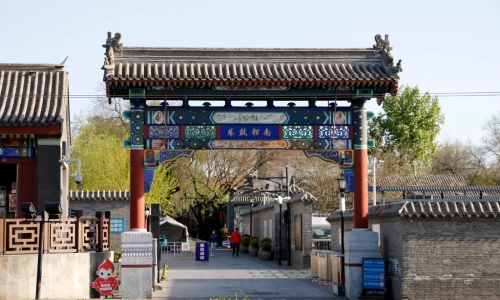
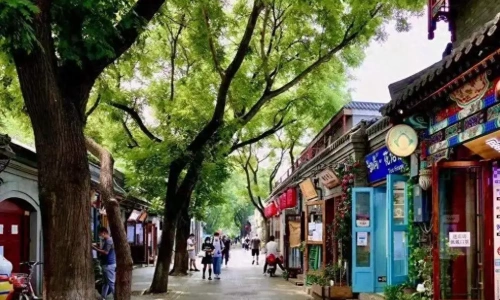
• 700-Year-Old Hutong Complex: A well-preserved "chessboard-style" hutong area from the Yuan Dynasty, with the main alley as the spine and side alleys as ribs, showcasing authentic old Beijing charm.
• Culture & Creativity Mix: Blend of historic courtyard houses (former residences of Qi Baishi, Mao Dun) and trendy indie shops, street art, and cozy cafes.
• Authentic Beijing Eats: Iconic local snacks and signature dishes in a historic setting, perfect for foodies to taste local flavors.
• Easy & Scenic Route: No backtracking, combining core hutong spots with a relaxing stroll, suitable for all ages.
RECOMMENDED ROUTES
• Exit Line 6/8, Exit E — Enter Nanluoguxiang from the South Gate (start with the main alley).
• Stroll the main alley (10-15 mins): Browse creative shops and stop for Wenyu Cheese (midway of the main alley).
• Turn right into Dongmianhua Hutong: Visit the Central Academy of Drama (iconic red-brick gate, great for photos) and enjoy the artistic atmosphere.
• Return to the main alley, continue north, then turn right into Mao'er Hutong: Explore traditional courtyard houses (e.g., Keyuan Garden) and feel the historic charm of old Beijing.
• Back to the main alley, walk north to the North Gate: Stop at Fangzhuanchang 69 for a delicious lunch of Beijing noodles with soy paste.
• Optional Extension: Walk 20 mins north to Shichahai to watch the sunset and stroll the evening bar street for a romantic end to the day.
ACCESSIBILITY NOTE
• The main alley has smooth paths, making it wheelchair-friendly. Side alleys may have uneven surfaces, so assistance is recommended for wheelchair users. Subway Exit E is equipped with elevators and accessible facilities.
TOP PHOTO SPOTS
• Main Alley Archway: Iconic entrance with traditional Chinese-style archway and street scenes.
• Central Academy of Drama (Dongmianhua Hutong): Red-brick gate, perfect for artistic photos.
• Red Walls & Grey Tiles: Classic Beijing hutong backdrop, ideal for candid shots at golden hour.
• Shichahai Sunset: Panoramic water view after the hutong visit, romantic and picturesque.
WHERE TO EAT
• Wenyu Cheese Shop: Classic local dessert, arrive early to avoid lines, 15 RMB/person.
• Fangzhuanchang 69 Sauce Noodle House: Beijing Noodle with Soy Paste, 38 RMB/person.
SEASONAL HIGHLIGHTS
• Spring (Mar–May): Cherry blossoms and greenery, the best time for photography.
• Summer (Jun–Aug): Cooler evenings, ideal for strolling and trying local ice cream.
• Autumn (Sep–Nov): Mild weather and fewer crowds, perfect for casual exploring.
• Winter (Dec–Feb): Cozy cafes and festive atmosphere, with fewer tourists.
VISITING TIPS
• Avoid Crowds: Weekends are extremely crowded. Arrive before 10:00 AM for a quieter experience.
• Comfortable Shoes: Wear flat, comfortable walking shoes—most hutongs have cobblestone or uneven paths.
• Etiquette: Respect private residences along the hutongs; do not enter without permission.
• Payment: Most shops accept mobile payment (WeChat/Alipay) and credit cards; carry small cash for street vendors.
• Evening Visit: The alley is more charming in the evening (after 18:00) with lanterns lit, perfect for a leisurely stroll.
3. 798 Art District
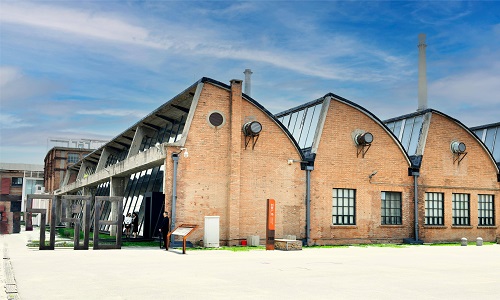
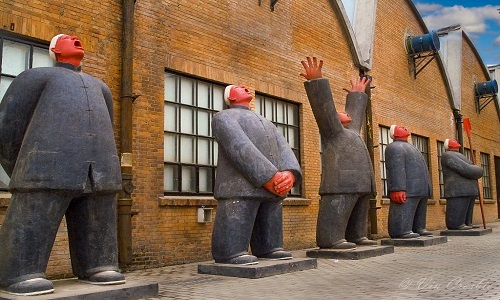
DIFFICULTY: Easy (1/5)
BEST FOR: Art lovers, photography enthusiasts, design buffs, casual walkers.
ADDRESS: No.2 Jiuxianqiao Rd, Chaoyang District, Beijing.
OPENING HOURS:
Park Hours Gallery/Shop Hours Last Entry
Year-round 24/7 (Free entry) Tue–Sun: 10:00 AM–6:00 PM 5:30 PM
• Mon: Many galleries closed; check official WeChat for exceptions.
TICKETS:
• Park Entry: Free (no reservation needed).
• Gallery/Exhibition: Separate tickets (100–200 RMB); discounts for students, seniors, and disabled visitors (valid ID required).
• Foreign Visitors: Book via official WeChat or on-site; passport/valid ID required for entry.
HOW TO GET THERE
• Subway (Best Route): Take Line 14 to Wangjing South or Jiangtai Station; 10–15 mins walk to West/North Gate.
• Bus: Take 401/403/909 to Dashanzi Lukou (Dashanzi Intersection) South/East Stop; 3–5 mins walk.
• Luggage: Near West Gate: 10–20 RMB/bag (10:00–21:00); store valuables separately.
TOP HIGHLIGHTS
• Industrial Heritage: 1950s Soviet-German Bauhaus factories transformed into art hubs—red-brick facades, zigzag roofs, and open lofts.
• Global Art Scene: International galleries (UCCA, Pace Beijing), street art, and cutting-edge installations; monthly exhibitions and artist talks.
• Creative Mix: Independent design stores, cafes, and rooftop bars blending industrial charm with contemporary culture.
RECOMMENDED ROUTES (3-4 hours)
• Enter via West Gate — Head to Graffiti Wall (iconic street art).
• Walk to UCCA Center for Contemporary Art (exhibitions + architectural photos).
• Stroll 798 Rd — Pass Bauhaus Square & 751 D·Park Train Station (vintage train + tracks).
• End at Lotus Bridge — Panoramic view of the district.
ACCESSIBILITY NOTE
• Smooth paths throughout; elevators at UCCA and major entrances.
• Side alleys may have uneven surfaces; wheelchairs recommended for main roads only.
TOP PHOTO SPOTS
• Graffiti Wall: Colorful murals & "798" logo—best at golden hour (16:00–18:00).
• 751 Train Station: Vintage orange locomotive + tracks—industrial chic shots.
• UCCA Facade: White concrete + glass—minimalist silhouettes with natural light.
• Red-brick Corridors: Mottled light through factory windows—textured street portraits.
WHERE TO EAT
• Huanxi Youyu: Green Curry Beef, Tom Yum Soup, 80-120 RMB/person.
• Xiaowan Cuisine: Sour Soup Beef Bowl, 40-60 RMB/person.
SEASONAL HIGHLIGHTS
• Spring (Mar–May): Cherry blossoms & greenery—soft light for photos; fewer crowds.
• Summer (Jun–Aug): Evening outdoor dining; night markets (weekends).
• Autumn (Sep–Nov): Mild weather—ideal for walking; foliage at 751 D·Park.
• Winter (Dec–Feb): Cozy cafes; holiday markets (Dec); fewer tourists.
VISITING TIPS
• Best Time: Tue–Fri (10:00–16:00) to avoid weekend crowds; arrive early for popular exhibitions.
• Etiquette: No photos in galleries (signage posted); respect artist studios.
• Language: English signage; most galleries have English explanations; free audio guides (QR code).
• Payment: Most shops accept mobile payment (WeChat/Alipay) and credit cards; carry small cash for street vendors.
• Safety: Keep valuables; stick to main paths after dark.
4. Olympic Park
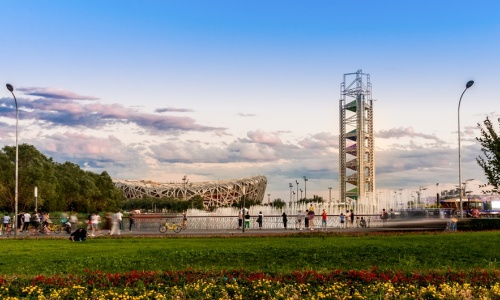
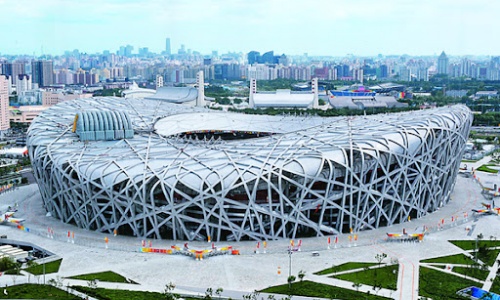
DIFFICULTY: Easy (1/5)
BEST FOR: Architecture lovers, families, sports fans, casual walkers.
ADDRESS: No.15 Beichen East Rd, Chaoyang District, Beijing.
OPENING HOURS:
Park Hours Venue Hours (Bird’s Nest/Water Cube)
May 1-Oct 31 6:30 AM–10:00 PM 9:00 AM–9:00 PM (9:00 PM last entry)
Nov 1-Apr 30 7:00 AM–9:30 PM 9:00 AM–8:00 PM (8:00 PM last entry)
TICKETS:
• Park Entry: Free (no reservation needed).
• Bird’s Nest (National Stadium): 50 RMB; half-price (25 RMB) for students/seniors; free for children under 1.2m/ disabled visitors (valid ID).
• Water Cube (National Aquatics Center): 30 RMB; half-price (15 RMB) for students/seniors; free for children under 1.2m/ disabled visitors (valid ID).
• Combo Ticket: 70 RMB (save 10 RMB); book via official WeChat (Bird’s Nest / Water Cube).
• Foreign Visitors: Valid passport/ID required; book online or on-site.
HOW TO GET THERE
• Subway (Best Route): Line 8/15 to Olympic Park Station; Exit D — 5 mins walk to Bird’s Nest.
• Bus: 82/510/607/T13 to National Stadium / Olympic Park Stop; 2–5 mins walk.
• Self-drive: Paid parking (10–15 RMB/hour); arrive early (weekends/holidays).
TOP HIGHLIGHTS
• Iconic Architecture: Bird’s Nest (steel lattice design) & Water Cube (bubble-like ETFE facade)—symbols of Beijing 2008.
• Green Space: 11.59km² park with lakes, gardens, and walking trails; perfect for picnics and evening strolls.
• Cultural Legacy: Olympic venues + modern art installations; night views with colorful lighting (20:00–22:00).
• Family Fun: Boat rides on the lake; interactive sports zones; accessible for strollers/wheelchairs.
RECOMMENDED ROUTES
• Enter via South Gate — Walk to Bird’s Nest (exterior photos + optional interior tour).
• Head north to Water Cube (blue-tiled facade + interior exhibits).
• Stroll Olympic Green — Pass Dragon-shaped Lake & Olympic Tower (panoramic views).
• End at Orson Park (Olympic Forest Park) — Relax by the lake or hike Yangshan Hill.
• Recommended duration: 3–4 hours (add 1–2 hours for venue visits).
ACCESSIBILITY NOTE
• Fully accessible: Ramps, elevators at venues; accessible restrooms throughout.
• Rental wheelchairs (50 RMB/deposit) at park info centers; service dogs welcome.
TOP PHOTO SPOTS
• Bird’s Nest Plaza: Wide-angle shot of the steel lattice + blue sky.
• Water Cube Facade: Close-up of bubble panels at golden hour (17:00–19:00).
• Dragon Lake: Reflections of Bird’s Nest/Water Cube at sunset (18:00–19:30).
• Olympic Tower: City skyline views from the observation deck (optional ticket).
WHERE TO EAT
• Olympic Park Restaurant: Peking Duck, Braised Pork, 120-180 RMB/person.
• Street Stalls: Jianbing (crepe), Tanghulu, 12-30 RMB/person.
SEASONAL HIGHLIGHTS
• Spring (Mar–May): Cherry blossoms (Dragon Lake); mild weather for walking.
• Summer (Jun–Aug): Evening light shows (20:00–21:00); boat rides on the lake.
• Autumn (Sep–Nov): Golden foliage; fewer crowds; ideal for photography.
• Winter (Dec–Feb): Ice skating (Water Cube); festive lighting; quiet park.
VISITING TIPS
• Best Time: 09:00–11:00 or 16:00–19:00 (soft light for photos; cooler temperatures).
• Etiquette: No running on venue tracks; respect sports facilities; no drones without permission.
• Reservation: Book combo tickets 1–2 days in advance (holidays); foreign passports required for online booking.
• Safety: Lockers at South Gate; keep valuables; watch for bicycles on trails.
• Language: English signage; venue staff speak basic English; free audio guides (QR code).
 All-inclusive 3-Day Beijing Private Tours: Uncover Historical Wonders and Contemporary Highlights
 Luxury Beijing Culinary & Cultural Experience: A Gourmet Adventure
Best Time to Visit Beijing | Weather & Crowds
Choosing the right time to visit Beijing is key to a comfortable trip—this city has distinct four seasons, with big differences in weather, crowds, and scenery. Autumn (September–November) is the absolute best time to visit, with mild weather, clear blue skies, and stunning fall foliage. Below is a breakdown of each season to help you plan:
A. Spring (March-May)
• Weather: Mild and pleasant, with temperatures ranging from 10°C to 25°C (50°F to 77°F). Occasional sandstorms in early spring (March) are rare but possible.
• Crowds: Low to moderate—fewer tourists than autumn, perfect for quiet exploration of attractions.
• Highlights: Cherry blossoms in Yuyuantan Park, blooming peonies in the Summer Palace, and fresh spring ingredients in local food.
B. Summer (June-August)
• Weather: Hot and humid, with temperatures hitting 30°C to 38°C (86°F to 100°F). Frequent afternoon rain showers.
• Crowds: High—Chinese school holidays mean busy attractions and higher prices for accommodation.
• Highlights: Summer festivals, lotus flowers in the Summer Palace and Beihai Park, and cold local snacks like mung bean jelly.
• Tip: Visit indoor attractions (Forbidden City halls, National Museum) in the morning/afternoon to escape the heat.
C. Autumn (September–November)
• Weather: Cool, dry, and sunny, with temperatures from 12°C to 28°C (54°F to 82°F). Clear skies make for perfect Great Wall and city skyline photos.
• Crowds: Moderate to high (peak in October for China’s National Day Holiday, Oct 1–7)—avoid the holiday for a quieter trip.
• Highlights: Golden fall foliage on the Great Wall and in Fragrant Hills Park, crisp air for outdoor exploration, and seasonal food like roasted sweet potatoes and persimmons.
D. Winter (December–February)
• Weather: Cold and dry, with temperatures from -10°C to 10°C (14°F to 50°F). Occasional light snow.
• Crowds: Low—the quietest season for major attractions.
• Highlights: Snow-covered palaces and the Great Wall (a magical winter wonderland), hot pot dinners to warm up, and Chinese New Year celebrations (January/February) with dragon dances and lantern fairs.
• Tip: Pack warm layers—indoor heating is abundant, so you can remove coats once inside.
Key Tip
• Avoid Chinese public holidays—National Day (Oct 1–7) and Spring Festival (Chinese New Year) see massive crowds, price hikes, and long lines at all attractions. Check the Chinese lunar calendar for exact Spring Festival dates before booking.
Travel Preparation for Beijing | For Foreigners
A. Visa requirements: 240-hour Visa-Free Transit (2025 Latest), Tourist L Visa
1. 240-hour Visa-Free Transit (Effective June 12, 2025)
Eligible Airports: Beijing Capital International Airport (PEK), Beijing Daxing International Airport (PKX).
Eligible Countries: 55 countries (Indonesia newly added), including all EU states, USA, Canada, Australia, Japan, South Korea, Singapore, Indonesia etc. (divided into Europe 40, Americas 6, Oceania 2, Asia 7).
Core Conditions: Valid passport (more than 6 months validity); confirmed onward ticket to a third country/region (no direct return to home country); entry & exit via PEK/PKX only.
On-site Process: Follow "Visa-Free Transit" signs — Submit passport + onward ticket — Complete entry form — Biometrics (fingerprint/photo) — Passport stamping (240-hour stay granted).
Key Notes: Stay starts from stamping time (10 full days max); travel scope covers Beijing-Tianjin-Hebei region; 24-hour short layovers apply to TWOV (Transit Without Visa) for eligible travelers.
2. Tourist L Visa (For stays over 240 hours/non-transit travel)
Application Materials: Valid passport (6+ months validity, 2 more blank pages), 2-inch white background photo (recent 6 months), travel itinerary (including flight/hotel details), hotel reservation proof, bank statement (optional for short trips).
Authorized Agencies: China Visa Application Service Center (CVASC) (official global branches), Chinese embassy/consulate in your country; Avoid unlicensed agencies to prevent document fraud and visa rejection.
3. Quick Policy Tips
• 240-hour stay is non-extendable; overstaying may result in fines.
• Prepare hotel reservation proof for border inspection (recommended).
• For latest updates: Check National Immigration Administration official announcement.
B. Internet & SIM/eSIM: Do You Need a VPN?
1. SIM Card Pick-up at Airports
• Beijing Capital Airport (PEK): China Mobile/Unicom Telecom Business Hall (T2: Arrival Hall B1, T3: Arrival Hall F1 near Exit 8); China Unicom Hall (T3 Arrival Hall F1).
• Beijing Daxing International Airport (PKX): All three operators’ business halls at the International Arrival Hall F1 (near Exit 5), open 24/7, provide tourist SIM cards (5/7/30 days package, 4G/5G available).
2. eSIM Application
• China Mobile: No online overseas application for now; apply on-site at airport/ downtown business halls with passport, scan QR code to download eSIM data and activate (no card fee).
• International eSIM: Purchase via Airalo/ESIM.Global (overseas platforms) before arrival, support one-click activation, cover Beijing’s 5G network.
3. VPN Suggestions (For Google/ Social Apps)
• Google services, WhatsApp, Instagram are not directly accessible in China.
• Recommended VPN: ExpressVPN, NordVPN, Surfshark (download and activate before entry, support multiple devices).
• Alternative solutions: International roaming (maintain original country’s network) or eSIM with overseas data package.
C. Currency & payments: Alipay/WeChat for foreigners, card payment, cash exchange
1. Mobile Payment (First Choice)
• Alipay International Version/WeChat Pay: Bind overseas Visa/Mastercard/Amex directly, 0 handling fee for transactions under 200 RMB, 3% currency conversion fee for over 200 RMB.
• Operation Steps: Download App — Register with overseas mobile number — Upload passport photo for real-name verification — Bind bank card (5 minutes to complete).
• Card Binding Failure Solutions:
1. Check if the bank card supports international online payment;
2. Re-upload clear passport photos for verification;
3. Contact Alipay/WeChat customer service (English support available).
2. Card Payment
• Accepted Scenarios: Scenic spots, shopping malls, chain hotels, high-end restaurants (all support Visa/Mastercard/Amex).
• Limit Notes: Most merchants have no single transaction limit; overseas credit card consumption is subject to the limit set by your issuing bank.
• Unsupported Scenarios: Small restaurants, street stalls, rural taxis, local markets.
3. Cash Exchange & Usage
• Exchange Channels: Bank of China (best exchange rate, need passport), airport/hotel exchange counters (slightly higher spread); exchange 1000 RMB in cash for small payments.
D. Essential apps: Translation, maps, ride-hailing, metro
Google Translate (offline package), Baidu Translate
• Chinese-English voice/text translation, photo translation for menus/signs.
Amap (Gaode), Baidu Maps
• English interface, real-time subway/bus navigation, scenic spot location.
Didi Chuxing
• English version, overseas card payment, taxi/ride-hailing booking.
Beijing Subway App
• Line query, real-time arrival, fare calculation.
Meituan, Ctrip, Booking
• Restaurant reservation, hotel booking, food delivery.
E. Packing list: Seasonal clothing, practical items, forbidden items
1. Seasonal Clothing & Weather Details
• Mar-Apr / Oct-Nov (Best Travel Season): Average temperature 8-20?, temperature difference between morning and night up to 10-12?, wear thin coat + long-sleeve shirt, prepare a light down vest for morning/evening.
• Jun-Aug (Summer): Average temperature 25-35?, high temperature and humidity, rainfall frequency 3-4 times a week (short-term thunderstorms), wear short-sleeve + sun protection clothing, prepare a foldable umbrella.
• Dec-Feb (Winter): Average temperature -10-5?, dry and cold, indoor heating (20-25?), wear down jacket + scarf + gloves (no need for thick inner wear).
2. Practical Items
• Plug Adapter: China national standard GB 1002 (Type A/C), two flat pins; most star hotels provide universal adapters, prepare a portable one for self-use.
• Must-haves: Portable power bank (less than 20000mAh, allowed on plane), high SPF sunscreen (Beijing’s strong UV), comfortable walking shoes (8-10km walking per day on average), eye mask/earplugs (for long trips).
• Others: Reusable water bottle (free water filling at scenic spots/hotels), small backpack (for carrying daily necessities).
3. Forbidden Items (Scenic Spot Security Check)
• Strictly Forbidden: Drones (no flying in Forbidden City, Great Wall, Olympic Park and other core scenic spots), flammable and explosive materials, fresh fruits/meat (customs prohibited), controlled knives.
• Restricted Items: Selfie sticks (forbidden in Forbidden City/Temple of Heaven), water cups (more than 500ml need to be checked, free water filling at scenic spots), portable speakers (no loud use in cultural sites).
Transportation in Beijing for Tourists | How to Get Around Easily
A. Airport to city center: PEK/PKX transportation options
1. Airport Express
Route:
PEK (Capital Airport) T2/T3 — Dongzhimen — Sanyuanqiao — Beijing Station;
PKX — Caoqiao — Xingong.
Operation Time:
PEK: 6:00-23:10;
PKX: 6:00-22:30.
Fare: PEK: 25 RMB; PKX: 35 RMB.
Travel Time: PEK: 30 mins; PKX: 45 mins.
Key Tips: Direct to downtown, no stopovers, tap-and-go with overseas card.
2. Airport Bus
Pick-up Point:
PEK: T1/T2/T3 Arrival Hall Exit; Lines to Tiananmen, Qianmen, Wangfujing;
PKX: International Arrival Hall Exit 3; Lines to Xidan, Financial Street.
Fare: 16-30 RMB.
Travel Time: PEK: 40-60 mins; PKX: 60-90 mins.
Key Tips: 24/7 operation, ticket on bus, free luggage storage.
3. Didi Chuxing
Pick-up Point:
PEK: Arrival Hall Taxi Stand (T2/T3);
PKX: Arrival Hall Taxi Stand (F1).
Fare: PEK: 80-150 RMB; PKX: 150-250 RMB.
Travel Time: PEK: 30-50 mins; PKX: 50-80 mins.
Key Tips: Choose "Express" for no waiting, support overseas card payment.
4. Taxi
Pick-up Point:
PEK: Arrival Hall Taxi Stand (T2/T3);
PKX: Arrival Hall Taxi Stand (F1).
Fare: PEK: 70-120 RMB; PKX: 140-200 RMB.
Travel Time: PEK: 30-40 mins; PKX: 50-70 mins.
Key Tips: Metered fare, no extra charge for luggage.
B. City transportation: Subway (Tap-and-Go for foreign cards), taxi, Didi
1. Subway (Most Recommended, Cover All Scenic Spots)
• Payment Method: 2026 Beijing subway full network supports overseas credit card Tap-and-Go (Visa/Mastercard/Amex/JCB), swipe physical card to pass the gate, no ticket purchase/ App download needed.
• Fare: 3-6 RMB (by mileage), airport line 25/35 RMB separately, unlimited transfer within the network.
• Operation Time: Most lines 5:30-23:00, airport line 6:00-23:10, check the last train time in advance
• English Service: All stations have English signs, real-time English broadcast for trains (station name/transfer info), staff at service center speak basic English.
• Common Tap-and-Go Problems & Solutions:
1. Swipe failure: Re-swipe the card near the sensor, avoid card overlap;
2. No deduction record: Contact subway service center with card and passport;
3. Insufficient balance: Recharge the card at overseas bank or use other payment methods.
• Taboo: No eating/drinking in the subway, fine 50-200 RMB for violation.
2. Taxi
• Fare Standard: Starting fare 13 RMB (3km), 2.3 RMB/km after 3km, 20% surcharge for night (23:00 - next day 5:00), no extra charge for luggage (less than 5kg).
• Anti-scam Tips: Take taxis at official taxi stands (scenic spots/airports/stations), avoid unlicensed black taxis; check the meter is on before getting on.
3. Didi Chuxing
• Advantages: English interface, transparent fare, overseas card payment, no communication barrier; suitable for late return/luggage carrying.
• Didi Chuxing English Interface Operation:
1. Download Didi App — Switch to English version (Settings — Language);
2. Enter destination (English/Chinese both acceptable, support location pick);
3. Select vehicle type (Express/Taxi/Premium).
4. Choose payment method (bind overseas Visa/Mastercard, no prepayment needed).
5. Confirm order — Wait for driver to pick up, real-time track the route on App.
• Tips: Pre-book during peak hours (7:00-9:00, 17:00-19:00), add a small tip (optional) for faster pick-up.
C. Great Wall transportation
1. Badaling
• Transportation Options:
1. Mubus/Zanbus: Depart from Dongzhimen at 8:00/9:00 AM, book via official WeChat Mini Program (Mubus/Zanbus), round-trip fare 80 RMB;
2. S2 High-Speed Railway: From Beijing North Station, buy ticket with passport (online/on-site), fare 12 RMB;
3. Tour bus (Dongzhimen Bus Station, 877 Road, 12 RMB).
• Ticket Price: 40 RMB (Apr-Oct) / 35 RMB (Nov-Mar).
• Key Features: Most famous, convenient transportation, large flow of tourists.
2. Mutianyu
• Transportation Options:
1. Mubus: Depart from Wangfujing at 8:30 AM, round-trip fare 90 RMB (including cable car discount);
2. Taxi/Didi: 200-300 RMB one way.
• Ticket Price: 45 RMB (Apr-Oct) / 40 RMB (Nov-Mar).
• Key Features: Well-preserved, less crowded, cable car/slide available.
3. Simatai
• Transportation Options:
1. Tour bus from Beijing Chaoyang Station (100 RMB round-trip);
2. Didi/taxi (300-400 RMB one way).
• Ticket Price: 40 RMB (Apr-Oct) / 35 RMB (Nov-Mar) + 30 RMB for cable car.
• Key Features: Primitive style, night tour available (only Simatai West).
4. S2 High-Speed Railway Ticket Purchase for Foreigners
1. On-site: Go to railway station ticket window with passport, select "S2 Line to Badaling", buy physical ticket (no service fee);
2. Online: Book via 12306 App (bind passport) or Ctrip/Booking, pick up ticket at station automatic ticket machine with passport.
D. Tourist Scams to Avoid in Transportation
1. Black Taxis
• Scam Characteristics: Unlicensed, no taxi sign, take initiative to ask for passengers at scenic spots/airports, quote low fare but charge high fees after arrival.
• Avoidance Tips: Only take official taxis (with red/green sign, license plate starting with "Jing B"), use Didi Chuxing for fixed fare.
2. Fake Great Wall Tours
• Scam Characteristics: Street flyers/ small agencies advertise "Great Wall + Ming Tombs one-day tour for 50-100 RMB", include forced shopping (jade/tea shops), take to fake Great Wall (e.g., "Jiankou Great Wall" unopened section).
• Avoidance Tips: Book tours via official travel agencies/CVASC, choose Mubus/Zanbus for self-guided tour (no shopping, direct to Great Wall).
Best Areas to Stay in Beijing
A. Top neighborhoods: Qianmen/Tiananmen, Dongzhimen/Sanyuanqiao, Nanluoguxiang/Shichahai
1. Qianmen/Tiananmen
• Recommended Hotels: The PuXuan Hotel & Spa, Beijing Qianmen Yayuan Homestay.
• Booking/Agoda Rating: 4.8 / 4.6
• Address:
The PuXuan: 1 Wangfujing Street, Dongcheng;
Yayuan: 18 Qianmen Street.
• Foreigner-friendly Facilities:
The PuXuan: Forbidden City views, UR SPA, French/Cantonese restaurants with English menus;
Yayuan: Courtyard setting, free tea ceremony.
• Core Advantages: Steps from Forbidden City/Tiananmen, historic ambiance, easy access to Qianmen food street.
2. Dongzhimen/Sanyuanqiao
• Recommended Hotels: NUO Hotel Beijing, Ji Hotel Sanyuanqiao.
• Booking/Agoda Rating: 4.7 / 4.5
• Address:
NUO Hotel: 32A Jiangtai Road, Chaoyang;
Ji Hotel: 22 Sanyuanqiao West Road.
• Foreigner-friendly Facilities:
NUO Hotel: Calligraphy workshops, art tours, Zen spa;
Ji Hotel: Basic English service, subway access.
• Core Advantages: Transportation hub, close to airport express, convenient for Great Wall trips.
3. Nanluoguxiang/Shichahai
• Recommended Hotels: The Orchid Hotel, Beijing Shichahai Youth Hostel.
• Booking/Agoda Rating: 4.6 / 4.4
• Address:
The Orchid: 12 Jiaodaokou East Street, Dongcheng;
Youth Hostel: 18 Shichahai North Bank.
• Foreigner-friendly Facilities:
The Orchid: Restored courtyard, curated city guides, private terraces;
Youth Hostel: Female-only dorms, common lounge.
• Core Advantages: Hutong immersion, close to Nanluoguxiang shops, Shichahai lake views.
B. Accommodation types: Luxury, boutique, budget
1. Luxury
• Representative Brands: The PuXuan Hotel & Spa, Quanjude-related luxury venues.
• Price Range (RMB/night): 1500-5000+
• Suitable for: Couples, business travelers.
• Key Features: 24h English front desk, overseas card payment, airport pick-up, fine dining with international cuisine.
2. Boutique
• Representative Brands: The Orchid Hotel, Hotel Éclat Beijing, The Opposite House.
• Price Range (RMB/night): 800-1500
• Suitable for: Culture lovers, photography enthusiasts.
• Key Features: Unique design (courtyard/art-themed), cultural activities (tea ceremonies/art tours), English service, prime locations.
3. Budget
• Representative Brands: Beijing Shichahai Youth Hostel, Ji Hotel.
• Price Range (RMB/night): 200-800
• Suitable for: Solo travelers, students.
• Key Features: Basic English communication, subway proximity, clean rooms, shared facilities (hostels).
C. Luggage storage: Airports, train stations, hotels
1. Airports
• Beijing Capital Airport (PEK): T2 B1 Arrival Hall, T3 F1 Arrival Hall; 20 RMB/8h (small bag), 30 RMB/8h (large bag); 24/7 service.
• Beijing Daxing Airport (PKX): F1 Arrival Hall near Exit 6; same pricing as PEK, secure storage with receipt.
2. Train Stations
• Beijing Station/Beijing South Station: Arrival Hall F1 luggage counters; 15-30 RMB/24h (by size); 6:00-23:00 operation.
3. Hotels
• Free Storage: All luxury and boutique hotels (The Orchid, The PuXuan) offer free luggage storage for check-out guests (1-3 days).
• Paid Storage: Budget hotels/hostels charge 10-20 RMB/day; confirm with the property in advance (some homestays do not provide storage).
D. Booking tips: English service, credit card acceptance, deposits
1. Recommended Booking Platforms
• International: Booking.com, Agoda (direct access to boutique hotels like The Orchid Hotel and Hotel Éclat Beijing).
• Chinese: Ctrip (English version available, exclusive deals for NUO Hotel Beijing).
2. Deposit Rules
• Luxury/boutique hotels: 500-1000 RMB deposit, accept credit card pre-authorization.
• Budget hotels/hostels: No deposit for advance payment bookings.
3. English Service Tips
• Boutique hotels (The Opposite House, The Orchid) have professional English-speaking staff; note "English service" when booking budget options.
• Most historic restaurants (Quanjude, Dong Lai Shun) and boutique hotels provide English menus and reservation confirmation via email.
Beijing Food Guide
A. Must-try local dishes
1. Peking Duck
• Taste Description: Roast duck with crispy skin, tender meat, served with pancake, scallion, sweet bean sauce, rich and not greasy.
• Recommended Restaurants: Quanjude (Wangfujing Branch), Bianyifang (Xianyukou Branch), Da Dong Roast Duck Restaurant.
• Restaurant Features:
1. Quanjude: 1864-founded historic spot, table-side carving, English menu;
2. Bianyifang: Ming Dynasty closed-oven roasting method, family-friendly;
3. Da Dong: "SuperLean" duck, modern presentation, sleek ambiance.
2. Zhajiangmian (Noodles with Soy Bean Paste)
• Taste Description: Hand-pulled noodles with fermented soybean paste, shredded pork, fresh vegetables, salty and fragrant.
• Recommended Restaurants: Lao Beijing Zhajiangmian (Qianmen Branch).
• Restaurant Features: Nostalgic old-Beijing atmosphere, local-favorite recipes, simple menu with pictures.
3. Jianbing (Chinese Savory Crepe)
• Taste Description: Crispy crepe with egg, ham, pickled vegetables, sweet/salty sauce.
• Recommended Restaurants: Wangfujing Snack Street Stalls.
• Restaurant Features: Authentic street food experience, customizable toppings, no English menu but easy to point and choose.
4. Beijing Hot Pot
• Taste Description: Thin lamb slices simmered in copper pot, dipped in sesame paste.
• Recommended Restaurants: Dong Lai Shun (Wangfujing Branch).
• Restaurant Features: Founded in 1903, traditional charcoal pot, classic condiment bar, English menu available.
5. Lu Zhu Huo Shao (Stewed Pork Intestines with Bread)
• Taste Description: Savory stew of intestines, liver, and bread in bone soup.
• Recommended Restaurants: Old Beijing Lu Zhu Huo Shao (Qianmen Branch).
• Restaurant Features: Family-run spot, authentic local flavor, picture menu for easy ordering.
B. Halal & vegan food in Beijing
1. Halal Food (Muslim-friendly)
• Recommended Restaurant: Beijing Muslim Restaurant (Xidan Branch).
• Address: 18 Xidan North Street, Xicheng District.
• Rating: 4.5/5 (Booking)
• Must-try: Lamb skewers, halal Peking duck, hand-pulled noodles, full halal menu with English pictures.
2. Vegan Food (Vegetarian-friendly)
• Recommended Restaurants: King’s Joy (Wudaoying Hutong), Vege Tiger (Qianmen Branch).
• Address:
King’s Joy: 2 Wudaoying Hutong, Dongcheng District;
Vege Tiger: Qianmen W Road Building 3, Zheng Yang Shi Chang.
• Rating:
King’s Joy: 4.7/5;
Vege Tiger: 4.3/5.
• Must-try:
King’s Joy: Truffle tofu, hawthorn jelly, mountain yam rolls, upscale vegetarian fine dining with English menu;
Vege Tiger: Creative mock meats, vegetarian noodles, affordable buffet style, casual atmosphere.
C. Famous food streets: Wangfujing, Guijie, Qianmen
1. Wangfujing Snack Street
• Business Hours: 10:00-22:00.
• Must-try Snacks: Candied hawthorn, fried skewers, dumplings, steamed buns.
• Foreigner-friendly Tips: Family-run stalls, traditional recipes, currency exchange nearby.
• Anti-scam Tips: Avoid overpriced "tourist traps"; choose stalls with local crowds; no forced purchases.
2. Guijie Food Street (Ghost Street)
• Business Hours: 17:00-24:00.
• Must-try Snacks: Beijing hot pot, crayfish, grilled fish.
• Foreigner-friendly Tips: Most restaurants have English menus, overseas card payment.
• Anti-scam Tips: Confirm prices before ordering; reject aggressive street promoters.
3. Qianmen Old Street
• Business Hours: 9:00-21:00.
• Must-try Snacks: Lu zhu huo shao, zhajiangmian, Peking duck rolls.
• Foreigner-friendly Tips: English signs for key shops, close to Tiananmen/Forbidden City.
• Anti-scam Tips: Opt for time-honored brands; avoid small stalls without price tags.
D. Drinking water: No tap water, mineral water options
1. Tap Water Note
• Tap water in Beijing is not drinkable directly (safe after boiling); do not consume raw tap water to avoid stomach discomfort.
2. Mineral Water & Drinking Water Options
• Convenience Stores: 7-Eleven, FamilyMart, and Jingkelong are widely distributed in downtown areas and near scenic spots (Forbidden City, Great Wall), open 24/7, mineral water 2-3 RMB/bottle.
• Free Water Filling: Major scenic spots (Summer Palace, Temple of Heaven) and restaurants offer free hot/cold water; bring a reusable bottle.
• Hotel Provision: Star hotels and boutique hotels provide 2 free mineral water bottles per guest daily; budget hotels offer hot water dispensers in lobbies.
Beijing Shopping & Souvenirs Guide
A. Top souvenirs: Chinese tea, Peking opera masks, cloisonné, silk
1. Chinese Tea
• Features: Longjing (green tea), Biluochun, Pu'er (fermented tea), jasmine tea; authentic tea from tea plantations, packaged beautifully.
• Price Range (RMB): 100-1000+ (by quality/package).
• Gift-giving Suggestion: For tea lovers, choose gift box packaging (with English introduction).
2. Peking Opera Masks
• Features: Hand-painted, vivid patterns, traditional Chinese art, small size (suitable for decoration).
• Price Range (RMB): 50-500 (by size/material).
• Gift-giving Suggestion: For culture/ art lovers, choose wooden masks (durable).
3. Cloisonné (Jingtai Blue)
• Features: Traditional Beijing craft, copper tire with colored enamel, vases/ornaments/ jewelry, bright colors.
• Price Range (RMB): 200-2000+ (by size/craft).
• Gift-giving Suggestion: High-end gift, choose small ornaments (easy to carry).
4. Silk Products
• Features: Silk scarves/silk paintings/silk clothes, soft texture, traditional Chinese patterns (peony/dragon/phoenix).
• Price Range (RMB): 100-1000+ (by material/ craft).
• Gift-giving Suggestion: For female friends, choose silk scarves (light and easy to carry).
5. Chinese Calligraphy/Paintings
• Features: Small scrolls (landscape/flower/bird), handwritten calligraphy, traditional Chinese art.
• Price Range (RMB): 200-1000+ (by artist/ size).
• Gift-giving Suggestion: For art lovers, choose small scrolls (easy to carry).
B. Best places to buy: Wangfujing, Nanluoguxiang, Panjiayuan Market
1. Wangfujing Department Store/ Qianmen Old Street
• Best to Buy: Branded souvenirs, tea, silk, cloisonné, time-honored products.
• Price Feature: Slightly higher price, but authentic, no fake.
• Foreigner-friendly Tips: English signs, overseas card payment, gift box packaging (free), English service.
2. Nanluoguxiang
• Best to Buy: Peking opera masks, small handicrafts, hutong-themed souvenirs (fridge magnets/ postcards), creative gifts.
• Price Feature: Affordable (50-300 RMB), diverse styles.
• Foreigner-friendly Tips: Picture menus, small size (easy to carry), can bargain (5-10% off).
3. Panjiayuan Antique Market
• Best to Buy: Cloisonné, calligraphy/paintings, traditional handicrafts, antiques (fake/ real).
• Price Feature: Low price, can bargain (30-50% off), diverse products.
• Foreigner-friendly Tips: No English signs (but basic English communication with vendors), cash payment is better, distinguish fake and real antiques.
C. Anti-scam tips: Avoid overpriced souvenirs in scenic areas
1. Scenic Area Souvenir Tips: Souvenirs in Forbidden City/Great Wall/Summer Palace are 2-3 times more expensive than downtown; buy only small souvenirs (fridge magnets/postcards) in scenic areas, buy high-value souvenirs (tea/silk/cloisonné) in Wangfujing/Qianmen.
2. Bargaining Skills: Bargain at Nanluoguxiang/Panjiayuan Market (start with 50% of the quoted price), no forced bargaining (polite refusal if the price is not suitable).
3. Avoid Fake Products: Reject "antique cloisonné/ silk" with ultra-low price (usually fake); buy time-honored brands (with official logo) for tea/silk.
4. No Forced Consumption: Reject vendors who pull customers/ force to buy souvenirs, walk away directly if encountered.
Beijing Recommended Itineraries
A. 1/3/5 Days for All Travelers
1 Day: Quick Beijing tour (imperial landmarks)
• Theme: Imperial Beijing Core Landmarks (for transit/ short trip visitors).
• Daily Time Consumption: 8-10 hours.
• Transportation Mode: Subway (Line 1/2/8) + walking.
• Must-eat Food: Peking duck (Siji Minfu), jianbing, tanghulu.
• Schedule: Forbidden City (Palace Museum) — Lunch at Siji Minfu (Qianmen Branch) — Tiananmen Square + Temple of Heaven — Qianmen Old Street — Shichahai.
• Adjustment: If it rains, replace Temple of Heaven with National Museum of China (indoor, free, English exhibition).
3 Days: Classic Beijing tour (for first-timers)
• Theme:Imperial History + Great Wall + Hutong Culture (most recommended for first-timers).
• Daily Time Consumption: 9-10 hours.
• Transportation Mode: Subway + Mubus (Great Wall) + walking.
• Must-eat Food: Local farm food (lamb hot pot, vegetable rolls), Fangzhuanchang 69 zhajiangmian and wenyu cheese.
• Schedule:
Day 1:Forbidden City — Tiananmen Square — Temple of Heaven — Qianmen Old Street.
Day 2: Mutianyu Great Wall (cable car up, slide down, less crowded).
Day 3: Nanluoguxiang (hutong walk) — Shichahai (lake view) — 798 Art District (modern art).
• Adjustment: Replace outdoor scenic spots with Olympic Park (Bird’s Nest/Water Cube, indoor exhibition), 798 Art District (indoor art exhibition) or National Museum of China.
5 Days: In-depth Beijing tour (culture + Great Wall + modern)
• Theme: Imperial History + Great Wall + Hutong + Modern Art + Suburban Culture (for in-depth travel lovers).
• Transportation Mode: Subway + Mubus + Didi + walking.
• Schedule:
Day 1: Forbidden City — Tiananmen — Temple of Heaven (Imperial Core);
Day 2: Badaling Great Wall — Ming Tombs (Great Wall + Royal Mausoleum);
Day 3: Summer Palace — Lama Temple (Royal Garden + Religious Culture);
Day 4: Nanluoguxiang — Shichahai — 798 Art District (Hutong + Modern Art);
Day 5: Olympic Park — Wangfujing — Guijie Food Street (Modern Beijing + Food & Shopping).
• Adjustment: Add a day for Suburban Beijing (Fragrant Hills/ Badachu) if time permits; replace outdoor scenic spots with indoor museums (National Museum/ Capital Museum) in bad weather.
B. Special Tips for Family Travel, Solo Travel, Photography Travel
1. Family Travel (Kid-friendly)
• Core Spots: Forbidden City (no long walking), Summer Palace (boat ride), Olympic Park (Bird’s Nest/Water Cube, open space), Beijing Zoo (panda house), 798 Art District (colorful art, kid-friendly).
• Kid-friendly Attractions:
1. Beijing Zoo (Panda House): The most popular spot for kids, giant pandas from Sichuan, close to Subway Line 4, English signs;
2. Summer Palace: Boat ride on Kunming Lake, large green space for kids to run, mild scenery, no steep roads;
3. Olympic Park (Bird’s Nest/Water Cube): Open space, unique architecture, kids can run and play, indoor water park in Water Cube (summer);
4. National Museum of China: Free, interactive exhibitions for kids (ancient relics/ science), English explanation.
• Transportation Tips:
1. Stroller Accessible: All Beijing subways have elevators, scenic spots (Forbidden City/Summer Palace) have stroller ramps, Didi Chuxing has baby seat option (book in advance);
2. Avoid Peak Hours: Travel at 8:00-9:00 (no crowds), take lunch break at 12:00-13:30 (avoid hot weather), return to hotel early in winter (cold at night).
• Accommodation:
1. Choose family rooms (2 beds/ big bed) with free breakfast (kids under 12 free for most hotels);
2. Select hotels close to subway/ scenic spots (reduce walking), with 24h English service and free luggage storage;
3. Prepare baby supplies (diaper/ milk powder) in advance (convenience stores have basic baby supplies, but foreign brands are limited).
2. Solo Travel (Female-friendly)
• Core Spots: Nanluoguxiang/Shichahai (safe nightlife), 798 Art District (artistic atmosphere), Lama Temple (quiet), Qianmen Old Street (busy and safe), Mutianyu Great Wall (less crowded).
• Social Spots (Make Friends):
1. Youth Hostels: Shichahai/Qianmen youth hostels have common rooms/ bars, regular social events (pub crawl/ city walk), easy to meet other solo travelers;
2. Cafes in 798 Art District: Western-style cafes (Tribe Organic Kitchen), many foreign expats/solo travelers, casual atmosphere for chatting;
3. Hutong City Walk: Join official city walk tours (via Booking/Ctrip), English guide, group travel with other solo travelers, explore hutongs together.
• Transportation: Subway (24h safe), Didi Chuxing (real-time track), avoid walking alone in remote areas at night.
• Accommodation: Boutique hotels/ youth hostels (female-only dormitory, lock the door at night, keep valuables in the safe).
• Tips: Share travel itinerary with friends/family, keep emergency numbers (12345/110) in phone, do not take unlicensed taxis at night.
3. Photography Travel
• Core Spots: Forbidden City (red walls & golden roofs, morning light), Nanluoguxiang/Shichahai (hutong light and shadow, golden hour), 798 Art District (industrial art, graffiti walls), Mutianyu Great Wall (sunrise/sunset), Olympic Park (Bird’s Nest/Water Cube night view).
• Best Time: Forbidden City (8:30-10:00, no crowds), hutongs (16:00-18:00, golden hour), Great Wall (sunrise/sunset), Olympic Park (20:00-21:00, night view).
• Tips: Bring a light camera (avoid heavy equipment), no flash photography in cultural sites, ask for permission before taking photos of locals.
Beijing Cultural Etiquette & Travel Mistakes to Avoid
A. Cultural etiquette: Greetings, conversation taboos (politics/religion)
1. Greetings
• Formal Greeting: Shake hands (most common), smile and nod, avoid hugging/kissing (not common in Chinese culture, only for close friends).
• Informal Greeting: Nod and say "Ni Hao" (Hello in Chinese), simple and polite.
• Tips: Do not touch someone’s head (especially kids, considered impolite), do not point with fingers (use palm instead).
2. Conversation Taboos
• Strictly Avoid: Politics (Taiwan/Hong Kong/Tibet issues), religion (avoid criticizing Chinese religions), personal income/age/marital status (privacy for Chinese people).
• Suggested Topics: Chinese food, travel, culture (Peking opera/ calligraphy/ painting), Beijing’s scenic spots, weather.
• Tips: Listen more and talk less if you are not familiar with the topic, do not argue with locals about sensitive issues.
3. Photo Rules
• No Photos: Soldiers/police (in uniform), military facilities, government buildings, airport security areas;
• Scenic Spot Photo Rules: No flash photography in cultural sites (Forbidden City/Temple of Heaven/Lama Temple) to protect relics; no photos of Buddha statues in temples (religious respect);
• Local People Photo Rules: Ask for permission before taking photos of locals (especially elders/kids), say "Xie Xie" (Thank you) after taking, delete if they refuse.
4. Temple Interior Rules
• No photos of Buddha statues/ religious relics, no flash photography, no loud talking (keep quiet);
• Do not step on the threshold of temple gates (traditional culture, considered disrespectful), cross with one foot;
• For religious activities (e.g., burning incense in Lama Temple), follow the temple’s rules, do not disrupt the order.
5. Anti-scam Tips
• Avoid Street Flyers: Reject all street flyers (Great Wall tour/ food/ souvenirs), most are unlicensed, include forced shopping/ fake tours;
• Unlicensed Guides: Do not follow unlicensed guides who approach you at scenic spots (claim "English guide for 50 RMB"), they will take you to overpriced shops and charge extra fees; choose official guides (scenic spot service center, English guide, fixed price);
• Overpriced Shops: Avoid small shops at scenic spots that sell souvenirs/ food with no price tag, they will quote high prices for foreigners; choose large shops/ time-honored brands with clear price tags;
• Report Scams: If you encounter scams (forced consumption/ overcharging), call tourism bureau hotline 12301 or police 110 (12345 for English service), provide evidence (receipt/ photo/ video).
Beijing Travel Safety & Emergency Information
A. Overall safety: Is Beijing safe for foreign tourists? Night travel tips
1. Is Beijing Safe for Foreign Tourists?
Yes, very safe. Beijing is one of the safest major cities in the world, with low crime rate, strict police patrol, and friendly locals to foreign tourists. Foreign tourists are rarely the target of crime; the main risks are small scams (black taxis/ fake tours), which can be avoided by following this guide.
2. Night Travel Tips
• Downtown Safety: Tiananmen/Qianmen/Nanluoguxiang/ Wangfujing are very safe at night (police patrol 24h), busy with people, perfect for night walk/ food.
• Avoid Remote Areas: Do not walk alone in suburban hutongs/ industrial areas after 22:00 (few people, no street lights), take Didi Chuxing if needed.
• Transportation Safety: Only take official taxis/Didi Chuxing at night (no unlicensed cars), share the ride link with friends/family, check the car license plate before getting on.
• Valuables: Keep valuables (phone/wallet/passport) in your bag/ pocket, do not put them in the back pocket of your pants, avoid using your phone in crowded places (prevent pickpocketing).
3. Emergency numbers
• 12345: General Service/ Complaint — 24h English hotline, solve all travel problems (scams/ lost items/ transportation), the most recommended number for foreign tourists.
• 110: Police/ Emergency — 24h, basic English service, call for theft/ scam/ accident/ danger.
• 120: Ambulance/ Medical Emergency — 24h, basic English service, call for sudden illness/ injury, ambulance will arrive in 5-10 mins in downtown.
• 119: Fire Emergency — 24h, call for fire/ explosion/ rescue.
B. Medical care: Foreigner-friendly hospitals, pharmacy tips
1. Foreigner-friendly Hospitals (English Service)
• Beijing United Family Hospital (International Department)
Address: 2 Jiangtai Road, Chaoyang District.
Features: 24h English service, foreign doctors, international medical standards, accept overseas medical insurance, close to 798 Art District.
• Peking Union Medical College Hospital (International Department)
Address: 1 Shuaifuyuan, Dongcheng District.
Features: Top hospital in China, English service, professional doctors, accept overseas credit card, close to Tiananmen/Forbidden City.
• Community Hospitals
Address: Small community hospitals are widely distributed in downtown.
Features: Basic English service, treat minor illnesses (cold/ stomachache/ injury), affordable price (50-200 RMB).
2. Pharmacy Tips
• Pharmacy Chains: Jingkelong/ Yiyao Jiajia are major pharmacy chains in Beijing, widely distributed, basic English service, sell over-the-counter drugs (cold/ stomachache/ painkillers/ sunscreen).
• Drug Purchase: Buy drugs with passport (some drugs need ID), ask the pharmacist for usage (English explanation available for basic drugs).
• Bring Your Own Drugs: Bring your own special drugs (e.g., allergy/ diabetes drugs) with English instructions, declare to customs if the amount is large.
C. Lost items: How to report and retrieve
1. Lost Items in Public Places (Subway/ Taxi/ Scenic Spots)
• Subway: Call Beijing Subway hotline (51168888) or go to subway service center, report the line/ station/ time/ lost items, provide your contact information (phone/ email).
• Taxi/Didi: For Didi, contact driver via App (English interface); for taxi, provide the license plate number/ receipt/ time/ route, call Didi hotline (400-000-9999) or taxi company hotline.
• Scenic Spots: Go to scenic spot lost and found office (at the entrance/ exit), report the time/ location/ lost items, provide your contact information, the staff will contact you if found.
2. Lost Passport/ Important Documents
Step 1: Call police 110 to report the loss, get a loss report certificate;
Step 2: Go to your country’s embassy/ consulate in Beijing, apply for a new passport/ travel document (need loss report certificate, photo, ID copy);
Step 3: Go to Exit-Entry Administration of Beijing Public Security Bureau (apply for a new visa/ stay permit, need new passport, loss report certificate).
FAQs About Traveling to Beijing
Q1: Do I need a visa to visit Beijing?
A: It depends on your nationality and travel purpose: 1. Citizens of 54 countries can enjoy 144/72-hour visa-free transit (for connecting trips, need flight/hotel proof); 2. For tourist trips (more than 144 hours), you need to apply for a tourist L visa in advance; 3. No visa for diplomatic/ official passports (according to bilateral agreements).
Q2: How many days are enough for Beijing?
• 1 day: For transit visitors, only visit core imperial landmarks (Forbidden City/Tiananmen/Temple of Heaven);
• 3 days: Classic tour, perfect for first-timers (Imperial landmarks + Great Wall + Hutong culture);
• 5 days: In-depth tour, explore imperial history + Great Wall + modern art + suburban culture (recommended for travel lovers);
• 7+ days: Combine Beijing with Tianjin/ Chengde (nearby cities), experience more northern China culture.
Q3: Is Beijing expensive for tourists?
A: Beijing is a mid-range cost city for foreign tourists, cheaper than Shanghai/ Hong Kong/ Tokyo/ New York: 1. Budget travel (youth hostel + street food + subway): 200-300 RMB/day; 2. Mid-range travel (budget hotel + local restaurant + subway/taxi): 500-1000 RMB/day; 3. High-end travel (luxury hotel + high-end restaurant + private car): 2000+ RMB/day. The main costs are accommodation and food, scenic spot tickets are cheap (most under 100 RMB).
Q4: Can foreigners use mobile payment in Beijing?
A: Yes. Foreigners can use Alipay International Version/WeChat Pay (bind overseas Visa/Mastercard/Amex) for mobile payment, which is accepted in most scenic spots/ restaurants/ malls/ taxis. Tap-and-go with overseas credit card is also supported for subway/ convenience stores. Prepare a small amount of cash for street stalls/ small restaurants (cash-only).
Q5: I don't speak Chinese. Will communication be difficult in Beijing?
A: No, it will not be difficult. 1. Most scenic spots, hotels, and restaurants in downtown Beijing have English signs and basic English service (front desk staff and waiters can speak simple English to assist with your needs). 2. Use translation apps (Google Translate or Baidu Translate) for menu, sign, or simple conversation translation—photo translation is especially useful for menus and street signs. 3. Locals in Beijing are very friendly; even if they can’t speak English, they will try their best to help you with body language or simple gestures. 4. Learning a few basic Chinese phrases (such as “Ni Hao” for hello, “Xie Xie” for thank you, and “Zai Jian” for goodbye) will make communication smoother and more pleasant.
Plan Your Perfect Beijing Trip
Beijing is a city where ancient imperial history, profound traditional culture, and vibrant modern life coexist harmoniously—offering a unique travel experience that you cannot miss. Here, you can wander through the Forbidden City, the imperial palace with a history of over 600 years, and feel the grandeur of China’s imperial past; explore the winding hutongs of Nanluoguxiang and Shichahai, and taste the most authentic old Beijing flavors; marvel at the iconic Bird’s Nest and Water Cube, symbols of modern Beijing’s vitality; and immerse yourself in the avant-garde art of 798 Art District, experiencing the collision of tradition and modernity. Whether you are a culture lover, a foodie, a photography enthusiast, a family traveler, or a solo traveler, Beijing has something special to offer you, making it a must-visit destination in your china beijing travel guide.
This comprehensive beijing travel guide covers everything you need to know for your trip to the capital of China, from travel preparation, transportation, accommodation, and food to itineraries, safety tips, and cultural etiquette. Whether you are planning a short 1-day trip or an in-depth 5-day adventure, this beijing china travel guide will be your most reliable companion. As the ultimate china beijing travel guide, we hope it helps you plan your perfect Beijing trip, experience the charm of this ancient yet modern city, and create unforgettable travel memories. Welcome to Beijing—we look forward to your arrival!
Top Experiences in Beijing Recommended by Your Way Holiday
We design private and Tailor-made Beijing Tours customized to your style of travel at affordable local prices. We will provide a private & spacious car and a local professional tour guide with over 5 years guiding experience only work for you or your group. Transport, ticket, and dining (We find the most authentic dishes popular with locals) all we will arrange for you according your requirements. Please check our most popular tours below:
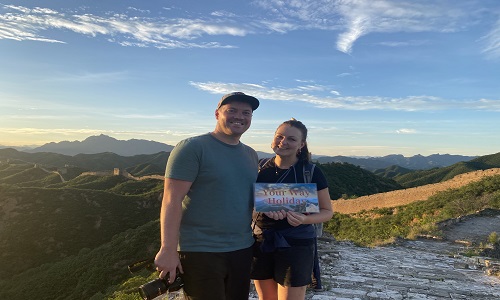 Discover the Best of Beijing with Our 6-Day Beijing Tour Package: Iconic Sites, Local Markets, and Expert Beijing Tour Guide
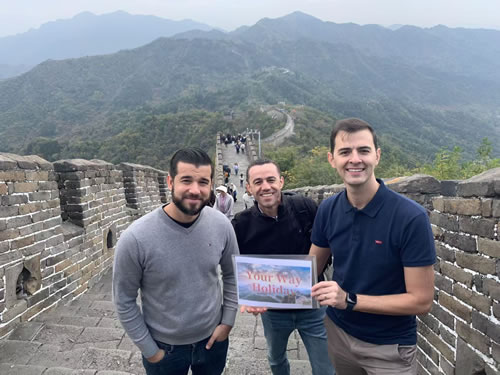 Private Simatai Great Wall Night Tour & Gubei Water Town One-Day Experience
Are the above sample tour programs not suitable for you? Dont worry, our Beijing tours can be tailor-made based on your requirements and budget to create unique Beijing experiences that allow you to interact with the local people and culture. We are Beijing travel experts who know what your guidebook and foreign agencies don't. Our enthusiastic tour expert will promptly reply you in details within 24 hours.
Prev: The Ultimate Guide to Chinese Street Food in Beijing: Top Snacks You Must Try
Next: No next link
Wechat: YourWayHolidayAsia
24 Hours Hotline:
+86 137-3541-1378
* Authentic Experiences: Genuine local experiences that immerse you in the true essence of Beijing and beyond.
* Safety First: Highest safety standards with secure activities and reliable transportation.
* Customizable Tours: Flexible itineraries tailored to your interests and needs.
* Local Expertise: In-depth knowledge of Beijing and China, offering exclusive insights.
* Professional Guides: Licensed bilingual guides with over 5 years of experience.
* Comfortable Travel: Experienced drivers and well-maintained vehicles for a smooth journey.
* Sustainable Tourism: Commitment to responsible tourism and supporting local communities.
* Customer-Focused: Personalized service and continuous improvement based on your feedback.
* Free Cancellation: Cancel up to 24 hours before travel for flexibility and peace of mind.
* 24/7 Support: Round-the-clock assistance for any questions or help needed.
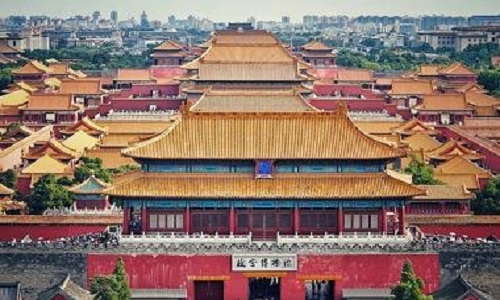 Forbidden City Beijing: Ultimate Tour Guide to China’s Imperial Palace
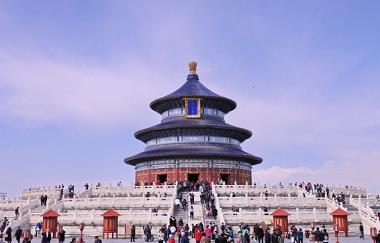 Temple of Heaven
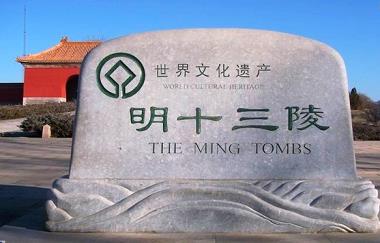 Ming Tombs
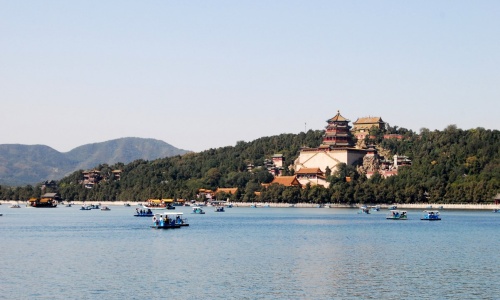 Exploring the Summer Palace Beijing: A Complete Guide to China’s Most Iconic Royal Garden
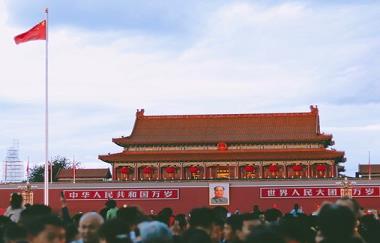 Tiananmen square
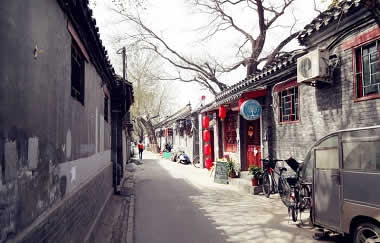 Beijing Hutongs: A Living Tapestry of Time
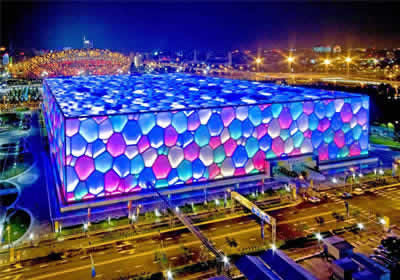 Water Cube
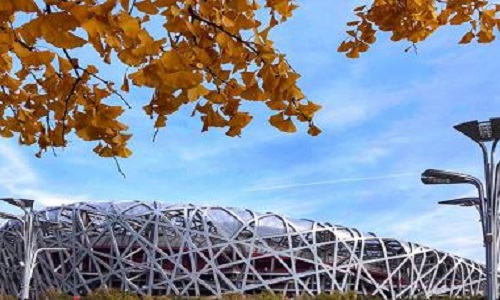 Beijing Bird's Nest – Explore the Iconic National Stadium Beijing
1 to 1 tailor-made service from our professional travel advisors for the most sophisticated
Constantly excellent reviews for attraction, hotel and service Competitive price
Local experts provide quality tours Best selected knowledgeable local guides Authentic local restaurants
7*24 hours available to create you a worry-free tour. No Hidden Fees and absolutely no pressure to buy. Secured









Copyright © 2017 Chinabeijingprivatetour.com All rights reserved. 浙ICP备18056007号-2