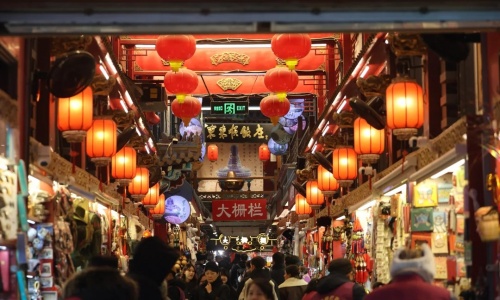


Exploring Chinese Street Food in Beijing
Beijing’s street food is more than just a quick bite—it’s a living, breathing slice of Chinese culture that sets it apart from street food scenes across other Chinese cities. What makes Beijing street food unique is its unbeatable blend of imperial heritage, ethnic diversity and hutong (alleyway) authenticity: unlike the spicy, bold flavors of Sichuan or the seafood-forward snacks of coastal cities like Shanghai, Beijing’s street bites balance subtle, savory notes with time-honored cooking techniques, shaped by centuries of being China’s political and cultural heart.
Street snacks are the ultimate gateway to understanding local Beijing culture. For generations, Beijingers have gathered over steaming bowls of Chao Gan and crispy Jianbing in hutong alleys, at temple fairs and on street corners—these bites are woven into the daily life, festivals and even the dialect of the city. A single bite of a traditional snack tells a story of Beijing’s past and present, connecting travelers to locals in a way no landmark can.
In this ultimate guide, you’ll find everything a traveler needs to explore Chinese street food in Beijing:
• The ancient history behind snacks still eaten today;
• The three main culinary influences: Han Chinese, Hui Muslim, and Imperial Court;
• Where to find the best savory snacks, sweet treats, and late-night bites;
• How to eat like a local in Beijing's historic hutongs.
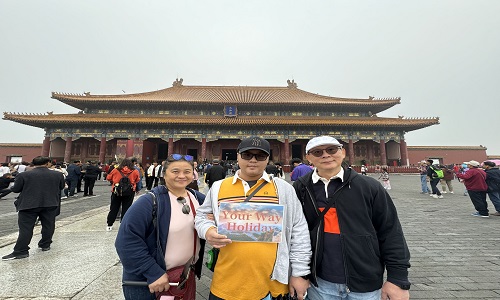 Beijing Day Tour: Experience the Best of the City’s Iconic Landmarks and Rich Heritage
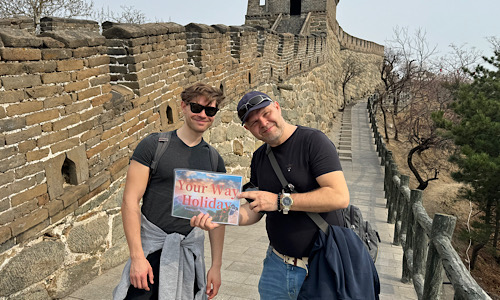 Embark on Beijing Tours: Experience a Full-Day Beijing Great Wall Tour to Badaling Great Wall and Ming Tombs
The History and Culture Behind Beijing Street Food
To truly appreciate beijing street food, you need to understand its roots. It’s a cuisine born from the streets, refined in the palace, and shared across generations.
A. Origins of Beijing Snack Culture
Beijing street food has a history stretching back hundreds of years, with its roots firmly planted in the city’s temple fairs and bustling traditional markets. Long before modern food courts and snack streets, temple fairs were the beating heart of Beijing’s food scene—held during festivals and religious celebrations, these fairs brought together vendors from all over the region, selling snacks to pilgrims, locals and imperial officials alike. What began as a way to feed crowds at religious events soon evolved into a beloved part of Beijing’s daily culture, with snacks passed down through generations of vendors.
Historical records document over 200 varieties of traditional Beijing snacks, each with its own unique recipe and story. From fermented bean drinks to stuffed flatbreads, these snacks were designed to be portable, affordable and full of flavor—perfect for the busy streets of a capital city. Many of these classic recipes remain largely unchanged today, making Chinese street food in Beijing a delicious link to the city’s imperial past.
B. Three Culinary Influences in Beijing Snacks
Beijing's unique position as the imperial capital gave rise to three distinct streams of snack culture:
• Han Chinese snacks: The foundation of Beijing’s street food, these bites focus on simple, high-quality ingredients and delicate flavors—think steamed buns (Baozi), pan-fried potstickers (Guotie) and the iconic breakfast Jianbing. Han Chinese snacks prioritize balance, with little to no heavy spice, letting the natural taste of ingredients shine.
• Hui Muslim street food: A cornerstone of Beijing’s street food scene, Hui Muslim cuisine brings aromatic lamb dishes, halal snacks and bold, fragrant spices to the capital. Dishes like flash-boiled tripe (Bao Du), lamb skewers (Chuan’r) and door nail meat pies (Men Ding Rou Bing) are all Muslim-inspired, reflecting Beijing’s long history of ethnic diversity and tolerance.
• Imperial court desserts: Many of Beijing’s sweet street snacks have their origins in the kitchens of the Forbidden City. Imperial chefs created delicate, refined desserts for the emperor and his court, and these recipes eventually made their way to the streets of Beijing. Today, snacks like Pea Cake (Wandou Huang) and Glutinous Rice Dessert (Ai Wo Wo) are beloved street treats, offering a taste of imperial luxury at an affordable price.
C. Temple Fairs and Traditional Snack Markets
Long before food courts and delivery apps, Beijing’s street food scene revolved around temple fairs. These events were the original food festivals:
• Tianqiao Snack Market: Once the most famous entertainment and food hub in old Beijing, Tianqiao was where street performers, storytellers and food vendors gathered. It was famous for its hearty, affordable snacks—perfect for the working class and travelers alike—and remains a symbol of Beijing’s lively street food heritage.
• Dong'an Market: A historic market in the heart of Beijing, Dong’an Market has been a staple of the city’s food scene for over a century. It brought together snacks from all over China, making it a melting pot of flavors and a favorite spot for both locals and foreign visitors in the early 20th century.
• Longfu Temple Fair: Held at the historic Longfu Temple, this fair is one of Beijing’s oldest and most beloved, famous for its seasonal snacks and traditional treats. From sweet Tanghulu in winter to cold soybean drinks in summer, the Longfu Temple Fair has long been a place to taste the best of Chinese street food in Beijing by season.
D. Street Vendors and Hutong Food Culture
The true soul of Chinese street food in Beijing lives in its hutongs. For centuries, vendors roamed these narrow alleyways, carrying their snacks on shoulder poles or carts. Their unique vendor calls—melodic chants announcing their wares—were the soundtrack of daily life . Today, while the calls have faded, many family-run food stalls still operate in hutongs, preserving recipes passed down through generations.
E. Seasonal and Time-Based Street Food Traditions
Beijingers eat by the clock and the calendar. The city’s street food changes throughout the day and across the seasons:
• Breakfast snacks: Beijing’s morning street food is all about quick, filling bites to fuel the day. Crispy Jianbing, steamed Baozi and savory Chao Gan are the stars of the breakfast scene, sold from carts on every street corner and eaten on the go by commuters.
• Afternoon sweets: As the day slows down, Beijing’s streets fill with sweet treats—perfect for a midday pick-me-up. Soft Ai Wo Wo, chewy Lv Da Gun and creamy Old Beijing Yogurt are popular afternoon snacks, offering a sweet contrast to the savory breakfast bites.
• Late-night street food: Beijing’s street food scene comes alive at night, with grilled skewers, hot lamb soup and fried snacks serving as the perfect late-night meal. Guijie (Ghost Street) is the capital’s famous late-night food hub, where vendors stay open until the early hours, serving hungry locals and travelers alike.
• Seasonal specialties: Chinese street food in Beijing changes with the seasons, with snacks designed to beat the summer heat or warm up winter nights. Summer brings cold Suanmei Tang (sour plum drink) and refreshing mung bean desserts, while winter is all about hot lamb soup (Yang Za Tang), crispy Tanghulu and steaming Laba Porridge. Every season in Beijing has its own iconic street food, making every visit a new taste experience.
Must-Try Beijing Street Food (Complete Guide)
A. Classic Savory Beijing Street Food
1. Jianbing – Beijing’s Most Popular Breakfast Street Food
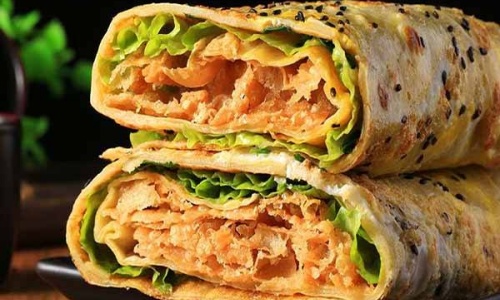
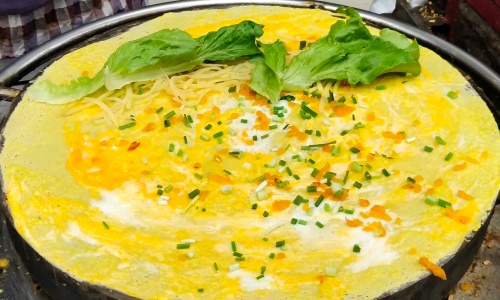
HISTORY: Beijing Jianbing traces its roots to Shandong and Tianjin, with griddle-made pancake records dating back to the Ming Dynasty’s Wanli period. Originally a spring delicacy famous at Tianqiao Market, it was described in the Qing Dynasty’s Ode to Jianbing for its crisp and fragrant taste. Evolving from millet and soybean flour batter variants, it’s now a year-round street food with modern innovative flavors and cross-border taste fusions.
INGREDIENTS: Millet flour, soybean flour, refined salt, edible alkali, crispy dough stick, fermented bean curd sauce, chili paste, sweet noodle sauce, scallion, vegetable oil.
FLAVOR PROFILE: Soft on the outside and crispy on the inside, with a rich and prominent sauce aroma.
TYPICAL PRICE: RMB 9-24
WHERE TO TRY:
1. Dahua Jianbing (with English menu)
• Address: 23-25 North Jianzi Alley, Jiaodaokou Subdistrict, Dongcheng District (inside Fuxue Fresh Supermarket).
• Business hours: 06:00-13:00 daily.
• Rating: 4.8/5
• Highlights: Mung bean and corn flour batter, unique fermented bean curd sauce, homemade crispy dough sticks that stay crunchy for takeout; once recommended by Beijing TV and American travel channels, with a 15-minute average waiting line and large portions.
2. Zhongyan Jianbing (Haiyuncang Jianbing)
• Address: Haiyuncang Boutique Apartment, Dongcheng District (at the exit of the food market in Haiyuncang Community).
• Business hours: 06:30-12:30 daily.
• Rating: 4.7/5
• Highlights: Multiple flour options including purple rice and millet, Tianjin-style taste with pickled mustard; smaller portions, no takeout service, and only 1-2 people in line on average.
2. Men Ding Rou Bing (Door Nail Meat Pie)
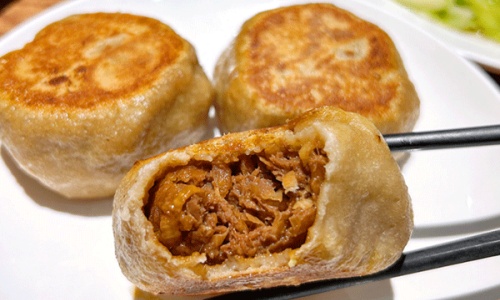
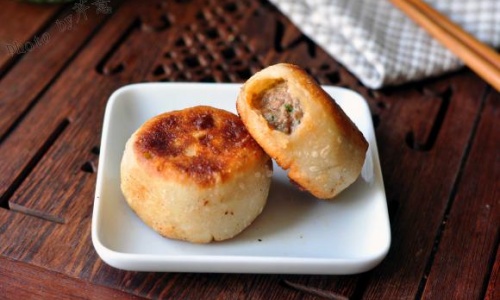
HISTORY: A traditional halal Beijing snack, it gets its name from its resemblance to metal studs on ancient city gates, with a legend linking it to Empress Dowager Cixi. A staple in Beijing’s Muslim communities, it uses a classic boiling and pan-frying technique, and its traditional production involves a two-hour dough proofing process and well-kneaded beef filling for juicy texture.
INGREDIENTS: all-purpose flour, beef mince, onion, egg, soy sauce, salt, sugar, monosodium glutamate, thirteen-spice powder or Chinese prickly ash water.
FLAVOR PROFILE: Rich and juicy beef filling with a fragrant spice note; golden crust is crispy outside and soft inside, with rich beef fat aroma that is perfectly balanced when eaten with vinegar.
TYPICAL PRICE: RMB 7-10 per pie
WHERE TO TRY:
1. Baorui Men Ding Rou Bing
• Address: Dongcheng District Dongsi Liutiao East.
• Business hours: 10:30-21:30 daily.
• Rating: 4.6/5
• Highlights: A nearly 20-year-old old shop with large, juicy pies and abundant broth; the only downside is long waiting lines due to great popularity.
2. Yin Ji Men Ding Rou Bing
• Address: Multiple branches across the city.
• Business hours: 06:00-20:30 daily.
• Rating: 4.5/5
• Highlights: A chain store with high cost performance, consistent taste across all branches, and a convenient choice for diners nearby.
3. Da Lian Huo Shao (Pancake Roll with Filling)
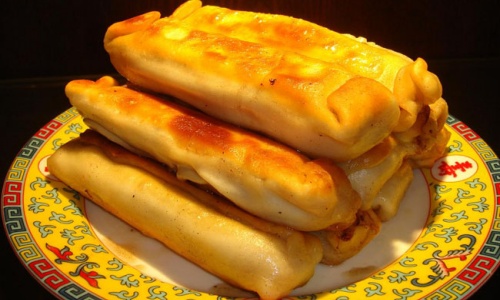
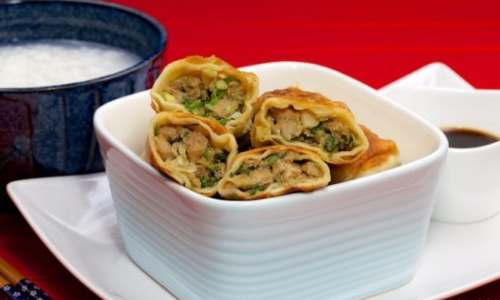
HISTORY: A classic Jing cuisine snack created in 1876 by a couple from Shunyi, it’s named for its shape resembling traditional cloth shoulder bags. First sold at Dong’an Market, it later became a citywide famous delicacy with a special pan-frying technique. It is traditionally served with hot and sour soup for a complete taste experience.
INGREDIENTS: Flour, peanut oil, pork, chives, sea cucumber, shrimp, minced green onion and ginger, salt, soy sauce, monosodium glutamate.
FLAVOR PROFILE: Crisp on the outside and tender on the inside, with a savory and juicy filling and rich umami taste; similar to potstickers but with a unique long folded shape, and the crust is golden and fragrant after pan-frying.
TYPICAL PRICE: RMB 20-30 for a serving
WHERE TO TRY:
1. Baiyunju Old Beijing Da Lian Huo Shao (Lianyiyuan Branch)
• Address: Building 1, Lianyiyuan Second District, Fengtai District.
• Business hours: 10:00-24:00 daily.
• Rating: 4.6/5
• Highlights: Afforable price with large fillings, oily but not greasy crust; tastes great both fresh and takeaway, affiliated with the renowned Youanmen branch.
2. Youanmen Old Beijing Da Lian Huo Shao & Home-style Dishes
• Address: Building 2, Kaiyangli Seventh District, Fengtai District.
• Business hours: 10:00-24:00 daily.
• Rating: 4.7/5
• Highlights: A time-honored shop in southern Beijing, popular with both locals and tourists; packed during meal times, a perfect first meal for travelers arriving by high-speed rail.
4. Zha Jiang Mian (Noodles with Soy Bean Paste)
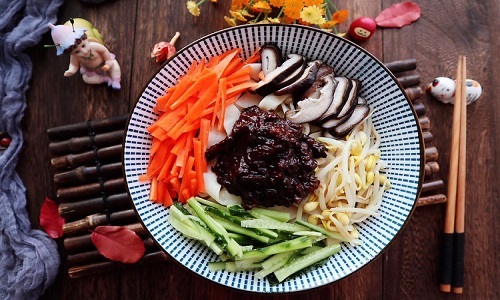
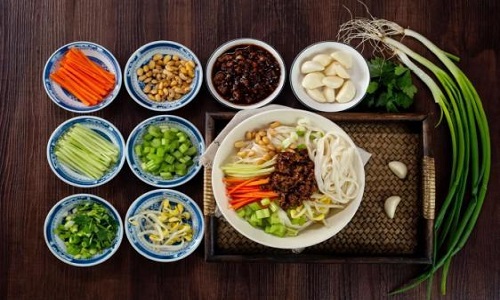
HISTORY: Ranked among the "Top 10 Chinese Noodles", it evolved from the Qing Dynasty’s "cold braised pork noodles" and was named a national famous noodle in 2013. A classic Beijing dish, it is served with side vegetables and soybean paste in separate plates, offering a unique dining experience of mixing ingredients by yourself, and has become a staple of local daily food.
INGREDIENTS: Noodles, pork (fat and lean), green onion, ginger, garlic cloves, dried tofu, soybean paste, salt, white sugar, light soy sauce, dark soy sauce, cooking wine, clear water.
FLAVOR PROFILE: Salty with a hint of sweet and sour, fresh and refreshing; the noodles are chewy, and the thick soybean paste with large pork pieces pairs perfectly with crisp side vegetables, creating a rich and balanced taste.
TYPICAL PRICE: RMB 16-28 per bowl
WHERE TO TRY:
1. Jinbaozhang (Jiaoda East Road Branch)
• Address: Jiaoda East Road, Haidian District.
• Business hours: 10:00-21:00 daily.
• Rating: 4.9/5
• Highlights: Six kinds of side vegetables including egg crumbles and two types of beans; mild sweet sauce with large pork pieces; chewy medium-wide noodles that are easy to digest.
2. Menkuang Hutong Centennial Luzhu (near Xinjiekou Subway Station)
• Address: Near Xinjiekou Subway Station, Xicheng District.
• Business hours: 09:00-22:00 daily.
• Rating: 4.8/5
• Highlights: Recommended by celebrity Lu Han; five kinds of generous side vegetables; fresh, non-salty and non-sweet sauce; perfect taste balance.
B. Traditional Old Beijing Snacks
1. Douzhi and Jiaoquan – The Most Authentic Beijing Breakfast
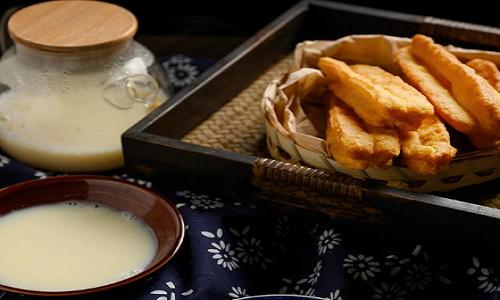
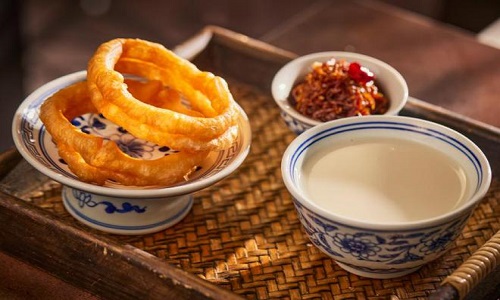
HISTORY: With a 300-year history, Douzhi was a folk snack before being introduced to the Qing imperial court in 1754, and its food custom was listed as a Beijing intangible cultural heritage in 2007. Jiaoquan has Ming Dynasty production records, a former royal court snack, and the pair is a classic Beijing breakfast with its eating custom detailed in old Beijing literary works.
INGREDIENTS: Fermented mung bean residue (Douzhi); flour, salt, alum, alkali (Jiaoquan).
FLAVOR PROFILE: Douzhi has a sour, earthy and slightly bitter taste with mung bean fragrance, nourishing for the stomach; Jiaoquan is deep golden, crisp and salty, the perfect crispy contrast to smooth Douzhi; paired with shredded pickled vegetables and chili oil for a unique sour and salty flavor.
TYPICAL PRICE: RMB 3 for Douzhi, RMB 2 for Jiaoquan
WHERE TO TRY:
1. Yin San Douzhi (Tiantan Branch)
• Address: North Gate of Tiantan Park, Dongcheng District.
• Business hours: 05:30-10:00 daily.
• Rating: 4.7/5
• Highlights: Small and popular shop with a convenient takeout window; crispy Jiaoquan and sweet sugar ears; shredded red pickles as the perfect greasiness-cutting side for Douzhi.
2. Old Ciqikou Douzhi Shop (Tiantan Branch)
• Address: North Gate of Tiantan Park, Dongcheng District.
• Business hours: 06:00-10:30 daily.
• Rating: 4.6/5
• Highlights: Moderate seating with free pickles; rich snack varieties including delicate pea cake and chewy Lv Da Gun; authentic Douzhi with classic old Beijing taste.
2. Chao Gan – Beijing Pork Liver Stew
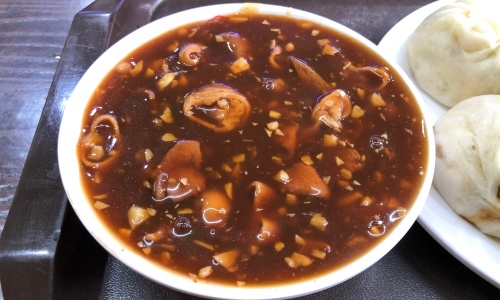
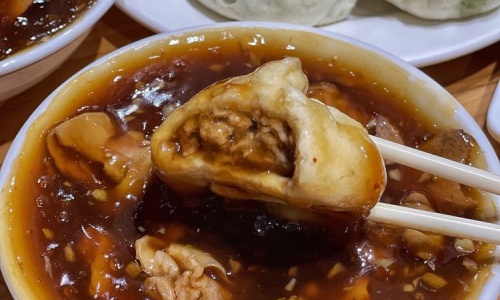
HISTORY: Originating from Song Dynasty liver and lung dishes, it was revamped from "boiled offal" at Qianmen’s Huixianju in the Qing Tongzhi period. Improved with garlic sauce and mushroom soup, it merged with Tianxingju’s craft in 1956, and Tianxingju’s version was named a national famous snack in 1997. It is a classic Beijing breakfast with a unique eating custom of sipping along the bowl edge with steamed buns.
INGREDIENTS: Pork large intestine, pork liver, mushroom soup, pork bone soup, cooking wine, starch, soy sauce, Chinese prickly ash, star anise, cinnamon, fennel, bay leaf, green onion, ginger, garlic.
FLAVOR PROFILE: Bright and oily soup with a rich garlic aroma; tender and crispy pork large intestine, smooth and non-fishy pork liver; thick but not runny soup with a savory and slightly salty taste, perfect with steamed buns.
TYPICAL PRICE: RMB 14(small bowl), RMB 25 (large bowl).
WHERE TO TRY:
1. Miaojiapo Steamed Bun Shop
• Address: Near Yonghe Temple, Guozijian and Guijie, Dongcheng District.
• Business hours: 06:00-14:00 daily.
• Rating: 4.9/5
• Highlights: Hidden gem with exceptional Chao Gan; decent steamed buns; only a 5-6 minute bike ride from the Drum Tower; no long waiting lines.
2. Yuan Zhaoji (Sanlihe Branch)
• Address: Sanlihe Area, Xicheng District.
• Business hours: 06:00-13:30 daily.
• Rating: 4.8/5
• Highlights: Most highly rated Chao Gan shop online; authentic classic taste; steamed buns best paired with yellow mustard sauce for a unique flavor; slightly high price.
3. Bao Du – Flash-Boiled Tripe
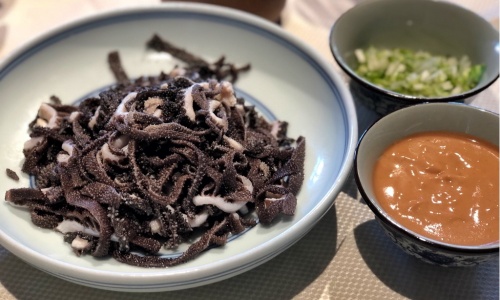
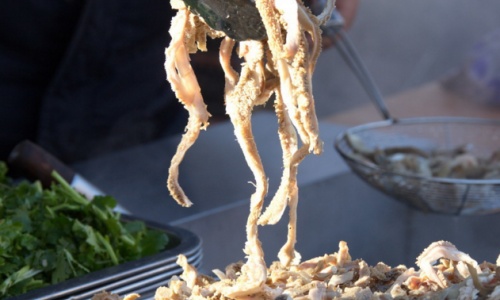
HISTORY: A famous Beijing and Tianjin snack with Qing Qianlong period records, it was a favorite of late Qing and early Republican celebrities like Mei Lanfang. A staple halal snack, lamb tripe has 9 varieties (most shops serve 5 popular ones), and it is a classic autumn food in Beijing with the local saying "To eat autumn, eat Bao Du". Famous old shops include Bao Du Shi, Bao Du Yang and Bao Du Feng.
INGREDIENTS: Lamb tripe, coriander, peanut oil, green onion, ginger, garlic, soy sauce, salt, monosodium glutamate, cooking wine, vinegar, sesame paste, chili oil.
FLAVOR PROFILE: Tender and crisp with fresh and mild meat aroma, non-greasy and non-oily; dipping sauce with sesame paste, vinegar and chili oil adds a rich, savory and slightly spicy taste with a refreshing aftertaste.
TYPICAL PRICE: RMB 30-50 for a portion.
WHERE TO TRY:
1. Jinshenglong (Liupukang Branch)
• Address: Liupukang Area, Xicheng District.
• Business hours: 10:00-21:30 daily.
• Rating: 4.9/5
• Highlights: Time-honored shop; authentic flash-boiled tripe with fresh ingredients; perfect ratio of traditional dipping sauce; a favorite of local food lovers.
2. Bao Du Feng (Langfang Ertiao Branch)
• Address: Langfang Ertiao, Qianmen, Dongcheng District.
• Business hours: 10:00-21:00 daily.
• Rating: 4.8/5
• Highlights: Century-old halal shop; classic lamb tripe varieties; tender and crisp texture; inherited traditional dipping sauce recipe.
4. Zha Guan Chang – Fried Starch Sausage
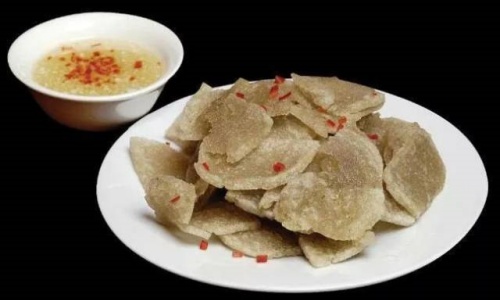
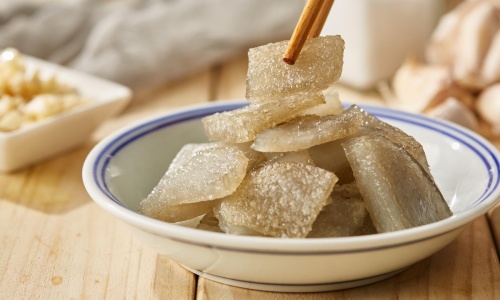
HISTORY: A classic Beijing snack with Ming Dynasty records, it became famous in the Qing Guangxu period as a favorite of Empress Dowager Cixi, made by Fuxingju’s "Guan Chang Pu". Evolving from intestine-stuffed starch to modern mung bean starch strips, Heyi Zhai was famous for its slicing and frying craft in the late Qing, and Fengnian Guanchang is now the most renowned brand with daily large sales.
INGREDIENTS: Starch sausage, salt, sesame oil, garlic.
FLAVOR PROFILE: Crisp on the outside and soft on the inside with a glutinous rice-like texture, no meat taste; served with salty and slightly spicy garlic water, the garlic aroma complements the mild starch flavor for a simple and savory taste.
TYPICAL PRICE: RMB 10-15 for a portion.
WHERE TO TRY:
1. Fengnian Guanchang (Yonghe Palace Street Branch)
• Address: Yonghe Palace Street, Dongcheng District.
• Business hours: 09:00-20:00 daily.
• Rating: 4.8/5
• Highlights: Most famous brand for fried starch sausage; traditional diamond-shaped slicing and frying technique; crispy and fragrant taste; authentic garlic water dipping sauce.
2. Tianqiao Guo Ji Guan Chang & Luzhu Huoshao
• Address: Tianqiao Area, Xicheng District.
• Business hours: 09:30-21:00 daily.
• Rating: 4.6/5
• Highlights: Local favorite shop; crispy fried starch sausage with authentic Luzhu Huoshao; affordable prices and casual dining atmosphere.
5. Ma Doufu – Fermented Mung Bean Dish
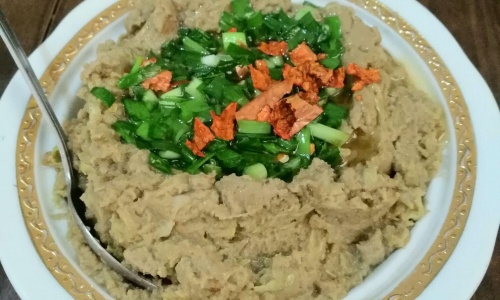
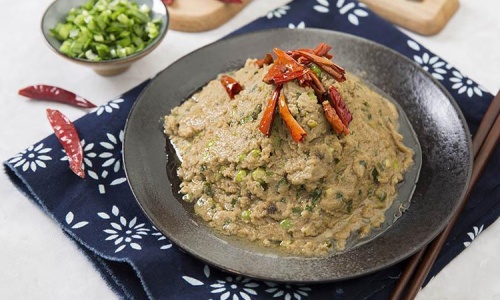
HISTORY: A unique Beijing specialty from old Beijing’s mung bean processing workshops, it is the thick green paste extracted between soybean milk and Douzhi during mung bean grinding. Rich in cellulose, protein and vitamins, it is a nutritious local snack with a long history of being loved by Beijingers, and is a classic side for Douzhi and Jiaoquan.
INGREDIENTS: Fermented mung bean paste, snow vegetable, lamb tail oil, yellow soybean paste, green chives.
FLAVOR PROFILE: Savory and slightly spicy with a unique fermented mung bean aroma; soft and glutinous texture with a hint of crunch from snow vegetables; lamb tail oil adds a rich fragrance without greasiness, balanced by yellow soybean paste’s mild taste.
TYPICAL PRICE: RMB 15-20 for a portion.
WHERE TO TRY:
1. Menkuang Centennial Luzhu (Xinjiekou Branch)
• Address: Near Xinjiekou Subway Station, Xicheng District.
• Business hours: 09:00-22:00 daily.
• Rating: 4.7/5
• Highlights: Authentic stir-fried Ma Doufu with four classic ingredients; rich flavor and generous portions; also serves other classic Beijing snacks like Luzhu Huoshao.
2. Niujie Baoji Douzhi Shop
• Address: Niujie Muslim Food Street, Xicheng District.
• Business hours: 06:00-10:30 daily.
• Rating: 4.6/5
• Highlights: Local Muslim shop; traditional Ma Doufu with fresh ingredients and mild taste; perfect pairing with Douzhi and Jiaoquan for a classic breakfast.
C. Beijing Street Barbecue and Late-Night Snacks
1. Chuan’r – Lamb Skewers
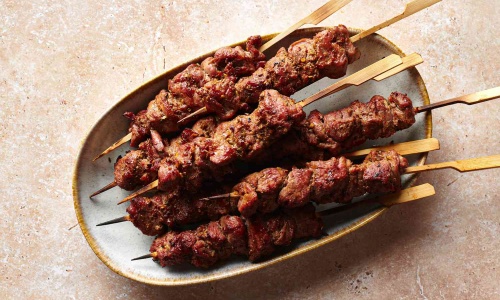
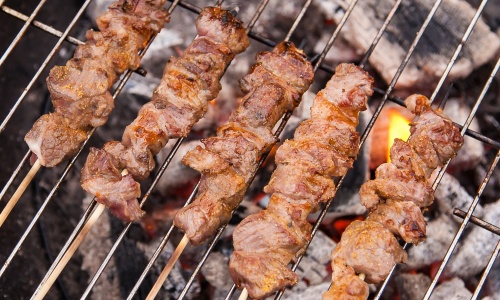
HISTORY: Beijing’s lamb Chuan’r is a beloved late-night snack brought to Beijing by Xinjiang immigrants, adapted to local tastes while retaining authentic Xinjiang spices. Cumin is the star spice, with charcoal grilling creating a smoky char; it has become a staple of Beijing’s late-night food scene, often paired with cold beer or hot tea.
INGREDIENTS: Lamb.
FLAVOR PROFILE: Tender and juicy lamb with a rich cumin and chili aroma; smoky char from charcoal grilling; slightly salty and spicy with a hint of sesame oil fragrance; fresh and non-gamy with a crispy outer layer and tender inner core.
TYPICAL PRICE: RMB 3-5 per skewer
WHERE TO TRY:
1. Shu Niumang Chuanchuan Xiang (Baiziwan Branch)
• Address: 106, Building 17, Baizi Garden, 16 Baiziwan Road, Chaoyang District.
• Business hours: 11:00-02:00 next day.
• Rating: 4.8/5
• Highlights: Nostalgic 80s-style decor; enamel basins for selecting skewers; unique lamb skewers with spicy and fragrant marinade; perfect for group dinners and photo taking.
2. Youmian Chuanchuan Xiang (Gongti Branch)
• Address: Gongti Area, Chaoyang District.
• Business hours: 11:00-24:00 daily.
• Rating: 4.7/5
• Highlights: Buffet-style with over 150 skewer varieties; unique double pepper dip with fresh and refreshing spicy taste; high cost performance; open late for night owls.
2. Yang Za Tang – Lamb Offal Soup
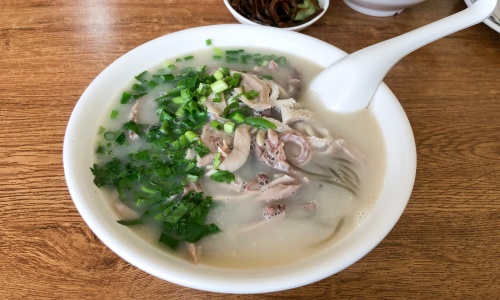
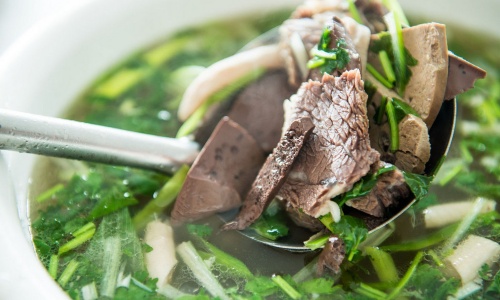
HISTORY: A classic Beijing halal late-night and winter warming snack, it is a staple in Muslim communities, made with slow-cooked lamb offal in a fragrant spice broth. It has been a popular post-drinking snack for decades, with famous local shops including Yin Ji Men Ding Rou Bing, Bai Kui Lao Hao and Ya’er Li Ji, all retaining traditional cooking crafts.
INGREDIENTS: Lamb heart, liver, lung, intestine, star anise, cinnamon, ginger, chili oil, coriander, green onion, fermented bean curd, chive flower sauce.
FLAVOR PROFILE: Spicy and savory with a rich lamb broth aroma; tender and soft offal with no fishy taste; moderate spicy kick from chili oil; thick and nourishing soup, perfect for warming up in cold weather.
TYPICAL PRICE: RMB 13-20 per bowl
WHERE TO TRY:
1. Yin Ji Men Ding Rou Bing (Tiantan Branch)
• Address: Near Tiantan Park, Dongcheng District.
• Business hours: 06:00-21:00 daily.
• Rating: 4.6/5
• Highlights: Affordable price; tender offal and fragrant broth; free refills of chive flower sauce, fermented bean curd and other condiments; perfect pairing with signature door nail meat pies.
2. Ya’er Li Ji (Shichahai Branch)
• Address: Shichahai Area, Xicheng District.
• Business hours: 08:00-22:00 daily.
• Rating: 4.8/5
• Highlights: Local favorite; fresh offal with a hint of Sichuan pepper in the broth; generous portions; classic winter warming snack and late-night bite.
3. Yang Tou Rou – Sliced Lamb Head Meat
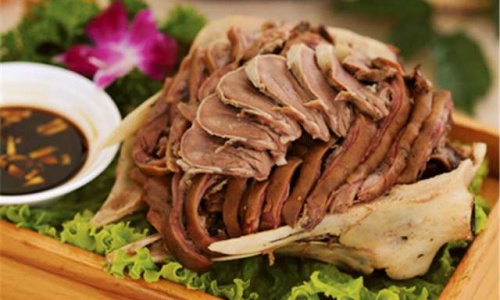
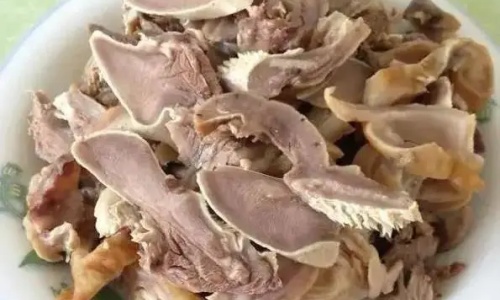
HISTORY: A Beijing halal snack with over 400 years of history, white-cooked sliced lamb head meat was created in the Qing Daoguang period, with a seven-step production craft and precise white boiling heat control. Renowned for paper-thin slicing and herbal spicy salt seasoning, it was a seasonal autumn-spring snack, and the "Yang Tou Ma" brand, passed down for seven generations, is a national famous snack and a favorite of old Beijing cultural celebrities.
INGREDIENTS: Cooked lamb head, potato vermicelli, carrot, spinach, cucumber, sesame oil, monosodium glutamate, soy sauce, vinegar, Chinese prickly ash, salt.
FLAVOR PROFILE: Tender and smooth lamb head meat with no gamy taste, mild and fresh; served cold with sesame paste and chili oil dipping sauce for a refreshing and savory taste; the vermicelli version is warm and nourishing for winter.
TYPICAL PRICE: RMB 30-50 for a plate
WHERE TO TRY:
1. Yang Tou Ma (Niujie Branch)
• Address: Niujie Muslim Food Street, Xicheng District.
• Business hours: 09:00-20:00 daily.
• Rating: 4.8/5
• Highlights: Century-old brand with seven generations of inheritance; paper-thin slicing; authentic herbal spicy salt seasoning; fresh and tender lamb head meat.
2. Niujie Local Snack Stall (South Entrance)
• Address: South Entrance of Niujie Muslim Food Street, Xicheng District.
• Business hours: 10:00-19:00 daily.
• Rating: 4.6/5
• Highlights: Local street stall; affordable prices and generous portions; mild and fresh taste; perfect for a casual on-the-go snack.
4. Fried Triangle Snacks
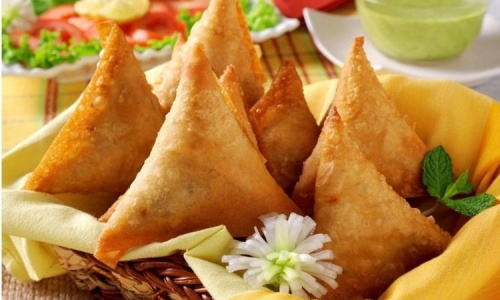
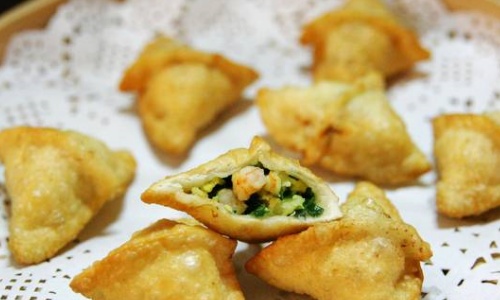
HISTORY: A traditional Beijing fried pastry with Qing Dynasty records, it was originally a Lunar New Year sacrificial food, later evolving into a folk snack. Legend links its origin to the Qing imperial kitchen or the famous Dou Yichu restaurant, where it was a signature dish paired with shaomai. It is now a local intangible cultural heritage candidate, with a long-standing eating custom of releasing steam before biting to avoid scalding.
INGREDIENTS: Warmed dough, pork, chives, dried shrimp (meat filling); carrot shreds, vermicelli, egg (vegetarian filling); green onion, ginger, starch paste (halal filling).
FLAVOR PROFILE: Crisp and golden crust with juicy and savory filling; meat version has a rich pork and chive aroma, vegetarian version is fresh and crisp; crust is crispy but not hard, with no soup splattering when eaten correctly.
TYPICAL PRICE: RMB 2-3 per piece
WHERE TO TRY:
1. Jiuchengju (Xicheng Branch)
• Address: Xicheng District, near Huguosi Snack Street.
• Business hours: 06:00-14:00 daily.
• Rating: 4.7/5
• Highlights: Famous for traditional fried triangle snacks; both meat and vegetarian options available; fresh fillings and crispy crust; also serves other classic Beijing fried snacks.
5. Zhi Zi BBQ (Iron Plate Barbecue)
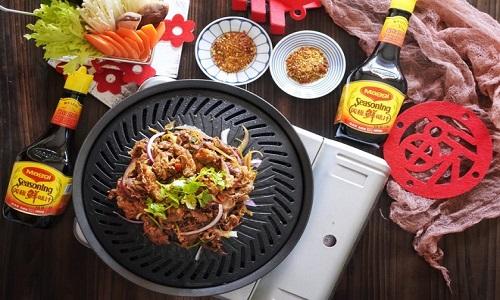
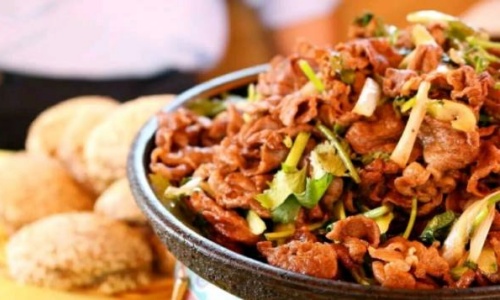
HISTORY: Originating from Mongolian nomadic people, it was brought to Beijing by the Manchus in the Qing Kangxi period, with an iron plate grill allowing fat to drip away for less greasy meat. Cooked with aromatic wood charcoal, it is divided into "civilized eating" (chef-cooked) and "martial eating" (self-grilling). Only "Southern Wan and Northern Ji" remain of the late Qing’s three famous barbecue shops, with Kao Rou Wan for beef and Kao Rou Ji for mutton.
INGREDIENTS: Fresh beef/mutton (hand-sliced), green onion, garlic slices, onion, coriander, salt, pepper.
FLAVOR PROFILE: Smoky char from aromatic wood charcoal; tender and juicy meat with no gamy taste (green onion and onion remove mutton smell); savory and slightly salty with rich meat aroma; can be paired with cumin dry dip or sesame oil wet dip, perfect with sesame seed cakes.
TYPICAL PRICE: RMB 80-150 per capita
WHERE TO TRY:
1. Laoshuren Barbecue City
• Address: Fengtai District, southern Beijing.
• Business hours: 11:00-22:00 daily.
• Rating: 4.9/5
• Highlights: 20-year-old iconic barbecue shop in southern Beijing; high cost performance; authentic traditional flavors; recommended grilled beef, lamb and beef tongue; long waiting lines during peak hours.
2. Liu Ji Zhi Zi BBQ (Hufangqiao Branch)
• Address: Hufangqiao, Xicheng District.
• Business hours: 10:30-22:30 daily.
• Rating: 4.8/5
• Highlights: 19-year-old time-honored shop; consistent authentic taste with no bad dishes; classic grilled beef and mutton; fried steamed buns as the perfect side.
D. Traditional Sweet Street Food in Beijing
1. Tanghulu – Candied Hawthorn Skewers
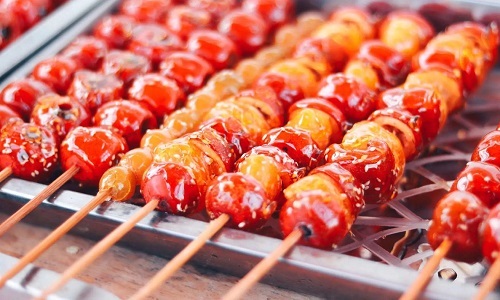
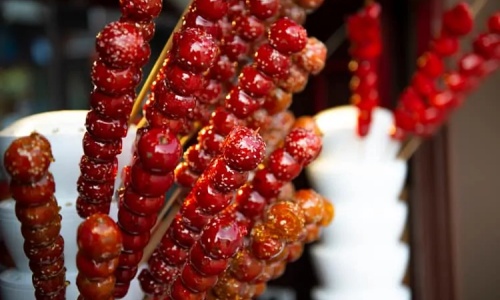
HISTORY: An iconic northern Chinese winter snack originating from the Southern Song Dynasty, it was created to cure a Song emperor’s concubine with loss of appetite, using hawthorn boiled with rock sugar. The recipe spread to the folk and was sold on skewers, recorded in old Beijing literary works for its sweet, crisp and cold taste. Now a classic Beijing winter street food with innovative fruit and filling varieties.
INGREDIENTS: Hawthorn (or other fruits), rock sugar, water.
FLAVOR PROFILE: Sweet and sour with a crisp, transparent rock sugar coating; fresh and tart hawthorn balances the sweet rock sugar; cold and crispy texture, appetizing and refreshing, the quintessential Beijing winter sweet snack.
TYPICAL PRICE: RMB 5-8 per skewer (stuffed varieties RMB 6–8)
WHERE TO TRY:
1. Baizhifang Tanghulu
• Address: Building 19, 30 Guang’anmen South Street, Xicheng District.
• Business hours: 09:20-15:00 daily.
• Rating: 4.9/5
• Highlights: Freshest and sourest hawthorn in Beijing; thin and crisp rock sugar coating; homemade fragrant red bean paste and soft Chinese yam stuffed varieties; sold out early, arrive for opening.
2. Jinta Xizhao Fixed Stall Tanghulu
• Address: Zhuzong Building, Jinta Xizhao Area, Chaoyang District.
• Business hours: 10:00-20:00 daily.
• Rating: 4.8/5
• Highlights: Large stuffed fillings with non-cloying sweet taste; grainy red bean paste and Chinese yam; thin and crisp rock sugar coating; popular but long waiting lines.
2. Lv Da Gun – “Rolling Donkey” Rice Cake
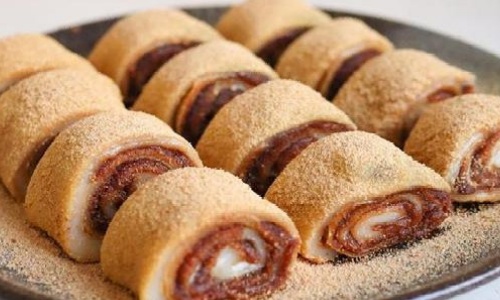
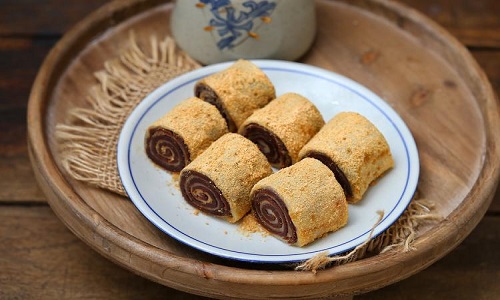
HISTORY: A traditional snack of old Beijing, Northeast China and Tianjin, it is named for rolling in roasted soybean flour, resembling loess kicked up by wild donkeys. With three distinct colors, it was named a national famous snack in 1997. A legend links its name to Empress Dowager Cixi, after a eunuch accidentally knocked the glutinous rice cake into a soybean flour basin.
INGREDIENTS: Glutinous rice flour, warm boiled water, caster sugar, red bean paste filling, roasted soybean flour.
FLAVOR PROFILE: Soft and chewy glutinous rice skin with sweet and smooth red bean paste; nutty and earthy soybean flour aroma; sweet but not cloying, melt-in-your-mouth filling, a classic sweet snack for all ages.
TYPICAL PRICE: RMB 2.5-20 per piece (RMB 18–20.8 per jin for bulk)
WHERE TO TRY:
1. Bai Kui Lao Hao (Longfu Temple Branch)
• Address: Longfu Temple Area, Dongcheng District.
• Business hours: 08:00-21:00 daily.
• Rating: 4.9/5
• Highlights: Perfect size, layers and chewiness; fragrant red bean paste and soybean flour; bite-sized with three bites per piece, the most popular Lv Da Gun in Beijing.
2. Huguo Temple Snacks (Headquarter)
• Address: Xicheng District, near Xinjiekou.
• Business hours: 07:00-21:30 daily.
• Rating: 4.7/5
• Highlights: Mini version with more layers; chewy glutinous rice skin; affordable price, perfect for a taste test with two bites per piece.
3. Ai Wo Wo – Glutinous Rice Dessert
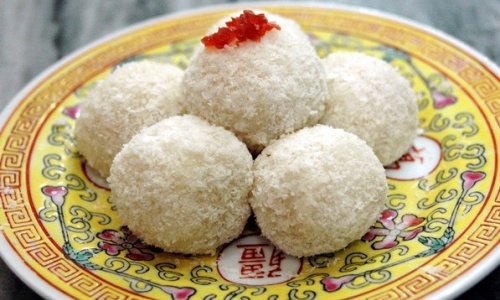
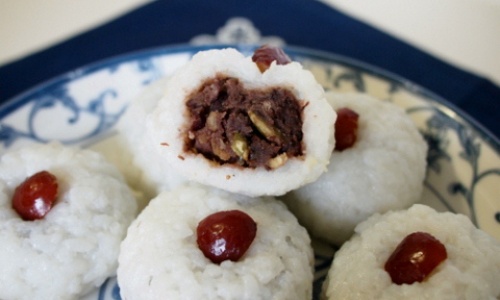
HISTORY: A time-honored Beijing sweet snack with Ming Dynasty origins, it was a favorite of imperial emperors and empresses, named "Imperial Ai Wo Wo" before spreading to the folk. Recorded in old Beijing cultural works for its snow-white, spherical shape and soft, glutinous taste, it gets its name from the concave surface dusted with thin flour.
INGREDIENTS: Glutinous rice, flour, white sugar, sesame, walnut kernel, hawthorn cake (for decoration).
FLAVOR PROFILE: Soft and glutinous with a sweet and fragrant taste; snow-white and delicate appearance with festive red hawthorn cake decoration; nutty and slightly sour filling balances the sweet glutinous rice, mild and refreshing, not cloying.
TYPICAL PRICE: RMB 5-8 per piece (RMB 20.8 per jin for bulk)
WHERE TO TRY:
1. Bai Ji Nian gao (Niujie Branch)
• Address: Niujie Muslim Food Street, Xicheng District.
• Business hours: 08:30-19:30 daily.
• Rating: 4.8/5
• Highlights: Most famous Ai Wo Wo in Beijing; fresh and soft glutinous rice; rich and nutty filling; short shelf life, buy in small quantities for the best taste.
4. Wandou Huang – Pea Cake from Imperial Cuisine
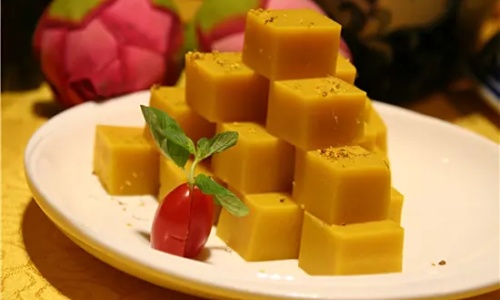
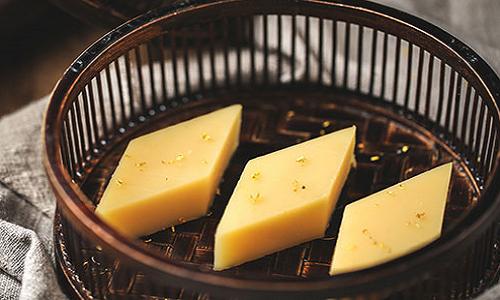
HISTORY: A classic Beijing sweet and spring seasonal snack, it was originally a coarse folk snack with red dates, later introduced to the Qing imperial court and improved into a fine version with top-quality white peas. A favorite of Empress Dowager Cixi, it is paired with kidney bean cake as an imperial snack, with Huguo Temple Snacks reviving the traditional iced eating method for a cool taste.
INGREDIENTS: White peas, white sugar, hawthorn cake (for decoration, imperial version).
FLAVOR PROFILE: Pale yellow, delicate and smooth, sweet and moist, melt-in-your-mouth with a fresh pea aroma; cool and refreshing, sweet but not cloying, a light and delicate imperial-style sweet snack.
TYPICAL PRICE: RMB 8-15 per piece
WHERE TO TRY:
1. Fangshan Restaurant (Beihai Park)
• Address: Inside Beihai Park, Xicheng District.
• Business hours: 09:00-18:00 daily.
• Rating: 4.9/5
• Highlights: Most authentic imperial-style pea cake; top-quality white peas with delicate texture; mild sweet taste paired with hawthorn cake; classic imperial court snack experience in a scenic park.
2. Huguo Temple Snacks (Headquarter)
• Address: Xicheng District, near Xinjiekou.
• Business hours: 07:00-21:30 daily.
• Rating: 4.8/5
• Highlights: Both classic and iced pea cake available; cool and refreshing iced version with the best taste in summer; affordable price with generous portions.
5. Sugar Fire Cake (Tang Huo Shao)
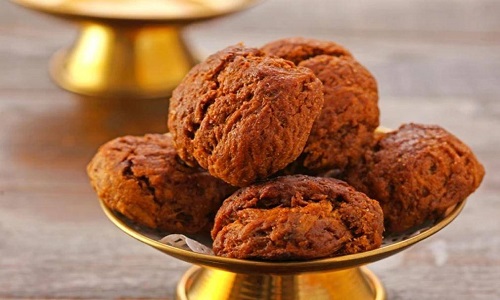
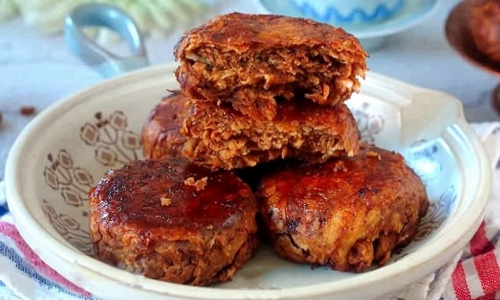
HISTORY: One of the "Thirteen Great Old Beijing Snacks", it originated in Tongzhou in the Ming Chongzhen period, created by a Muslim chef and inherited by Dashun Zhai for over 300 years. It is now a Beijing municipal intangible cultural heritage, made with traditional vat oven baking and a classic brown sugar and sesame paste filling, a beloved Beijing breakfast staple.
INGREDIENTS: Flour, yeast powder, warm water, brown sugar, sesame paste, sweet osmanthus (for fragrance).
FLAVOR PROFILE: Sweet and fragrant, soft with a slightly crispy crust; layered inner texture with rich brown sugar and sesame paste aroma; sweet but not cloying with a hint of osmanthus; a classic carbohydrate-rich breakfast snack.
TYPICAL PRICE: RMB 3-8 per piece
WHERE TO TRY:
1. Dashun Zhai (Niujie Branch)
• Address: Niujie Muslim Food Street, Xicheng District.
• Business hours: 08:00-20:00 daily.
• Rating: 4.9/5
• Highlights: Birthplace of Sugar Fire Cake, one of "Tongzhou Three Treasures"; royal court favorite in ancient times; small and round shape, sweet and fragrant taste, more sweet as you eat.
2. Ziguang Garden (Chaoyang Branch)
• Address: Chaoyang District, near Sanlitun.
• Business hours: 08:00-21:30 daily.
• Rating: 4.8/5
• Highlights: Famous multi-layered Sugar Fire Cake with clear layers; soft and glutinous texture; moderate sweetness with rich sesame paste and brown sugar aroma; friendly to the elderly and children.
6. Mi San Dao
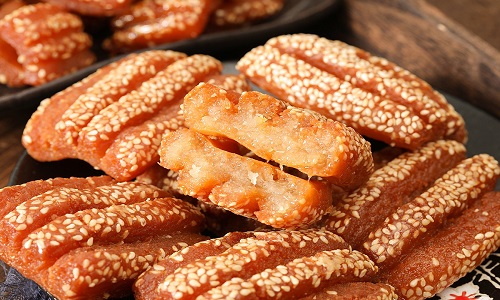
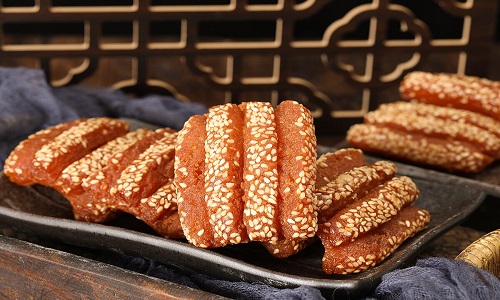
HISTORY: Originating in the Northern Song Dynasty, it is named for three knife marks on its surface, with a legend linking it to Su Dongpo. A traditional pastry from Xuzhou and Shandong, it was named a royal tribute by the Qing Qianlong Emperor, and Beijing’s Di’anmen version was named a national famous snack in 1997. It became a popular New Year gift in 2026, with a surge in popularity after a celebrity recommendation.
INGREDIENTS: Refined flour, maltose, oil, white sugar, sweet osmanthus, honey, water, sesame.
FLAVOR PROFILE: Shiny and non-sticky, sweet and soft with a rich sesame aroma; pull string when broken, chewy and non-sticky with a sweet, soft and sandy texture; best paired with green tea to cut greasiness, one piece is sufficient for most diners.
TYPICAL PRICE: RMB 20-30 for a small bag
WHERE TO TRY:
1. Beijing Sanhe Daoxiangcun (Wangfujing Branch)
• Address: Wangfujing Street, Dongcheng District.
• Business hours: 08:00-22:00 daily.
• Rating: 4.7/5
• Highlights: Most famous Mi San Dao in Beijing; authentic classic taste with rich sugar syrup and fragrant sesame; soft and chewy texture; a classic traditional sweet pastry.
E. Seasonal and Festival Snacks
Beijing’s street food is deeply tied to traditional Chinese festivals and seasons, with special snacks carrying rich cultural and folk meanings, crafted to match the climate and festive customs. These bites are not only a taste of local flavors but also a window into Beijing’s traditional culture.
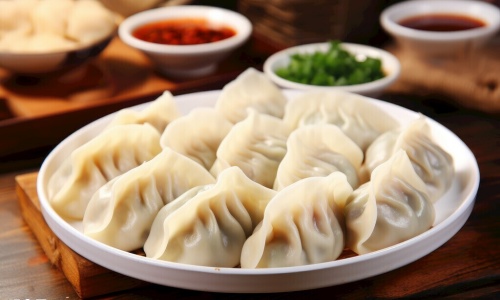
• Dumplings during Chinese New Year: The most important Chinese New Year food, symbolizing good luck and wealth (shaped like ancient gold ingots). Street vendors sell fresh hand-made dumplings with classic pork/cabbage and beef/green onion fillings; boiled or pan-fried, paired with vinegar and chili oil. A local custom hides a coin in a dumpling – the finder gets good luck for the new year.
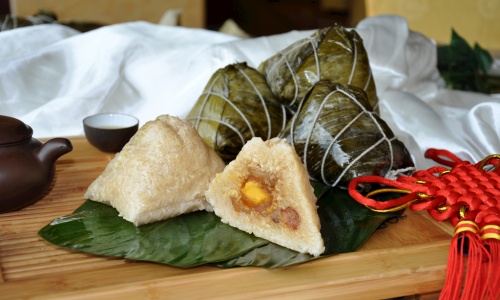
• Zongzi during Dragon Boat Festival: Eaten to commemorate the patriotic poet Qu Yuan, it is a sticky rice dumpling wrapped in bamboo leaves. Street vendors offer sweet (red bean paste, jujube) and savory (pork, salted egg yolk) versions, soft and glutinous with rich fillings, a portable festival snack.
• Mooncakes during Mid-Autumn Festival: Symbolizing family reunion (round like the full moon), it is the iconic Mid-Autumn snack. Street vendors sell small, portable mooncakes with classic lotus seed paste, red bean paste and egg yolk fillings, sweet and rich, perfect for eating while admiring the full moon.
• Laba Porridge in Winter: Eaten on Laba Festival (the start of Beijing’s cold winter), it is made with 8 kinds of grains and beans cooked for hours until thick and creamy. Sweet and nourishing, it symbolizes good luck and health, a popular warming street food sold from Laba Festival to the Spring Festival.
F. Modern Beijing Street Food and Creative Snacks
Beijing’s street food scene blends time-honored traditions with modern innovation, creating creative snacks that merge classic local flavors with international tastes and modern cooking techniques, loved by young locals and adventurous travelers alike.
1. Tea Ice Cream from Wuyutai Tea Shop
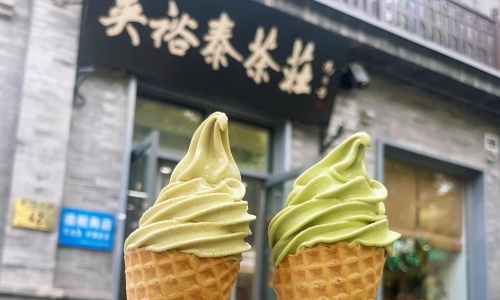
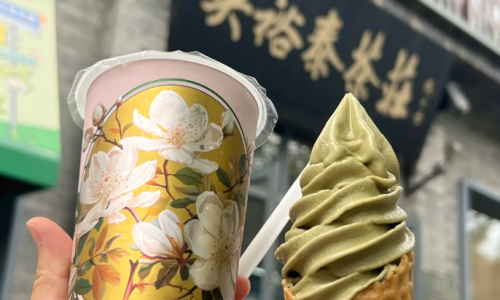
BRAND INTRO: Wuyutai, a 100+ year-old famous Chinese tea brand, innovatively crafts tea ice cream with fresh milk and real tea leaves (no artificial flavors).
FLAVORS & TASTE: Popular flavors include matcha, jasmine, oolong and Pu’er; strong authentic tea notes with a smooth, creamy texture, light and refreshing, not cloying.
TYPICAL PRICE: RMB 9
WHERE TO BUY: Multiple Wuyutai branches across Beijing (Wangfujing, Sanlitun, Nanluoguxiang), sold as a casual sweet treat for all ages.
2. Trendy Hutong Desserts
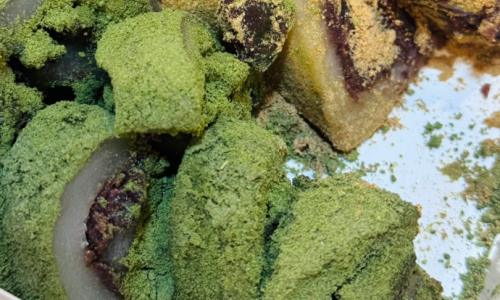
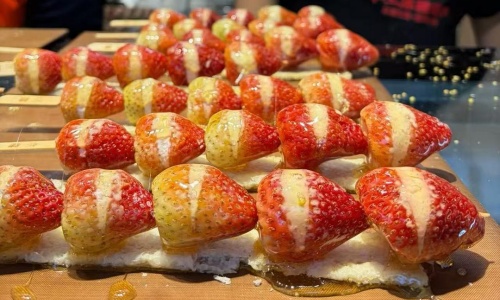
INNOVATION CORE: Blends traditional Beijing sweet snack textures and flavors with modern ingredients and presentation, located in historic hutongs for a mix of old and new.
POPULAR VARIETIES: Matcha Lv Da Gun with green tea soybean flour, red bean Ai Wo Wo with coconut cream, chocolate drizzled Wandou Huang, honey osmanthus Tanghulu.
WHERE TO TRY: Small dessert stalls in Nanluoguxiang, Yandaixiejie and Shichahai hutongs, the perfect end to a hutong food tour with a sweet and creative bite.
G. Gluten-Free & Vegetarian Beijing Street Food Options
Beijing’s diverse street food scene caters to all dietary needs, with abundant gluten-free and vegetarian options – local vendors are friendly and happy to accommodate custom requests, with simple English or translation notes ensuring a safe and delicious dining experience.
1. Vegetarian Beijing Street Food Recommendations
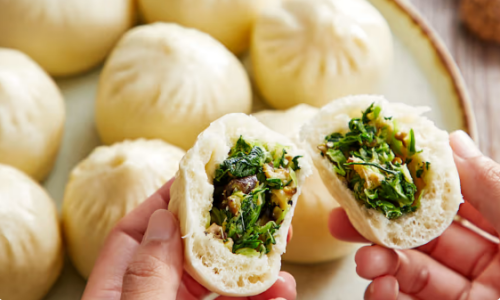
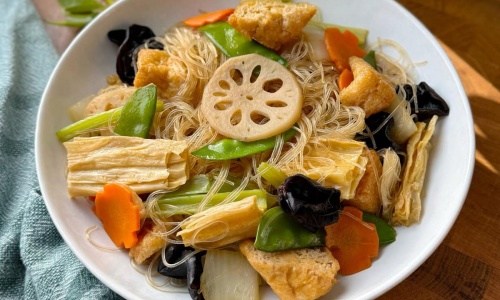
• Vegetable Baozi: Steamed buns with cabbage, mushroom, carrot and green onion fillings; sold at all breakfast carts and street stalls, soft and fluffy, fresh and crisp filling, a classic vegetarian staple.
• Tofu Snacks: Fried tofu skewers, braised tofu and spicy cold tofu; marinated in savory and spicy sauce, sold at all street food carts, cheap and flavorful, perfect for on-the-go bites.
• Vegetarian Jianbing: Custom-made with no egg or meat, topped with crispy dough sticks, pickled vegetables and sweet-spicy sauce; ask for "vegetarian Jianbing" at any Jianbing cart, a filling vegetarian breakfast.
• Buddha’s Delight Skewers: Grilled skewers with fried tofu, mushroom, eggplant and bell pepper; marinated in fragrant soy sauce and five-spice powder, a popular late-night vegetarian barbecue snack.
2. Gluten-Free Chinese Street Food Beijing Options
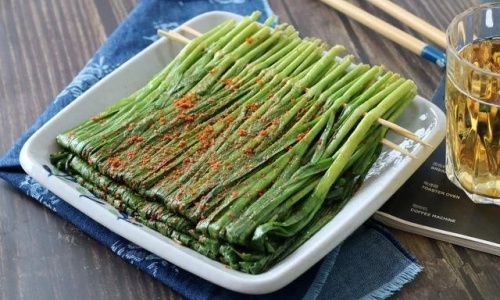
• Rice-Based Sweet Snacks: Ai Wo Wo, Lv Da Gun, Tanghulu; all made with glutinous rice or fresh fruit, no wheat flour, classic gluten-free sweet snacks sold at all traditional snack stalls.
• Grilled Skewers: Lamb/beef/vegetable Chuan’r; ask for no soy sauce or wheat-based marinade at barbecue stalls, pure spice and salt seasoning, fresh and tender, a perfect gluten-free savoury option.
• Fresh Fruit & Candied Snacks: Fresh fruit skewers, stuffed Tanghulu with Chinese yam; no wheat or gluten ingredients, refreshing and sweet, sold at street stalls across Beijing’s food districts.
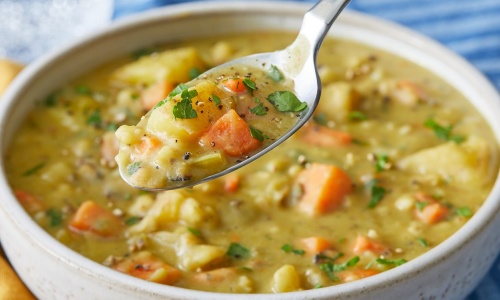
• Halal Soups: Lamb offal soup, pea soup; clear broth with no wheat thickeners, served at Niujie Muslim Food Street stalls, warm and nourishing, a gluten-free winter staple.
 All-inclusive 3-Day Beijing Private Tours: Uncover Historical Wonders and Contemporary Highlights
 Luxury Beijing Culinary & Cultural Experience: A Gourmet Adventure
Best Places to Try Beijing Street Food
1. Huguosi Snack Street
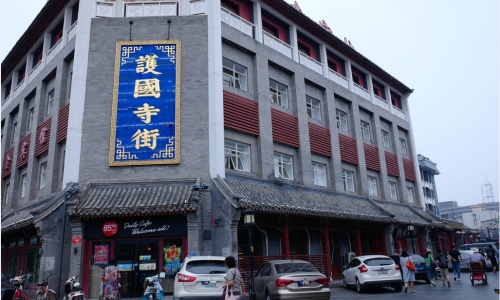
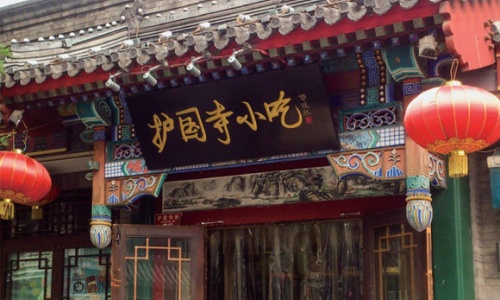
OVERVIEW: Huguosi Snack Street is the most famous destination for traditional Beijing snacks, a historic street with over 800 years of history in the heart of old Beijing. It gathers nearly all classic local snacks, with most shops being time-honored brands preserving inherited craftsmanship. Blending old hutong culture with modern food tourism, it’s loved by locals and tourists alike for authentic flavors and a lively atmosphere.
MUST-TRY SNACKS: Douzhi & Jiaoquan, Chao Gan, Wandou Huang, Lv Da Gun, Ma Doufu, Sugar Fire Cake.
HIGHLIGHTS:
• One-stop access to the most comprehensive traditional Beijing snacks, no need to travel across the city.
• Time-honored shops with decades of history ensure authentic old Beijing tastes.
• Lively hutong-style ambiance, perfect for experiencing local food culture while eating.
TIPS: Visit before 10:00 AM to avoid crowds; prioritize signature snacks at headquarter shops for the most genuine flavor.
2. Niujie Muslim Food Street
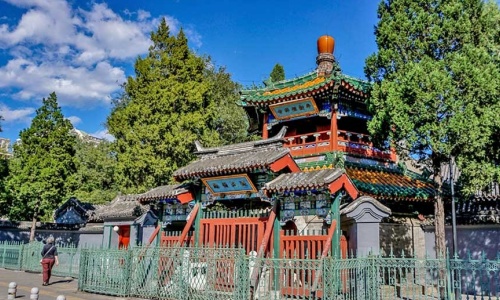
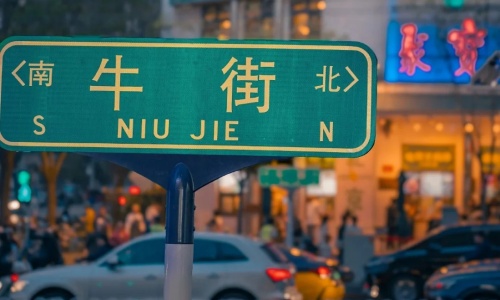
OVERVIEW: Niujie Muslim Food Street is Beijing’s top halal food destination and paradise for lamb lovers, with over 1,000 years of history as the core of the city’s Muslim community. It offers all classic halal Beijing street food, crafted with authentic Muslim techniques and fresh ingredients. Most stalls are family-run with generational recipes, providing the most genuine halal street food experience.
MUST-TRY SNACKS: Lamb Chuan’r, Men Ding Rou Bing, Bao Du, Yang Za Tang, Yang Tou Rou, Old Beijing Yogurt.
HIGHLIGHTS:
• Premium lamb-based snacks with fresh, tender meat and no gamy taste.
• All food is halal, ideal for Muslim travelers and halal cuisine enthusiasts.
• Local-focused with few tourist traps, offering affordable prices and generous portions.
TIPS: Visit for dinner to enjoy the lively late-night lamb barbecue scene; pair lamb snacks with Suanmei Tang to cut greasiness.
3. Qianmen & Dashilar Food Area
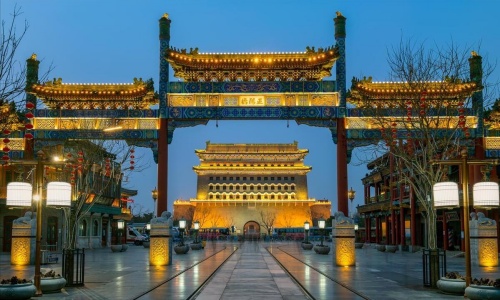
OVERVIEW: Qianmen & Dashilar Food Area is a historic street food district with over 600 years of history, located at the southern end of the Forbidden City. Blending imperial culture and folk street food, it features both time-honored snack shops and local stalls. A bustling food hub since the Ming and Qing dynasties, it’s perfect for tasting historic Beijing street food while exploring ancient architecture.
MUST-TRY SNACKS: Zha Jiang Mian, Da Lian Huo Shao, Luzhu Huoshao, Tanghulu, Beijing Yogurt.
HIGHLIGHTS:
• Rich royal and old Beijing cultural vibes, combining food exploration with historic sightseeing.
• Mix of high-end and casual options, catering to diverse tastes and budgets.
• Close to landmarks like Tiananmen Square and the Forbidden City, ideal for a food stop during sightseeing.
TIPS: Visit in the morning or afternoon to avoid peak tourist crowds; try time-honored Luzhu Huoshao shops for classic historic flavors.
4. Guijie (Ghost Street)
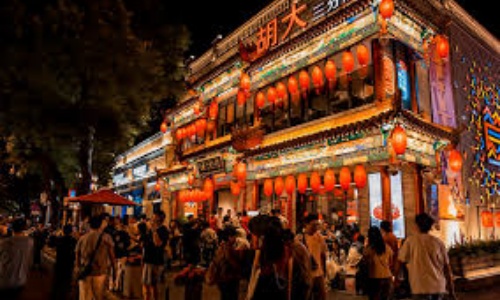
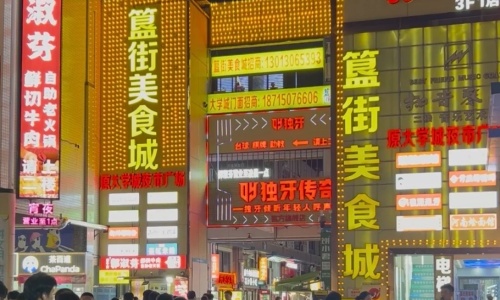
OVERVIEW: Guijie, known as Ghost Street, is Beijing’s iconic late-night dining street—1.5 kilometers long with over 100 food shops, many open 24 hours. Famous for barbecue, spicy snacks, and a lively night atmosphere, it originated as a late-night food hub for rickshaw pullers in old Beijing and is now a favorite for late-night street food lovers.
MUST-TRY SNACKS: Lamb Chuan’r, Zhi Zi BBQ, Yang Za Tang, Fried Triangle Snacks, Spicy Seafood (modern fusion).
HIGHLIGHTS:
• Top late-night dining destination, perfect for night owls and late-night food enthusiasts.
• Premier spot for street barbecue and savory late-night snacks, with an energetic ambiance.
• Diverse options blending classic Beijing street food and modern fusion bites.
TIPS: Visit after 8:00 PM to experience the true late-night vibe; book ahead for popular barbecue shops to avoid long waits.
5. Hidden Hutong Snack Shops
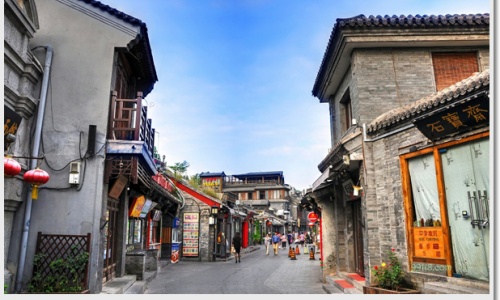
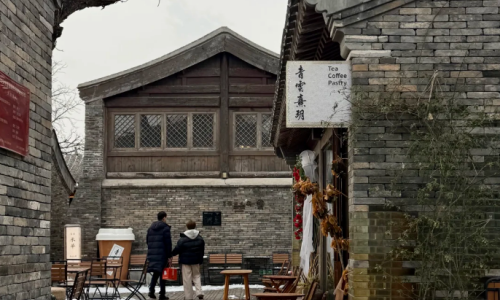
OVERVIEW: Beyond famous food streets, hidden hutong snack shops in Dongcheng and Xicheng Districts offer the most authentic local flavors. These small family-run shops, unknown to most tourists, serve old Beijing street food with family recipes and fresh local ingredients. Exploring them is the best way to experience real local food culture away from tourist traps.
MUST-TRY SNACKS: Homemade Jianbing, Douzhi & Jiaoquan, Ma Doufu, Sugar Fire Cake, Local-style Baozi.
HIGHLIGHTS:
• Authentic flavors with no tourist-oriented modifications, made from family recipes.
• Quiet hutong ambiance, ideal for slow food exploration and interacting with locals.
• Affordable prices and generous portions, reflecting real local eating habits.
TIPS: Wander hutongs around Nanluoguxiang, Shichahai, and Drum Tower; follow local crowds and look for shops without English signs for the most genuine bites.
A One-Day Beijing Street Food Walking Routes
Route 1: Classic Old Beijing Flavors Route
Morning – Drum Tower & Hutong Breakfast
• Core spot: Drum Tower Hutong Area, Dongcheng District.
• Must-try snacks:
1. Jianbing at Dahua Jianbing (North Jianzi Alley) – Classic mung bean and corn flour batter with homemade crispy dough sticks.
2. Chao Gan at Miaojiapo Steamed Bun Shop – Rich garlic broth with tender pork intestine and liver.
3. Pork/Vegetable Baozi at a local hutong stall – Soft, fluffy buns with juicy filling.
• Sightseeing bonus: Wander around Drum Tower and Bell Tower, enjoying quiet morning hutong vibes.
Midday – Huguosi Traditional Snacks
• Core spot: Huguosi Snack Street, Xicheng District.
• Must-try snacks:
1. Douzhi & Jiaoquan – The most authentic old Beijing breakfast combination.
2. Ma Doufu – Fermented mung bean dish with savory and slightly spicy flavors.
3. Wandou Huang – Smooth, delicate pea cake with fresh pea aroma.
• Lunch tip: Share snacks to try more varieties; pair with jasmine flower tea to cut greasiness.
Afternoon – Shichahai Dessert Walk
• Core spot: Shichahai Hutong Area, Xicheng District.
• Must-try snacks:
1. Tanghulu – Classic hawthorn skewers with crisp rock sugar coating.
2. Lv Da Gun – Chewy rice cake rolled in soybean flour with red bean paste.
3. Old Beijing Yogurt – Creamy yogurt in a traditional ceramic jar.
• Sightseeing bonus: Stroll along Shichahai Lake, admiring courtyard houses and willow trees.
Evening – Guijie Late-Night Barbecue
• Core spot: Guijie Street, Dongcheng District.
• Must-try snacks:
1. Lamb Chuan’r – Grilled skewers with cumin aroma.
2. Zhi Zi BBQ – Iron plate-roasted beef/lamb with green onions.
3. Yang Za Tang – Warming lamb offal soup for cold nights.
Route 2: Halal & Historic Flavors Route
Morning – Niujie Breakfast
• Core spot: Niujie Muslim Food Street, Xicheng District.
• Must-try snacks:
1. Men Ding Rou Bing – Juicy beef pies with crispy crust.
2. Bao Du – Flash-boiled tripe with sesame paste dipping sauce.
3. Almond Tea – Creamy, nourishing sweet drink topped with osmanthus.
• Sightseeing bonus: Visit Niujie Mosque, one of Beijing’s oldest Muslim places of worship.
Midday – Qianmen Historic Bites
• Core spot: Qianmen & Dashilar Food Area, Dongcheng District.
• Must-try snacks:
1. Zha Jiang Mian – Chewy noodles with thick soybean paste and side vegetables.
2. Luzhu Huoshao – Stewed pork intestine with baked flatbread.
3. Da Lian Huo Shao – Pan-fried stuffed flatbread.
• Sightseeing bonus: Explore Dashilar Pedestrian Street, with well-preserved Ming and Qing architecture.
Afternoon – Nanluoguxiang Creative Snacks
• Core spot: Nanluoguxiang Hutong, Dongcheng District.
• Must-try snacks:
1. Fusion Jianbing – Modern twists like avocado or cheese toppings.
2. Tea Ice Cream from Wuyutai – Matcha or jasmine-flavored ice cream.
3. Stuffed Tanghulu – Hawthorn skewers with red bean paste or Chinese yam.
• Sightseeing bonus: Browse boutique shops and art galleries in the hutong.
Evening – Moon River Town Night Market
• Core spot: Moon River Town, Tongzhou District.
• Must-try snacks:
1. Grilled Lamb Skewers – Juicy skewers with bold spices.
2. Trendy Hutong Desserts – Matcha Lv Da Gun or coconut cream Ai Wo Wo.
3. Suanmei Tang – Refreshing sour plum drink to balance rich flavors.
• Sightseeing bonus: Walk along the river, enjoying art installations and night views.
Route 3: Casual & Accessible Highlights
Morning – Dongsi Breakfast
• Core spot: Dongsi Area, Dongcheng District.
• Must-try snacks:
1. Jianbing at Zhongyan Jianbing – Multiple flour options (purple rice, millet).
2. Baozi at a local breakfast cart – Freshly steamed pork or vegetable buns.
3. Soy Milk – Hot, savory soy milk with fried dough sticks.
Midday – Xinjiekou Noodles & Snacks
• Core spot: Xinjiekou Area, Xicheng District.
• Must-try snacks:
1. Zha Jiang Mian at Menkuang Hutong Centennial Luzhu – Recommended by locals.
2. Zha Guan Chang – Fried starch sausage with garlic dipping sauce.
3. Sugar Fire Cake – Sweet, flaky flatbread with brown sugar and sesame paste.
Afternoon – Wangfujing Dessert Stop
• Core spot: Nanluoguxiang Hutong, Dongcheng District.
• Must-try snacks:
1. Tanghulu – Classic and fruit varieties (strawberry, grape).
2. Ai Wo Wo – Glutinous rice dumplings with nutty fillings.
3. Pea Cake – Smooth, sweet imperial-style dessert.
Evening – Chaoyang Late-Night Bites
• Core spot: Sanlitun/Chaoyang Park Area.
• Must-try snacks:
1. Lamb Chuan’r at local barbecue stalls – Tender and flavorful.
2. Fried Triangle Snacks – Crispy pastries with savory fillings.
3. Old Beijing Yogurt – Creamy, tangy finish to the meal.
Practical Tips for Trying Beijing Street Food
1. Avoid Tourist Food Traps
Skip overpriced, inauthentic spots like Wangfujing Snack Street (modified for tourists). Instead, seek out stalls with local customers, no aggressive marketing, and minimal English signage—these are signs of genuine flavor.
2. Follow Local Crowds
A line of local Beijingers (especially the elderly) is the best indicator of quality. Locals only queue for snacks that are truly delicious and authentic, making this a foolproof tip for finding hidden gems.
3. Start with Mild Flavors
First-time visitors should begin with mild, approachable options like Jianbing, Baozi, Zha Jiang Mian, or Old Beijing Yogurt. Gradually try bolder flavors (Douzhi, Ma Doufu) as you adapt to local tastes. Ask for "bù yào là de" (no spicy) if you prefer milder food.
4. Explore Hutongs for Authenticity
The most genuine Beijing street food lies in historic hutongs (Drum Tower, Nanluoguxiang, Shichahai). Wander freely—get lost a little—and look for small family-run stalls. These spots use family recipes and fresh local ingredients, offering an unfiltered taste of local life.
5. Eating Etiquette
• Eating while walking: Fully acceptable for Beijing street food (most snacks are portable). Use napkins or disposable gloves for messy bites like Men Ding Rou Bing.
• Sharing snacks: Encouraged! Share portions with companions to try more varieties without overeating.
• Payment: Mobile payment (WeChat Pay, Alipay) is universal. Foreign visitors can use the "Tourist Version" with foreign credit cards; cash is rarely necessary but accepted.
• Ordering: Most stalls have picture menus. Point to the food you want, use basic phrases like "wo3 ya4o yi1 ge4" (I want one), or ask for recommendations with "ni3 jia4n yi4 chi1 she2n me?" (What do you recommend?).
6. Check Food Freshness Visual Cues
Prioritize stalls where ingredients are stored properly (e.g., meat kept in refrigerated displays, vegetables washed and chopped on clean surfaces). Avoid snacks with dull colors, unusual odors, or sticky textures—fresh Beijing street food should look vibrant (e.g., bright green chives in fillings, golden-brown fried items) and smell aromatic.
7. Learn to Read Stall Popularity Clues
Beyond crowds, look for signs like stacks of clean bowls/plates (indicating high turnover), vendors constantly restocking ingredients, or locals engaging in casual chat with the vendor (a sign of regulars trusting the quality). Stalls with handwritten Chinese menus (not printed tourist menus) are also more likely to serve authentic fare.
8. Be Flexible with Portion Sizes
Many street food stalls offer "small" (xia3o) and "large" (da4) portions—opt for small portions if you want to sample multiple snacks without overeating. For example, a small bowl of Chao Gan or a single Men Ding Rou Bing is enough to taste without filling you up.
9. Respect Seasonal Availability
Some classic snacks are seasonal—Tanghulu is most abundant and fresh in winter (October–March), while cold desserts like iced Wandou Huang are popular in summer. Embrace seasonal specialties: try Laba Porridge in late winter (Laba Festival) or fresh Zongzi during Dragon Boat Festival for an authentic time-sensitive experience.
10. Navigate Peak Hours Wisely
Avoid breakfast (7:00–9:00 AM) and dinner (6:00–8:00 PM) peaks at popular stalls (e.g., Dahua Jianbing, Niujie lamb skewers) if you hate waiting. Visit 30 minutes before or after peak times for shorter lines while still getting fresh food.
11. Clarify Dietary Restrictions Clearly
For specific needs (vegan, gluten-free, nut allergies), use simple, direct phrases or translation cards. For example: "Wo3 shi4 su4 shi2 zhe3, wu2 ji1 da4n, wu2 niu2 yo2u" (I’m vegan, no egg, no butter) or "Wo3 bu4 ne2ng chi1 mia4n fe3n" (I can’t eat wheat flour). Most vendors will happily adjust or point you to suitable options.
12. Carry Hand Sanitizer and Napkins
While stalls often provide disposable gloves or napkins, it’s handy to carry your own—especially for messy snacks like Lamb Chuan’r or Men Ding Rou Bing (which can be juicy). Hand sanitizer is useful if you can’t wash your hands before eating.
13. Use Navigation Apps for Hidden Gems
Apps like Baidu Maps or Amap (with English versions) can lead you to highly rated local stalls—search for keywords like Old Beijing Snacks or Hutong Snacks to find spots off the beaten path. Look for stalls with 4.5+ ratings from local users (not just tourists).
14. Don’t Fear "Weird" Snacks—Start Small
If curious about bold flavors like Douzhi (fermented mung bean drink) or Ma Doufu, ask for a small portion first. Locals often appreciate visitors trying traditional snacks, and starting small lets you experience the flavor without wasting food if it’s not to your taste.
15. Be Mindful of Spice Levels Beyond "Là"
Some snacks use Sichuan peppercorn (hua1 jia1o), which creates a numbing (ma2) sensation rather than heat. If you don’t like numbing flavors, add "bu4 ya4o hua1 jia1o" (no Sichuan peppercorn) to your order—this is common in dishes like Bao Du or Yang Za Tang.
FAQs About Traveling Beijing Street Food
Q1: Is Beijing street food safe for tourists?
A: Yes, it’s generally safe. Most vendors use fresh, daily-prepared ingredients and follow food safety regulations. For extra peace of mind: choose stalls with local crowds (fresh ingredients are used quickly), eat food while hot, and avoid items sitting out for hours. Drink bottled water or freshly brewed drinks.
Q2: What is the most famous street food in Beijing?
A: Jianbing (Beijing Savory Pancake) is the most iconic—known worldwide as the city’s signature breakfast. Other famous options include Tanghulu (candied hawthorn skewers), Men Ding Rou Bing (door nail meat pies), and Douzhi & Jiaoquan (authentic old Beijing breakfast combo).
Q3: Where can I find authentic Beijing snacks?
A: Head to Huguosi Snack Street (traditional snacks), Niujie Muslim Food Street (halal lamb dishes), or hidden hutong shops (local gems). Avoid tourist traps like Wangfujing Snack Street.
Q4: How much does Beijing street food cost?
A: It’s very affordable—most snacks range from RMB 5–20, and a full meal costs RMB 30–50 per person. Prices are slightly higher in tourist areas but cheaper in local hutongs.
Q5: What street food should first-time visitors try?
A: Start with classic, mild options: Jianbing, Old Beijing Yogurt, Tanghulu, Zha Jiang Mian, Baozi, and Lamb Chuan’r. These represent Beijing’s core flavors and are easy to adapt to.
Q6: Is Beijing street food spicy?
A: Most classic Beijing street food is mild and savory rather than spicy. Dishes like Jianbing, Zha Jiang Mian, Baozi, and Wandou Huang focus on balanced flavors—soy sauce, sesame paste, garlic, and five-spice powder are more common than chili. However, some snacks (e.g., Lamb Chuan’r, Yang Za Tang) can be spicy if requested. Vendors are happy to adjust the spiciness—just say "bu4 ya4o la4 de" (no spicy) or "yi1 dia3n dia3n la4 de" (a little spicy) to suit your taste.
Q7: Are there vegetarian or vegan options for Beijing street food?
A: Yes, there are plenty of vegetarian/vegan-friendly choices. Classic options include vegetable Baozi (steamed buns with cabbage/mushroom fillings), tofu skewers, vegetarian Jianbing (no egg/meat), and Buddha’s Delight skewers (grilled tofu, mushroom, eggplant). Many vendors also offer custom vegetarian versions of snacks like Zha Jiang Mian (without meat) or Fried Triangle Snacks (vegetable fillings). For vegan travelers, specify "wu2 ji1 da4n" (no egg) and "wu2 niu2 yo2u" (no butter) when ordering.
Q8: How can I order Beijing street food if I don’t speak Chinese?
A: Ordering is easy even without Mandarin:
• Point and smile: Most stalls display food or have picture menus—simply point to what you want.
• Use basic phrases: Learn simple terms like "yi2 ge4" (one) or "da4i zo3u" (takeaway) from common vocabulary lists.
• Show photos: Save pictures of desired snacks on your phone to show vendors.
• Ask for recommendations: Say "ni3 jia4n yi4 chi1 she2n me?" (What do you recommend?) —vendors are friendly and will point to their signature dishes.
Q9: Are there halal Beijing street food options for Muslim travelers?
A: Absolutely—Beijing has a rich halal street food scene, centered around Niujie Muslim Food Street. Must-try halal snacks include Lamb Chuan’r, Men Ding Rou Bing (beef filling), Bao Du (flash-boiled tripe), and Yang Za Tang (lamb offal soup). All halal stalls avoid pork and alcohol, and many display halal certification. Most vendors in Niujie and Muslim communities are familiar with halal dietary requirements.
Q10: What should I do if I’m concerned about hygiene at street food stalls?
A: To ensure hygiene:
• Choose stalls with high turnover (local crowds mean fresh ingredients) and visible food safety licenses.
• Opt for food cooked fresh in front of you—avoid items sitting out for hours.
• Look for stalls with protective covers (to keep dust off food) and clean cooking surfaces.
• Stick to reputable old shops (e.g., Yao Ji Chao Gan, Bao Du Feng) where hygiene standards are consistent.
Q11: Is there a best time of day to eat Beijing street food?
A: Beijing street food is available all day, with different snacks shining at different times:
• Morning (6:00–10:00 AM): Breakfast staples like Jianbing, Baozi, Douzhi & Jiaoquan.
• Afternoon (2:00–5:00 PM): Sweet snacks like Tanghulu, Lv Da Gun, and Old Beijing Yogurt.
• Evening/Night (6:00 PM–midnight): Barbecue (Lamb Chuan’r, Zhi Zi BBQ) and late-night bites at Guijie—ideal for experiencing the lively street food atmosphere.
Q12: Do I need to tip street food vendors?
A: No. The price listed is the full amount—simply pay after receiving your food (mobile payment or cash) and thank the vendor with a smile. Tipping is not part of local culture and may even confuse vendors.
Q13: Why do some Beijing street snacks (like Douzhi or Ma Doufu) have such strong flavors?
A: Many bold-flavored snacks are rooted in Beijing’s history and climate. For example, Douzhi (fermented mung bean drink) was originally a summer refreshment with cooling properties, and its sour taste aids digestion after greasy meals. Ma Doufu and Bao Du reflect the city’s ethnic diversity—Hui Muslim influences and imperial court cuisine combined to create unique, intense flavors that locals cherish as part of their cultural identity.
Q14: Can I find gluten-free Beijing street food?
A: Yes! Gluten-free options include rice-based snacks (Ai Wo Wo, Lv Da Gun), Tanghulu (candied fruit), grilled skewers (Lamb Chuan’r, vegetable skewers—ask for no soy sauce), and fresh fruit snacks. Most vendors can accommodate gluten-free requests if you clarify "wu2 mia4n fe3n" (no wheat flour).
Taste the Soul of Beijing
Beijing street food is far more than just a quick bite or a casual meal – it is a living, breathing gateway to the rich and diverse local culture of Beijing, a city with over 800 years of history as China’s imperial capital. Every snack, from the iconic Jianbing and Tanghulu to the unique Douzhi & Jiaoquan and Ma Doufu, tells a story of Beijing’s past and present – a blend of imperial court culture, Muslim ethnic culture and folk hutong culture, shaped by centuries of history and diversity. Eating Beijing street food is not just about tasting delicious flavors, but about experiencing the real life of local Beijingers, their customs, their traditions and their way of living.
We encourage you to step away from the tourist landmarks and busy shopping streets, and explore the winding historic hutongs of Beijing – the heart and soul of the city’s street food scene. Wander around the Drum Tower, Nanluoguxiang and Shichahai hutongs, follow the local crowds to small family-run snack stalls, order a Jianbing from a street vendor, sip a bowl of Douzhi with Jiaoquan, and bite into a juicy Men Ding Rou Bing. Talk to the friendly local vendors, learn about their family recipes, and experience the warm and welcoming local culture of Beijing – this is the true way to taste the best of Beijing street food.
In the end, the best way to experience Beijing is to eat like a local – to walk the hutongs, to try the snacks, to savor the flavors, and to let the street food of Beijing guide you through the city’s rich history and vibrant culture. Beijing’s street food is waiting for you to discover – take a bite, and taste the soul of China’s imperial capital.
Top Beijing Street Food Experiences Recommended by Your Way Holiday
We design private and Tailor-made Beijing Tours customized to your style of travel at affordable local prices. We will provide a private & spacious car and a local professional tour guide with over 5 years guiding experience only work for you or your group. Transport, ticket, and dining (We find the most authentic dishes popular with locals) all we will arrange for you according your requirements. Please check our most popular tours below:
 Beijing Heritage Day Tour: Imperial Gardens, Lakeside Views & Hutong Life
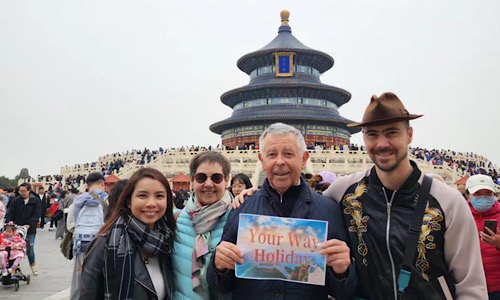 Beijing One Day Local Tour with Traditional Breakfast Food Experience & Cultural Immersion
Are the above sample tour programs not suitable for you? Dont worry, our Beijing tours can be tailor-made based on your requirements and budget to create unique Beijing experiences that allow you to interact with the local people and culture. We are Beijing travel experts who know what your guidebook and foreign agencies don't. Our enthusiastic tour expert will promptly reply you in details within 24 hours.
Prev: Beijing Massage Guide: Best Massage Spas, Foot Reflexology, and Traditional Treatments
Next: The Ultimate Beijing China Travel Guide: Top Attractions, Travel Tips & Local Insights
Wechat: YourWayHolidayAsia
24 Hours Hotline:
+86 137-3541-1378
* Authentic Experiences: Genuine local experiences that immerse you in the true essence of Beijing and beyond.
* Safety First: Highest safety standards with secure activities and reliable transportation.
* Customizable Tours: Flexible itineraries tailored to your interests and needs.
* Local Expertise: In-depth knowledge of Beijing and China, offering exclusive insights.
* Professional Guides: Licensed bilingual guides with over 5 years of experience.
* Comfortable Travel: Experienced drivers and well-maintained vehicles for a smooth journey.
* Sustainable Tourism: Commitment to responsible tourism and supporting local communities.
* Customer-Focused: Personalized service and continuous improvement based on your feedback.
* Free Cancellation: Cancel up to 24 hours before travel for flexibility and peace of mind.
* 24/7 Support: Round-the-clock assistance for any questions or help needed.
 Forbidden City Beijing: Ultimate Tour Guide to China’s Imperial Palace
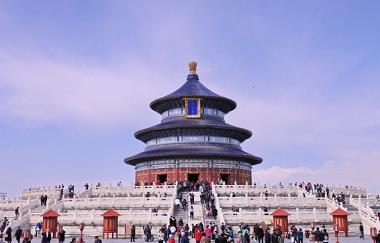 Temple of Heaven
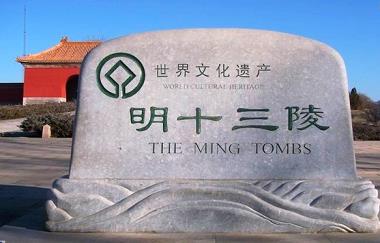 Ming Tombs
 Exploring the Summer Palace Beijing: A Complete Guide to China’s Most Iconic Royal Garden
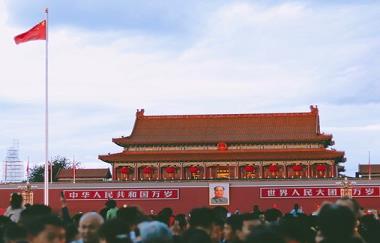 Tiananmen square
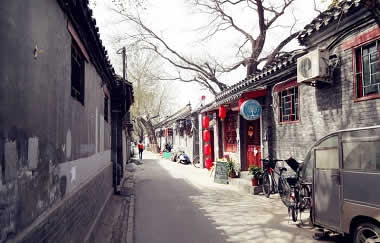 Beijing Hutongs: A Living Tapestry of Time
 Water Cube
 Beijing Bird's Nest – Explore the Iconic National Stadium Beijing
1 to 1 tailor-made service from our professional travel advisors for the most sophisticated
Constantly excellent reviews for attraction, hotel and service Competitive price
Local experts provide quality tours Best selected knowledgeable local guides Authentic local restaurants
7*24 hours available to create you a worry-free tour. No Hidden Fees and absolutely no pressure to buy. Secured









Copyright © 2017 Chinabeijingprivatetour.com All rights reserved. 浙ICP备18056007号-2