Introduction
Tsinghua University is a research university located in Beijing and a member of the C9 League of Chinese universities. With its motto of Self-Discipline and Social Commitment, Tsinghua University is dedicated to academic excellence, the well-being of Chinese society, and global development. Tsinghua is ranked as one of the top academic institutions in China and Asia, placing 14th worldwide in the 2017 Times Higher Education World Reputation Rankings.
Tsinghua University has been ranked as the best engineering school in the world, ranking 1st among 250 universities in the Best Global Universities for Engineering list, which consists of top universities from around the world that have shown strength in producing research and achievements on a variety of engineering topics, overtaking MIT. The university has also shown strong performances in other topics, achieving top 10 ranking worldwide in several subjects. It is one of the most cited institutions in the world, and has collaborated and partnered with many world leading universities, research institutes, and multinational enterprises.
History
Establishment and Development
In the aftermath of the Boxer Rebellion, American Secretary of State John Hay suggested that the US $30 million plus Boxer indemnity paid by China to the United States was excessive. After much negotiation with ambassador Liang Cheng, President Theodore Roosevelt obtained congressional approval in 1909 to reduce the Qing dynasty indemnity payment by US$10.8 million, on the condition that these funds would be used as scholarships for Chinese students to study in the United States. Using this fund, the Tsinghua College (????; Qinghuá Xuétáng) was established in Beijing, on 29 April 1911 on the site of a former royal garden, to serve as a preparatory school for students to be sent by the government to study in the United States. The faculty members for sciences were recruited by the YMCA from the United States and its graduates transferred directly to American schools as juniors upon graduation. In 1925, the school established its College Department and started its research institute on Chinese studies.
In 1928, Tsinghua changed its name to National Tsing Hua University (NTHU). During World War II in 1937, Tsinghua University along with Peking University and Nankai University, merged to form Changsha Temporary University in Changsha, and later National Southwestern Associated University in Kunming of Yunnan province. After the war, Tsinghua moved back to Beijing and resumed its operations.
After the communist revolution at the end of the Chinese Civil War in 1949, which led to the creation of the People's Republic of China (PRC), Tsinghua University's then President Mei Yiqi, followed by many professors, fled to Taiwan where they established the National Tsing Hua Institute of Nuclear Technology in 1955, which later became National Tsing Hua University of Taiwan.
In 1952, the Chinese government regrouped the country's higher education institutions in an attempt to build a Soviet style system, with individual institutions tending to specialize in a certain field of study. When the Cultural Revolution began in 1966, many university students walked out of the classrooms, and some went on to be part of the Red Guards, resulting in the complete shutdown of the university. It was not until 1978, after the Cultural Revolution had ended, that the university began to take in students again. Even so, Tsinghua University remained in the top tier of schools in China.
Since the 1980s, the university has incorporated a multidisciplinary system. As a result, several schools were re-incorporated. These included the School of Sciences, the School of Economics and Management, the School of Life Sciences, the School of Humanities and Social Sciences, the Tsinghua Law School, the School of Public Policy and Management, and the Academy of Arts and Design. In 1996, Tsinghua School of Economics and Management established partnership with the Sloan School of Management at Massachusetts Institute of Technology. One year later, Tsinghua and MIT founded the MBA program Tsinghua-MIT Global MBA.
Present
Most national and international university rankings place Tsinghua amongst the best universities in Mainland China. Admission to Tsinghua is extremely competitive. According to a report in 2008, 215 out of 300 students who placed within the top 10 in the 30 tested provinces and regions chose Tsinghua and 21 out of the 30 top scorers in each province and region chose the university. Admission to Tsinghua's graduate schools is also very competitive, with, for example, only about 16% of MBA applicants admitted each year.
With its motto of Self-Discipline and Social Commitment, Tsinghua University describes itself as being dedicated to academic excellence, the well-being of Chinese society and to global development. The motto goes back to a speech with the title Gentleman given by Liang Qichao in 1914, in which he quoted the I Ching to describe a particular notion of an ideal gentleman.
Tsinghua alumni include the current General Secretary of the Chinese Communist Party and Paramount Leader Xi Jinping, who graduated with a degree in chemical engineering in 1979, as well as the CPC General Secretary and former Paramount Leader Hu Jintao, who graduated with a degree in hydraulic engineering in 1964. Tsinghua has a reputation for hosting some of the most distinguished guest speakers of any university in the world, with international leaders such as Bill Clinton, Tony Blair, Henry Kissinger, Carlos Ghosn, Park Geun-hye, and Henry Paulson, all recently giving lectures to the university community.
As of 2003, Tsinghua University has 12 colleges and 48 departments, 41 research institutes, 35 research centers, and 167 laboratories, including 15 national key laboratories. In September 2006, Peking Union Medical College was renamed to Peking Union Medical College, Tsinghua University, although the Peking Union Medical College and Tsinghua University remain two separate institutions. The university offers 51 bachelor's degree programs, 139 master's degree programs and 107 PhD programs. Recently, Tsinghua has become the first Chinese university to offer a Master of Laws program in American law, through a cooperative venture with the Temple University Beasley School of Law. The university is a member of LAOTSE, an international network of leading universities in Europe and Asia. Each year, the University celebrates the Intellectual Property Summer Institute in cooperation with Franklin Pierce Law Center of Concord, New Hampshire. It has its own editorial, Tsinghua University Press.
Announced in 2013, the Schwarzman Scholars program will consist of 200 scholars to be chosen annually to work towards a one-year master's degree in Public Policy, International Relations, Engineering, Economics & Business. These scholars will live on the university campus at Schwarzman College, a residential college being built specifically for this program.
In 2016, Tsinghua's expenditures were RMB 13.7 billion, the largest budget of any in China.
Campus
The campus of Tsinghua University is located in northwest Beijing, in the Haidian district which was designated for universities and other academic institutes.
It is located on the former site of Qing Dynasty royal gardens and retains Chinese-style landscaping as well as traditional buildings, but many of its buildings are also in the Western-style, reflecting the American influence in its history. Along with its rival and neighbor the Peking University, it is known throughout China and the wider world for having one of the most beautiful campuses. Tsinghua University's campus was named one of the most beautiful college campuses in the world by a panel of architects and campus designers in Forbes in 2010; it was the only university in Asia on the list.
T. Chuang, a 1914 graduate of the University of Illinois at Urbana-Champaign, helped design the campus grounds of the Tsinghua University with influences of American architectural style and architectures.
The University's Institute of Nuclear and New Energy Technology is on a separate campus in a northern suburb of Beijing.
Source: Wikipedia
Prev: Ghost Street Beijing: The Ultimate Guide to Guijie Street’s Late-Night Food Heaven
Next: Huabiao
Duration:7-8 Hours
Attractions(Cities):Tiananmen Square, Forbidden City, Temple of Heaven, Summer Palace
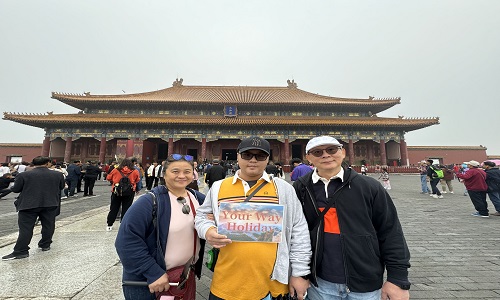
Tour Style:One day, four Beijing essentials — Tiananmen Square, the Forbidden City, the Temple of Heaven and the Summer Palace — with a private English-speaking guide and your own air-conditioned car and driver. Itineraries run daily, take 7–8 hours door to door, and can start from your Beijing hotel, a train station or the airport arrivals gate. Your guide walks you through Ming (1368–1644) and Qing (1644–1911) palace courts with real dates instead of legend, then takes you to a genuine local kitchen for Peking Duck — you order, you pay for what you eat, and vegetarian, halal or lighter meals are easy to arrange. Want to fold in Tai Chi at the Temple of Heaven, a hutong morning market, Peking Opera or Hanfu photos? Just tell us; the car and the day are yours.
Duration:2 Days, 1 Night
Attractions(Cities):Temple of Heaven, Tiananmen Square, Forbidden City, Nanluoguxiang, Mutianyu Great Wall, Summer Palace
Tour Style:Two days, one night, six Beijing essentials — with a private English-speaking guide, your own car and driver, and one overnight in a city-centre four-star. Day one: Tiananmen Square, the Forbidden City (3,400-metre red wall, 980 buildings), a hutong lunch stop, the Temple of Heaven, then evening on Nanluoguxiang. Day two: an early start to the Mutianyu Great Wall — cable car up, optional toboggan down — then the Summer Palace and its 728-metre Long Corridor before drop-off at your hotel, station or airport. Tell us if you want to fold in Peking Duck, 798 Art District, flag-raising at dawn, Chinese acrobatics, a street-snack crawl or Hanfu photos.
Duration:3 Days, 2 Nights
Attractions(Cities):Tiananmen Square, Forbidden City, Temple of Heaven, Jingshan Park, Summer Palace, Kunming Lake Boat Riding, Nanluoguxiang, Panjiayuan Antique Market, Mutianyu Great Wall, Bird's Nest, Water Cube
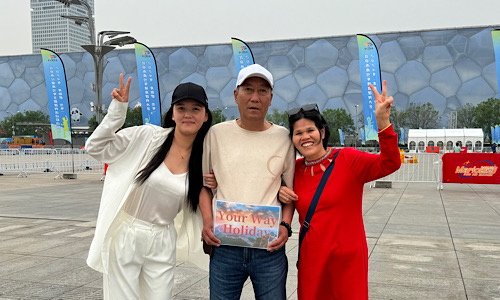
Tour Style:Three days, two nights in a city-centre four-star, eleven Beijing essentials and a private English-speaking guide, your own air-conditioned car and a professional driver for the whole trip. Day 1: Tiananmen Square, the Forbidden City (3,400-metre red wall, 980 buildings), Jingshan Park for the north panorama over golden roofs, evening on Nanluoguxiang. Day 2: the Mutianyu Great Wall — cable car up, optional toboggan down — back through the city for a walk around the Bird’s Nest and Water Cube lit up. Day 3: the Temple of Heaven, the Summer Palace with a boat on Kunming Lake, and a slow hour at the Panjiayuan antique market before drop-off at your hotel, station or airport. Lunch isn’t included — your guide takes you to genuine local kitchens and you pay for what you eat.
Duration:5 Days, 4 Nights
Attractions(Cities):Mutianyu Great Wall, Bird's Nest, Water Cube, Qianmen Street, Morning Market, Forbidden City, Tiananmen Square, Jingshan Park, Temple of Heaven, Nanluoguxiang, Facial Makeup Painting, 798 Art Zone
Tour Style:Five days, four nights in a city-centre Beijing hotel with a private English-speaking guide, your own car and a professional driver. This is the ‘beyond the surface’ version of Beijing — yes, Tiananmen Square, the Forbidden City (3,400-metre red wall, 980 buildings), Jingshan Park for the golden-roof panorama, the Temple of Heaven and the Mutianyu Great Wall are all in, but the tour also threads in a dawn hutong morning market, a face-painting workshop with a working Peking Opera artist, the 798 Art District’s galleries and cafés, an evening at Qianmen pedestrian street, and a slow look at the Bird’s Nest and Water Cube at the old Olympic Park. Lunch isn’t included on purpose — your guide takes you to genuine local kitchens each day and you pay for what you eat. Drop-off on Day 5 at your Beijing hotel, station or airport.
Duration:10+ Hours
Attractions(Cities):Terracotta Warriors and Horses Museum
Tour Style:A long but focused day trip to the Terracotta Warriors and Horses Museum. Your private English-speaking guide and car meet you at your Xi’an hotel, train station or airport (arrive from Beijing by G-series high-speed rail — 4.5–6 hours, or an early flight if you prefer). Lintong, 35 km east of Xi’an, holds roughly 8,000 life-size clay soldiers, horses and chariots buried with the first emperor Qin Shi Huang around 210 BC and rediscovered by farmers digging a well in 1974 (UNESCO-listed). You’ll cover Pit 1, Pit 2, Pit 3 and the bronze-chariot museum at a proper pace, break for lunch at a local noodle kitchen on your own bill, and finish back at your Xi’an pickup point or the station for the evening train. Total door to door: 10+ hours.
Wechat: YourWayHolidayAsia
24 Hours Hotline:
+86 137-3541-1378
Certificate of Excellence
2012~2026

Your Way Holiday
(Your Privacy is Protected)
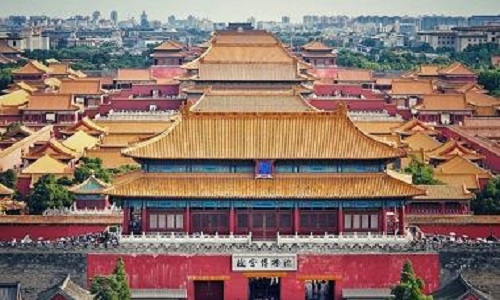 Forbidden City Beijing: Ultimate Tour Guide to China’s Imperial Palace
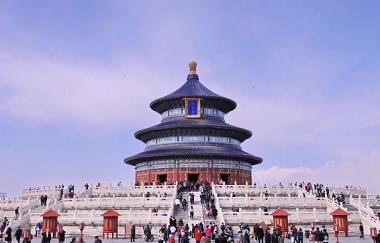 Temple of Heaven
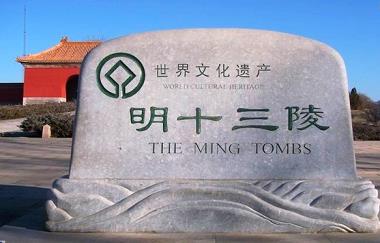 Ming Tombs
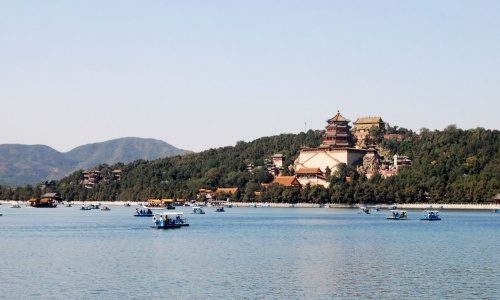 Exploring the Summer Palace Beijing: A Complete Guide to China’s Most Iconic Royal Garden
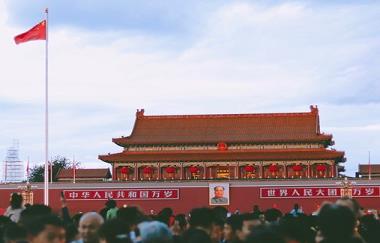 Tiananmen square
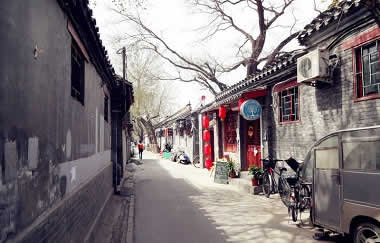 Beijing Hutongs: A Living Tapestry of Time
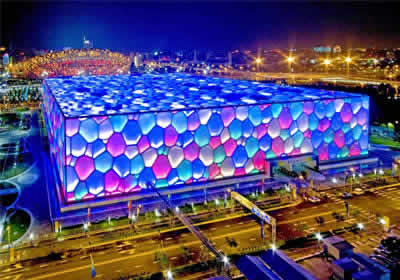 Water Cube
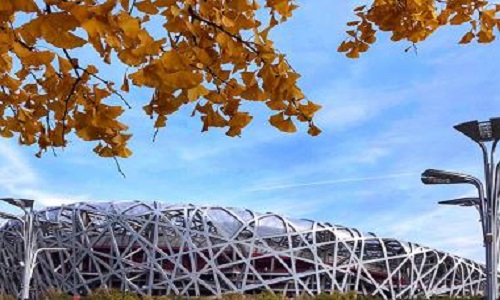 Beijing Bird's Nest – Explore the Iconic National Stadium Beijing
1 to 1 tailor-made service from our professional travel advisors for the most sophisticated
Constantly excellent reviews for attraction, hotel and service Competitive price
Local experts provide quality tours Best selected knowledgeable local guides Authentic local restaurants
7*24 hours available to create you a worry-free tour. No Hidden Fees and absolutely no pressure to buy. Secured





Copyright © 2017 Chinabeijingprivatetour.com All rights reserved. 浙ICP备18056007号-2